
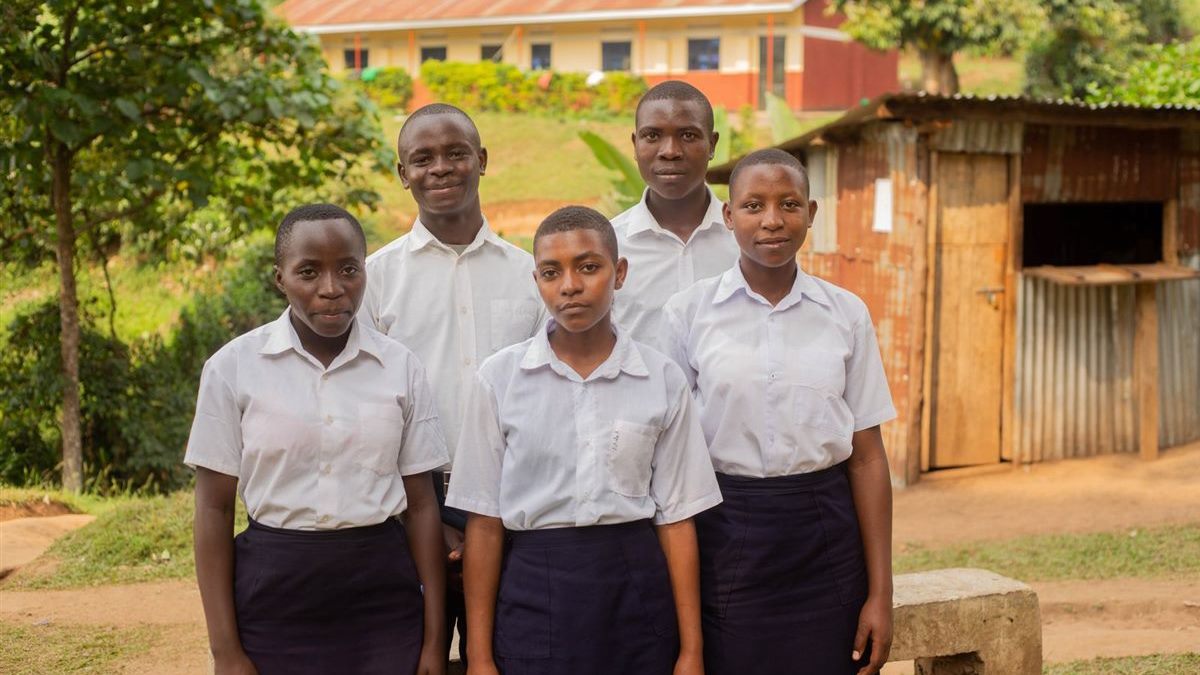
For the families of Grade 9 candidates, the question behind every revision timetable is the same: what actually happens after the assessment? Placement to senior school is a process with several moving parts, and parents who understand it make calmer, better choices than those waiting for a single mysterious letter.
This guide walks through that process in plain language: what counts towards the Grade 9 outcome, how the senior school pathways work, and what a parent can usefully do before, during and after the assessment. For 2026 candidates, KJSEA written papers run from 26 to 30 October, with a rehearsal day on Friday 23 October, so the steps below begin almost immediately.
What counts towards placement
KJSEA is not the whole story. The final Grade 9 outcome combines the national assessment with school-based assessment scores banked across the junior school years. That is why steady classwork has always mattered: a candidate walks into the assessment room already carrying part of their result. Our guide to what KJSEA tests from Grade 8 explains that banked component, and the BE, AE, ME, EE report card guide shows how to read the levels schools have been recording all along.
For parents, the practical meaning is reassuring. A single bad morning in the assessment week does not erase three years of work. Equally, nothing a learner does in the last few days can replace the classwork that has already been recorded. The best contribution now is a calm, well-rested candidate.
The national assessment itself covers the junior school learning areas: English, Kiswahili, Mathematics, Integrated Science, Social Studies, Religious Education (CRE, IRE or HRE), Agriculture and Nutrition, Pre-Technical Studies, and Creative Arts and Sports. Performance across these areas, together with interest, helps show where a learner's strengths lie, which is exactly what pathway choice should rest on.
The pathways, in plain language
| Pathway | What it leads toward | Suits a learner who |
|---|---|---|
| STEM | Sciences, engineering, technology, medicine-track subjects | Enjoys mathematics and science and wants them deeper |
| Social Sciences | Business, humanities, law-track subjects | Argues well, reads people and society keenly |
| Arts and Sports Science | Creative arts, music, sport and performance fields | Shows talent that deserves timetabled development |
Within each pathway, senior schools offer subject combinations, so two STEM learners may carry different subjects. The full picture of how pathways branch is in our senior secondary pathways guide, and the subject-by-subject detail sits in the Grade 10 subjects list.
How to think about pathway choice
Pathway choice is where families most often go wrong, usually by choosing for prestige rather than fit. A few honest questions help:
- Where does the evidence point? Look at three years of report cards, not one term. Consistent ME and EE levels in Mathematics and Integrated Science are a stronger signal for STEM than a single good mock.
- What does your child choose when nobody is watching? The learner who reads history books for fun, or spends every break on the pitch, is telling you something.
- What does the class teacher see? Teachers watch learners across subjects every day. Ask them directly which pathway they would recommend and why.
- Is the choice the child's, or ours? A learner who owns the decision works harder for three years than one who was placed into a parent's ambition.
What parents should actually do
Before the assessment: keep the revision routine steady and the household calm; the banked scores are already earned, and panic adds nothing to them. During selection: discuss pathway preference honestly with your child and their class teacher, weighing interest and evidence over prestige; a learner placed against their strength struggles for three years. After placement: whatever school is named, the Grade 10 curriculum is national, and materials travel with the learner. The complete Grade 9 revision bundle carries candidates to the assessment, and Grade 10 materials are ready the day placement lands.
| Stage | Parent action | What to avoid |
|---|---|---|
| Final revision weeks | Protect sleep, meals and a short daily study routine | Late-night cramming and comparing your child with others |
| Assessment week (26 to 30 October) | Confirm the timetable, prepare materials the night before, arrive early | Post-mortems of each paper at the dinner table |
| Waiting for results | Rest, then light reading and reflection on pathway interests | Buying into rumours or "leaked" results and placement lists |
| Results and placement | Read the outcome with your child, talk to the school, plan the move | Treating the result as a verdict on your child's worth |
| Before Grade 10 starts | Get uniform, materials and a simple study routine ready | Spending the whole break with no reading at all |
For the practical side of the week itself, see our guide on what to carry and what is not allowed in KJSEA exam week. Be careful of anyone selling "leaked" papers or promising to influence placement; our article on leaked paper scams and real practice papers explains how to spot them.
After results: the move to Grade 10
When the results arrive, read them together with your child before anyone else does. Our guide on what happens next after KJSEA and KPSEA results walks through the steps that follow. Then look ahead: senior school is a real change in routine, subject load and independence, and our article on what actually changes from Grade 9 to Grade 10 sets out what to expect.
Because Grade 10 in 2026 is the first CBC senior school cohort, almost no past papers exist for it yet, and families heading into 2027 will find that preparation materials matter more than usual. The Grade 10 notes by pathway give an early look at the subjects, and the Grade 10 hub collects resources in one place.
The week-by-week run-in to the assessment itself is mapped on our free KJSEA countdown page. Placement rewards the steady family, and steadiness is a decision, not a temperament.
Starting Grade 10 in January 2027?
The first weeks of senior school set the pace for the whole year, and Grade 10 school-based assessment counts towards the final KCBE grade. The Grade 10 Complete Revision and Exam Kit has notes, practice papers and answers for every Grade 10 subject, so your child can read ahead over the December holiday and settle in fast.
Frequently asked questions
Does KJSEA alone decide which senior school my child joins?
No. The Grade 9 outcome combines the national assessment with school-based assessment banked across junior school, and pathway preference also plays a part in placement.
Can my child change pathway after placement?
Ask the receiving school directly about its process. The better approach is to choose carefully before placement, using evidence from report cards and the class teacher's view.
Should we choose STEM because it seems more prestigious?
Only if the evidence and your child's interest support it. Every pathway leads to respected careers, and a learner placed against their strengths struggles for three years.
What should my child do during the break before Grade 10?
Rest first, then a light routine of reading and a little preparation in the subjects of their pathway, so the first weeks of senior school feel familiar rather than overwhelming.
To prepare for the step up, the Grade 10 Complete Revision and Exam Kit covers senior school subjects in one download.
Grade 9 KJSEA Complete Revision Course
All 9 learning areas in one download: notes, worked examples, topical questions and full marking schemes. Rebuilt for the 26 to 30 October assessment.
⏳ Only 12 days to the national assessments on 26 October. Start now.
KSH 400 · Get it now → 📱 M-Pesa, sent to your email after payment · join parents preparing nowHave a CBC question this article didn't answer?
Ask Somo, Kenya's first AI tutor. CBC-grounded, Kenyan examples, instant feedback. Five free questions a day with no signup, or start a 7-day free trial for 30 questions a day.
Try Somo Free →