
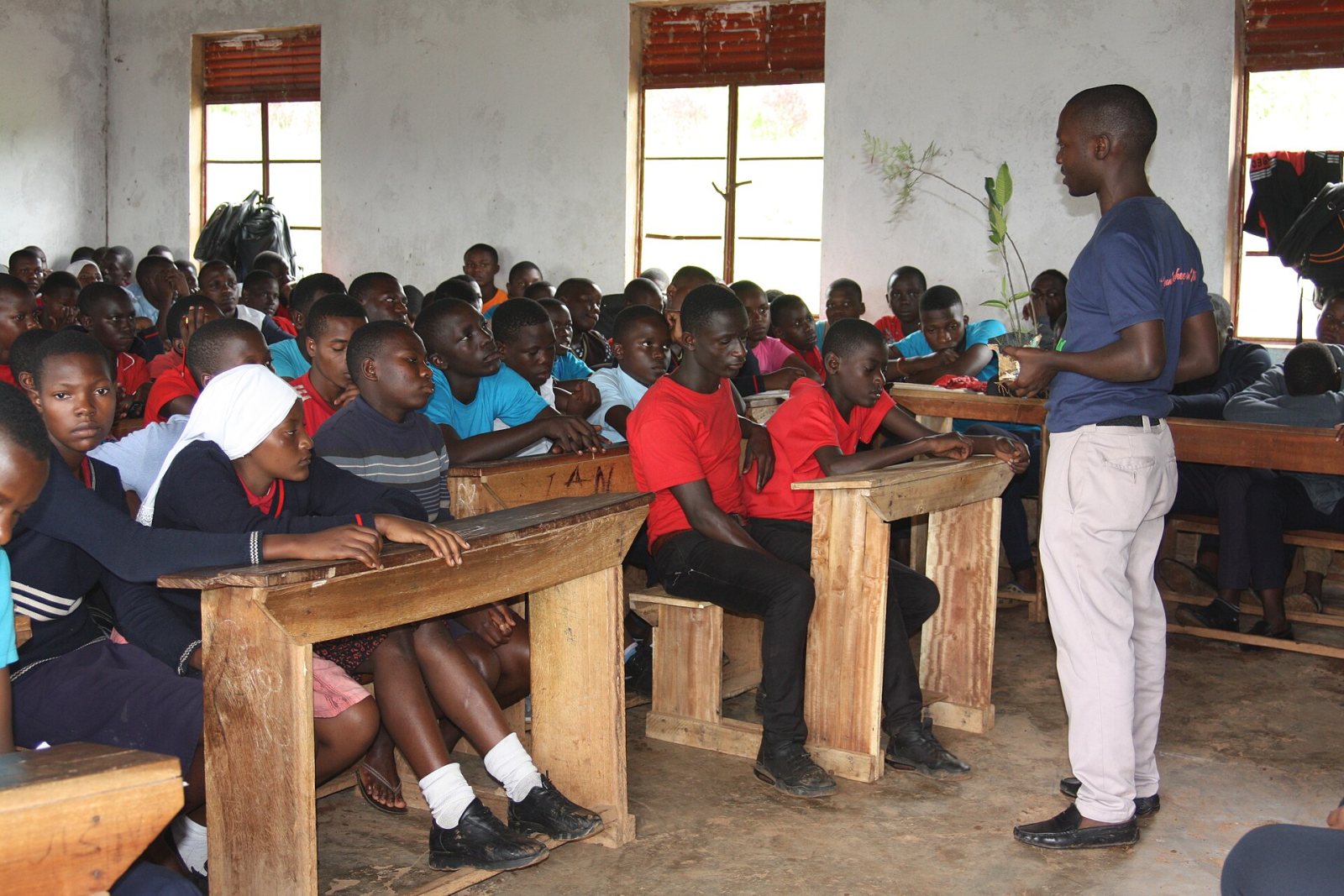
Who this is for
- Grade 6 class teachers, subject teachers and head teachers planning the last week of class revision before KPSEA 2026, Monday 19 to Friday 23 October.
- KPSEA runs Monday 26 to Wednesday 28 October 2026, and the rehearsal is on Friday 23 October (KNEC 2026 KPSEA timetable).
- The guide covers a five-day class plan, running predictive papers in class, fast item analysis for large classes, and the KNEC instructions teachers are asked to explain to candidates.
The last week of class before KPSEA is the week in which a Grade 6 teacher has the most influence and the least time. There are five school days between Monday 19 October and the rehearsal on Friday 23 October, a class that may be 40 or more learners, five papers to cover, and a set of KNEC instructions that the council specifically asks teachers to make sure candidates understand. This guide is a practical plan for that week: how to run predictive papers so they produce teaching, not just scores; how to analyse a whole class's answers in under an hour; what to reteach and to whom; and exactly what to brief learners on before the rehearsal.
Every date, time and rule here is from the KNEC 2026 KPSEA Timetable, Instructions and Guidelines (KNEC/TD/SE/KPSEA/TT/26/001), unless another source is named.
Information current as of Term 3, October 2026.
Key takeaways
- KNEC's 2026 instructions say teachers should ensure candidates clearly understand the instructions and know the penalties for irregularities. Build that briefing into the week.
- Run each KPSEA day in class at its real times: Day 1 papers on Monday, Day 2 on Tuesday, Day 3 on Wednesday. Mark and analyse the same afternoon.
- Item analysis beats re-marking: tally how many learners got each question right and which wrong option they chose. A shared wrong option means a shared misconception.
- Reteach by band: whole class for items most learners missed, small groups for the middle, mistakes books for the rest.
- Thursday is for reteaching and a full instruction and shading drill. Friday is KNEC's rehearsal: keep it calm.
The KPSEA 2026 timetable your week should copy
| KPSEA day | Paper | Standard time | Braille and other versions |
|---|---|---|---|
| Fri 23 Oct | Rehearsal | Set by the centre | None |
| Mon 26 Oct | Mathematics | 8.30 to 9.50 a.m. (80 min) | Braille to 10.20 a.m. |
| Mon 26 Oct | English | 10.50 to 11.50 a.m. (60 min) | Hearing impaired and Braille to 12.10 p.m. |
| Tue 27 Oct | Integrated Science | 8.30 to 10.10 a.m. (100 min) | Braille to 10.40 a.m. |
| Tue 27 Oct | Kiswahili or Kenyan Sign Language | 11.10 a.m. to 12.10 p.m. (60 min) | Braille Kiswahili to 12.30 p.m. |
| Wed 28 Oct | Creative Arts and Social Studies | 8.30 to 10.10 a.m. (100 min) | Braille to 10.40 a.m. |
Source: KNEC 2026 KPSEA timetable. Large print papers keep the standard times. If you teach learners who use Braille, large print, the hearing impaired English paper or Kenyan Sign Language, copy their exact times into your mock week.
KNEC states that no extra time is allowed, that reading time is part of the time on the paper, and that morning sessions start at 8.30 a.m. with candidates seated 15 minutes earlier. Your class papers should follow all three rules.
The numbers behind a KPSEA centre
It helps to know the scale. In 2024, 1,303,913 Grade 6 candidates sat KPSEA across 35,573 centres, according to The Star. In 2025, the Education Cabinet Secretary said 1,298,089 candidates would sit KPSEA in 32,843 centres, as reported by the Kenya News Agency. Dividing one by the other gives an average of about 37 candidates per centre in 2024 and about 40 in 2025. Many teachers will be marking for a class of that size, or larger, in this final week, which is why the item analysis method below is built for speed.
| Year | Candidates | Centres | Average per centre | Source |
|---|---|---|---|---|
| 2024 | 1,303,913 | 35,573 | 36.7 | The Star, 7 January 2025 |
| 2025 | 1,298,089 | 32,843 | 39.5 | Kenya News Agency, 27 October 2025 |
A five-day plan for the last week of KPSEA class revision
The plan copies each KPSEA day once, in the morning, at the real times. Afternoons are for marking, item analysis and reteaching while the paper is fresh in the learners' minds. If your school already ran a full mock earlier in the term, you can use the same structure with fresh papers, or run only the papers where the class was weakest.
| Day | Morning | Afternoon |
|---|---|---|
| Mon 19 Oct | Day 1 copy: Mathematics 8.30 to 9.50; English 10.50 to 11.50. Learners seated by 8.15 | Learners mark in pairs with the key; teacher tallies item analysis; reteach the top three Mathematics items |
| Tue 20 Oct | Day 2 copy: Integrated Science 8.30 to 10.10; Kiswahili 11.10 to 12.10 | Pair marking and tally; reteach top three English items from Monday and top Science items |
| Wed 21 Oct | Day 3 copy: Creative Arts and Social Studies 8.30 to 10.10. Then reteach Kiswahili items | Pair marking and tally; small-group stations for middle-band items across all papers |
| Thu 22 Oct | Reteach whole-class items still open; mistakes book review; short mixed quiz | Instructions briefing and full shading drill on practice answer sheets (see below) |
| Fri 23 Oct | KNEC rehearsal. Follow the centre's arrangements | Debrief: what surprised learners? Send a note home with the dates, times and what to bring |
Running predictive papers in class
A predictive paper in the final week is a diagnostic tool, not a ranking. Its job is to tell you which items, and which misconceptions, the class still has. To get that information cleanly:
- Use exam conditions. Desks spaced, bags at the front, phones nowhere near (KNEC prohibits cell phones and electronic communication devices in assessment centres, and a candidate found with one has results cancelled). Learners shade answers in pencil on an answer grid, and do rough work on the question paper, as KNEC requires.
- Use real times and no extra time. Learners who finish early check their shading.
- Keep the key separate. Print the answer key on its own sheet, held by the teacher. Our separate answer key method explains the logic, and it works for a class as well as at home.
- Do not post a ranked list. The point is the items, not the order of learners. Since the first KPSEA, learners have not been ranked on results (The Star noted this when the 2024 results were released), and a ranked mock the week before can do more harm to confidence than good.
- Be honest about what the paper is. Any predictive paper, from any provider, is original practice written in the KPSEA format. It is not a KNEC paper and not a leak. KNEC's guidelines set out serious penalties for revealing assessment material, and learners should hear clearly that no genuine paper circulates before the assessment.
For a fuller treatment of running mocks, our teacher's guide to running mock exams was written for Grade 9 but much of its logistics apply to Grade 6. Our guide to marking schemes that teach covers how to turn a key into a learning tool.
Item analysis in under an hour
Re-marking 40 scripts tells you who scored what. Item analysis tells you what to teach tomorrow. With multiple-choice papers it is fast.
- Pair marking. Learners swap answer grids and mark with the key read aloud or projected. Each marker writes the total and circles wrong answers.
- Hands-up tally. Read each question number and ask learners whose grid has that item wrong to raise a hand. A class monitor counts. For each wrong item, ask "Who chose A? B? C? D?" only when the wrong count is high.
- Record on one sheet. Question number, number correct, most chosen wrong option, sub-strand.
- Band each item using the rule below, and plan the reteach.
| Share of class correct | What it usually means | What to do this week |
|---|---|---|
| Fewer than half | A gap in teaching or a shared misconception | Reteach to the whole class, then set two fresh items on the same sub-strand |
| About half to most | Some learners secure, others not | Small-group station on Wednesday afternoon; secure learners can lead |
| Almost all | Individual slips | Learners copy the item into their mistakes book with the correct answer and one line of reason |
These are planning bands for classroom use, not KNEC performance levels.
The "most chosen wrong option" column is the most useful one on the sheet. If 15 learners got a fractions item wrong and 12 of them chose the same option, they share one misconception, for example adding denominators. Ten minutes on that one idea fixes 12 learners at once. If wrong answers are spread across all three distractors, the problem is more likely reading or guessing, and the fix is technique.
A worked example
Here is how one hypothetical class of 40 might look on three Mathematics items (illustrative figures, not real data). Item 7: 14 correct, and 20 of the 26 wrong chose B, the answer you get by finding the discount instead of the new price. Whole-class reteach: "Read the last line of the question again. What is it asking for?" Item 12: 27 correct, wrong answers spread. Small group, with two fresh items. Item 18: 38 correct. Mistakes books only. Ten minutes on item 7 does more for the class than an hour of general revision.
The instruction briefing: what KNEC asks teachers to make sure candidates understand
KNEC's 2026 guidelines include an instruction addressed to teachers: ensure that candidates clearly understand the instructions to candidates and are aware of the penalties for assessment irregularities or misconduct. Thursday 22 October, the day before the rehearsal, is the right time. Use this table as your script.
| KNEC instruction (summarised) | What to tell learners | How to practise it |
|---|---|---|
| Be available for searching and seated 15 minutes before the paper; morning sessions start at 8.30 a.m. | "Be in your seat by 8.15 every morning." | Line up and enter in silence on Monday to Wednesday of this week |
| A candidate late by more than half an hour gets a paper only in exceptional circumstances | "Arriving late can mean missing a paper." | Tell parents too, in Friday's note |
| Write and shade name and assessment number correctly on the answer sheet in pencil; do not use a fountain or biro pen | "Pencil only on the answer sheet. Check your name and number." | Shading drill on practice sheets; check each learner knows their assessment number |
| Check that every page of the question paper is printed; return any paper with smudges, errors or bad printing | "Count your pages first. Put up your hand if anything is wrong." | Start each mock paper with a 30-second page check |
| Rough work is done on the official question paper; no used or unused paper leaves the room | "Do your working beside the question." | No scrap paper during the mocks |
| No books, notes or materials other than those KNEC authorises; no communication of any kind | "Empty pockets. No talking, no signs, no notes." | Pocket check before each mock |
| Cell phones and electronic communication devices are prohibited; possession leads to cancelled results | "No phone, no smartwatch, not even switched off." | Include in the parents' note |
| An irregularity in any paper cancels the result for the whole subject; widespread irregularities can cancel a whole centre's results | "One mistake of this kind costs the whole subject, and can affect everyone." | Say it calmly and once; the aim is clarity, not fear |
The guidelines also note that offences under the KNEC Act No. 29 of 2012 apply, including imprisonment of up to ten years or a fine of up to two million shillings, or both, for anyone who gains access to assessment material and reveals its contents. Teachers will know this already; it is worth reminding colleagues and parents in the same week that "leaked papers" offered online are either fake or a crime. Our explainer on KNEC rules that can lead to result cancellation covers this in more detail.
The shading drill
KNEC asks supervisors to issue each candidate with a personalised answer sheet bearing the correct name and assessment number. Learners who have never seen such a sheet can lose minutes on Monday morning. On Thursday afternoon, give every learner a practice answer sheet and run a 20-minute drill: check the name and number, shade 30 answers called out by the teacher, rub out and correct two of them cleanly, and finally check that the last answer shaded is in the row for the last question. Our guide to KPSEA answer sheet shading has a printable checklist.
A case from one school
Take Mrs Achieng, a Grade 6 class teacher in Kisumu with 46 learners (a made-up example). On Monday 19 October her class sits the Day 1 copy. By 2 p.m. pair marking is done, and the hands-up tally takes 25 minutes for Mathematics. Three items fall below half correct; on one, 19 learners chose the same wrong option, the result of subtracting times as if an hour had 100 minutes. She reteaches it in ten minutes with a clock face and sets two fresh items: 38 learners now get them right. On Wednesday afternoon she runs four stations, each led by a learner who got that item right, while she works with the six learners who struggled most. On Thursday she runs the instruction briefing and the shading drill, and on Friday after the rehearsal she sends a half-page note home with the dates, times and the pencil rule. By the time the class leaves on Friday, every learner has met every paper, knows the rules, and has a mistakes book built from their own errors.
Common mistakes in the last week of class revision
- Marking every script yourself. With 40 or more learners, pair marking plus a tally gives better information in less time.
- Ranking learners on a mock. It tells you little you can teach from and can damage confidence days before the assessment.
- Covering new content. The final week is for closing known gaps, not starting sub-strands the class has never met.
- Skipping Creative Arts and Social Studies. It is the last paper but one of the two longest. Give it its own morning.
- Leaving the instruction briefing to the supervisor. KNEC's guidelines address teachers directly on this. Brief learners yourself.
- Ignoring learners who use Braille, large print or Kenyan Sign Language. Their papers have different timings. Copy those into your mock week.
Resources for the final week
Free materials first: our sample question sets for each paper, linked from the KPSEA timetable, paper by paper, and the free KPSEA Mini-Mock, five questions per paper with a marking scheme, which works well as a Thursday quiz. If you need full papers for all three mock mornings, the KPSEA Complete Revision Course has three predictive papers for each of the five papers, in the KPSEA multiple-choice format, with answer grids and a separate answer booklet that gives a reason for each answer, which helps when you reteach. These are original CBC Edu Kenya practice papers, not official or leaked KNEC papers. Assessment materials for this class are also listed in the Grade 6 exams catalogue, and the Grade 6 hub has notes and lesson plans.
Frequently asked questions
When is the KPSEA 2026 rehearsal?
Friday 23 October 2026, according to the KNEC 2026 KPSEA timetable. The papers run from Monday 26 to Wednesday 28 October.
Should we run a full mock in the last week?
Running each KPSEA day once, at real times, works well if the afternoons are used for marking and reteaching. If your class already sat a full mock recently, run only the papers where it was weakest.
What do KNEC's instructions ask of teachers?
The 2026 guidelines advise teachers to ensure that candidates clearly understand the instructions to candidates and are aware of the penalties for assessment irregularities or misconduct.
Can learners use pens in KPSEA?
No. The name, assessment number and answers are shaded on the answer sheet with a pencil. KNEC tells candidates not to use a fountain or biro pen.
How should I handle learners who are anxious?
Keep the week predictable, avoid ranking, and praise preparation habits. Share our guide to exam anxiety with parents in Friday's note.
Are predictive papers the same as KNEC papers?
No. Predictive papers are original practice written in the KPSEA format. Genuine KNEC papers are confidential until the assessment, and revealing them is an offence under the KNEC Act.
How many learners sit KPSEA each year?
About 1.3 million: 1,303,913 in 2024 (The Star) and 1,298,089 in 2025 (Kenya News Agency).
Conclusion
The last week of KPSEA class revision works best when it copies the real assessment and turns every paper into teaching. Run Day 1, Day 2 and Day 3 at their real times on Monday, Tuesday and Wednesday; mark in pairs and tally every item the same afternoon; reteach by band, starting with the items most of the class missed and the wrong options they shared. Use Thursday for reteaching, the instruction briefing KNEC asks teachers to give, and a full shading drill. On Friday, let the rehearsal do its job and send a clear note home. Your learners will walk in on Monday 26 October knowing the papers, the rules and their own mistakes. For complete practice papers with answer explanations for all five papers, see the KPSEA Complete Revision Course.
Further reading
Grade 6 KPSEA Complete Revision Course
All 5 subjects with notes, worked examples, questions and marking schemes. Rebuilt for the 26 to 28 October assessment.
⏳ Only 9 days to the national assessments on 26 October. Start now.
KSH 300 · Get it now → 📱 M-Pesa, sent to your email after payment · join parents preparing nowHave a CBC question this article didn't answer?
Ask Somo, Kenya's first AI tutor. CBC-grounded, Kenyan examples, instant feedback. Five free questions a day with no signup, or start a 7-day free trial for 30 questions a day.
Try Somo Free →