
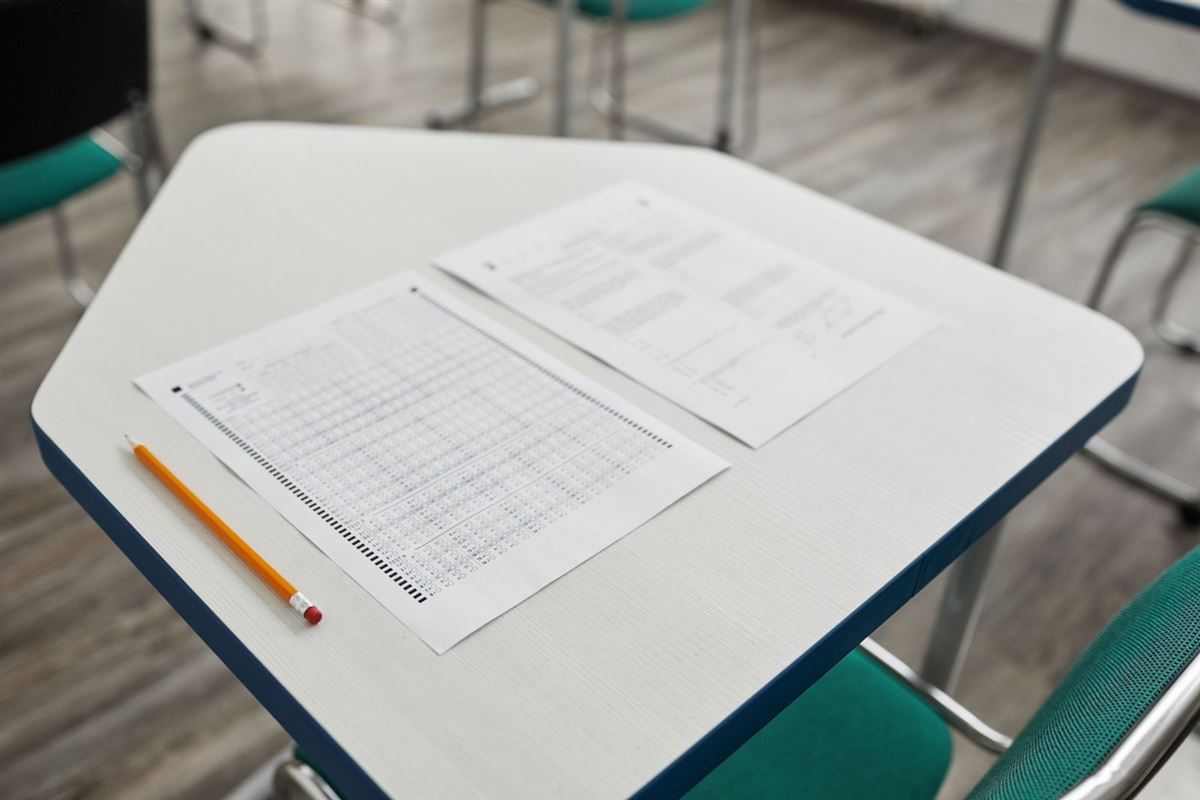
KPSEA 2026 runs from Monday 26 October to Wednesday 28 October, with the rehearsal on Friday 23 October. Every single paper is multiple choice, shaded in pencil on a personalised answer sheet that already carries your child's details.
That format is kinder than structured questions in one way and crueller in another. It is kinder because there is no penalty for imperfect handwriting. It is crueller because a child who knows the answer can still score zero for it if the sheet is filled in wrongly, and nobody will ever know the difference.
The 2026 KPSEA timetable
| Day | Date | Paper | Time | Duration |
|---|---|---|---|---|
| Monday | 26 October | Mathematics | 8.30 to 9.50 | 1 hour 20 |
| Monday | 26 October | English | 10.50 to 11.50 | 1 hour |
| Tuesday | 27 October | Integrated Science | 8.30 to 10.10 | 1 hour 40 |
| Tuesday | 27 October | Kiswahili or KSL | 11.10 to 12.10 | 1 hour |
| Wednesday | 28 October | Creative Arts and Social Studies | 8.30 to 10.10 | 1 hour 40 |
Two papers on Monday and two on Tuesday means stamina matters. A child who has never sat two papers in one morning will feel the second one badly.
The five shading mistakes that actually cost marks
1. Shading two bubbles for one question
A child changes their mind, shades the new answer, and does not fully erase the old one. Two marks on one row is read as no answer. This is the most common avoidable loss, and it happens most in the final ten minutes when the child is rushing back through questions they flagged.
2. Losing the line
The child skips a hard question on the paper but does not skip the row on the answer sheet. Every answer after that point is one row out. A child can answer thirty questions correctly and score almost nothing. Teach one rule: if you skip a question, shade nothing and say the number out loud in your head before the next one.
3. Faint shading
The sheet is read by machine. A light grey mark may not register. The bubble should be filled firmly and completely, not ticked, circled or crossed. A soft pencil makes this easier, which is why the pencil itself matters more than parents expect.
4. Stray marks
Doodles, tally marks and working done on the answer sheet can confuse the reader. All working belongs on the question paper, never on the sheet.
5. Leaving blanks
There is no negative marking. A blank is a guaranteed zero and a guess is not. In the last five minutes, every empty row should be filled with something. This one habit is worth several marks a paper for most children.
What to carry
| Item | Why it matters |
|---|---|
| Two HB pencils, sharpened | Soft enough to shade firmly and erase cleanly. Two, because points break. |
| A clean eraser | A dirty or hard eraser smears rather than lifts, which creates the double shading problem. |
| A small sharpener | A blunt pencil shades slowly and the child runs out of time. |
| A ruler | Used as a line guide to keep the eye on the correct row. |
The ruler trick is underrated. Sliding a ruler down the answer sheet so it sits under the current row makes losing the line almost impossible. It costs nothing and it removes the single most destructive error on this list.
Pacing the paper
Mathematics gives 1 hour 20. Integrated Science and the Creative Arts with Social Studies paper give 1 hour 40. English and Kiswahili give an hour each. In every case the arithmetic is the same: work out roughly how many seconds each question is worth, and teach the child to move on when a question exceeds it.
The instruction that helps most is simple. Go through the whole paper once, answering everything you are sure of. Then go back. A child who spends nine minutes on question four will not reach question forty, and the questions at the end are not harder, they are just later.
Practise the sheet, not just the syllabus
Most children practise content and never practise the answer sheet. In the two weeks before the exam, at least three practice sessions should use a printed answer grid so the physical act of shading becomes automatic. The rehearsal on 23 October exists for exactly this reason, and it should be treated as a real event rather than a formality.
If you want structured practice with papers modelled on the KNEC sample structures, the KPSEA Complete Revision Course covers Mathematics, English, Kiswahili, Integrated Science, and Creative Arts with Social Studies, with a separate answer booklet so children cannot see the answers while working.
For the wider picture, our guide to the SBA scores that shape KPSEA explains the portion of the grade that is already banked, and the parent exam preparation checklist covers the night before.
None of this is about being clever. It is about making sure that every mark your child has genuinely earned actually reaches the marker.
Grade 6 KPSEA Complete Revision Course
All 5 subjects with notes, questions and marking schemes, ready for the national assessment.
⏳ Only 42 days to the national assessments on 26 October. Start now.
KSH 300 · Get it now → 📱 M-Pesa, instant download · join parents preparing nowHave a CBC question this article didn't answer?
Ask Somo, Kenya's first AI tutor. CBC-grounded, Kenyan examples, instant feedback. Five free questions a day with no signup, or start a 7-day free trial for 30 questions a day.
Try Somo Free →