
A 2026 guide for parents of Grade 6 learners in Kenya. The Kenya Primary School Education Assessment (KPSEA) is set by KNEC, and the national assessment window opens on 26 October. Knowing how each learning area is assessed helps you prepare your child where it counts.
Many Grade 6 parents know KPSEA is important but are unsure what it actually tests, and how. That uncertainty makes revision feel like guesswork. In truth, KPSEA assesses a clear set of learning areas, and each one rewards a particular kind of preparation. Once you understand what each subject is looking for, you can steer your child's revision towards the things that earn marks rather than spreading effort thinly. This guide walks through the main Grade 6 learning areas one by one, what each covers, how it is assessed, and the single most useful thing you can do at home for each. It closes with a simple weekly plan that ties them together for the run to 26 October.
- KPSEA is a national summative assessment at the end of Grade 6, sitting alongside the School Based Assessment (SBA) recorded through the years.
- The core assessed learning areas are English, Kiswahili, Mathematics, Science and Technology, and Social Studies, with Religious Education and other areas also part of the curriculum.
- Each subject rewards a different kind of practice: languages reward reading and comprehension, Mathematics rewards worked practice, Science and Social Studies reward structured factual recall and application.
- The most reliable revision across every subject is answering past-style questions and marking them against a scheme.
- A simple weekly rota covering each area beats last-minute cramming in one or two subjects.
First, what KPSEA actually is
KPSEA is the national assessment learners sit at the end of Grade 6, the final year of upper primary, and it is administered by the Kenya National Examinations Council (KNEC). It is one part of how a learner's primary journey is assessed: the summative KPSEA works together with the School Based Assessment (SBA) that teachers record across the years. The purpose is to assess the competencies a learner has developed, not to trip them up. That is good news for preparation, because it means steady, understanding-based revision across the learning areas is exactly what pays off. For the full materials by subject, our KPSEA revision course gathers notes, questions and marking schemes for every area in one place.
How KPSEA and School Based Assessment work together
KPSEA is not the whole story. Alongside the national assessment sat at the end of Grade 6, teachers record School Based Assessment (SBA) across the years, capturing competencies that a single sitting cannot. According to the Kenya National Examinations Council (KNEC), which administers the assessment, this combination gives a fuller picture of a learner than a one-off exam. For parents, the practical message is reassuring: steady work and genuine understanding across Grade 6 matter more than a single dramatic effort at the end. A child who keeps up with each learning area, does the class tasks well and practises regularly is building both the SBA record and the knowledge KPSEA will test. That is why this guide focuses on understanding each subject and preparing steadily, rather than on last-minute cramming, which serves neither the SBA nor the final assessment.
The mistakes that cost marks across every subject
Before the subject-by-subject guide, it helps to know the errors that lose marks everywhere, because fixing them lifts scores across the board. The commonest are: giving fewer points than the marks ask for (a three-mark question needs three distinct points); misreading the command word (answering "explain" with a bare fact, or "state" with a long paragraph); copying where the question wants the child's own words; leaving blanks instead of attempting a sensible answer; and, in Mathematics and Science, not showing working, which throws away method marks. None of these are about knowledge. They are habits, and they are fixed through marked practice, which is why every section below points back to practising past-style questions and checking them against a scheme.
English: reading, grammar and writing
What it covers: listening and speaking, reading and comprehension, grammar in use, and writing. How it is assessed: comprehension passages with questions that test both direct understanding and simple inference, grammar items (tenses, agreement, punctuation, vocabulary), and a writing task. Answers are expected in complete, correct sentences.
The most useful thing at home: read together every day and talk about the meaning, then practise comprehension questions where your child answers in full sentences using words from the question. Our Grade 6 English revision guide has focused practice. Vocabulary grows through reading, so any reading, storybooks, newspapers, signs, helps.
Kiswahili: lugha na ufahamu
What it covers: kusikiliza na kuzungumza, kusoma na ufahamu, sarufi, na kuandika. How it is assessed: comprehension passages, grammar items (ngeli, nyakati, vitenzi, uakifishaji), vocabulary including methali and misemo, and a writing task. As in English, full and accurate sentences matter.
The most useful thing at home: daily Kiswahili reading and conversation, plus practice with common methali and their meanings, which appear often and are easy marks once learned. Our Grade 6 Kiswahili guide covers the key grammar and comprehension skills.
Mathematics: number, measurement and problem solving
What it covers: numbers and place value, the four operations, fractions, decimals and percentages, ratio, measurement (length, mass, capacity, time, money), geometry, and simple data and algebra. How it is assessed: a mix of straightforward computation and word problems that apply the maths to real situations. Method matters, so showing working can earn marks even when the final answer slips.
The most useful thing at home: short, regular practice rather than occasional long sessions, and always mark the work so your child sees where a method went wrong. Word problems reward reading carefully, deciding the operation, and checking the answer makes sense. Our Grade 6 Mathematics worked examples show the method step by step.
Science and Technology: understanding and application
What it covers: living things and the human body, plants and animals, matter, energy and forces, the environment, and digital technology. How it is assessed: questions that test both recall (naming, stating) and application (explaining, giving reasons, interpreting a simple diagram or situation). A common source of lost marks is answering "explain" with a bare fact, or giving fewer points than the marks ask for.
The most useful thing at home: teach your child to notice the command word. "State" wants a fact; "explain" wants a reason (because...); "give two" wants two distinct points. Practising this turns knowledge into marks. Our Grade 6 Science and Technology guide pairs content with question practice.
Social Studies: facts, maps and citizenship
What it covers: maps and map reading, the physical and human environment of Kenya, resources and economic activities, history and government, and citizenship. How it is assessed: factual questions, map-skill questions (direction, symbols, distance), and questions on how the country and community are organised. Organised, structured recall scores well.
The most useful thing at home: practise map skills specifically, since they are a distinct skill many learners neglect, and use simple memory aids for facts like the arms of government and the counties. Connect topics to daily life: point out economic activities and community helpers you see around you.
Religious Education and the other learning areas
Alongside the core academic areas, Grade 6 learners study Religious Education (Christian, Islamic or Hindu), Agriculture and Nutrition, and Creative Arts, and these carry good values and practical competencies assessed largely through school-based work. Religious Education rewards knowing key teachings and stories and the values they teach: honesty, kindness, respect, responsibility and service. A little regular attention keeps these areas strong without crowding out the core subjects.
A simple weekly plan to 26 October
The trick is not to do everything every day, but to make sure every learning area gets regular attention across the week. A workable rota for the August holiday and Term 3 looks like this:
- Every day (short): reading, in English one day and Kiswahili the next, plus ten minutes of mental Mathematics.
- Rotate the focus: Monday Mathematics, Tuesday English, Wednesday Science and Technology, Thursday Kiswahili, Friday Social Studies, with Religious Education woven in briefly.
- Once a week: a full past-style paper in one subject, sat under time, then marked together against the scheme. Rotate which subject each week.
- Always: review every lost mark and note the reason, so the same mistake is not repeated.
This steady rhythm covers the whole curriculum, builds exam stamina, and reveals weak areas early while there is still time to fix them. For a ready-made structure, see our Grade 6 holiday revision timetable.
How CBC Edu Kenya helps
To revise each subject the way KPSEA assesses it, your child needs the right material: notes organised by topic, questions in the assessment style, and marking schemes so revision is self-checking. Our KPSEA Complete Revision Course (KSH 300) covers all five core learning areas in one download. If you would also like the holiday revision pack bundled in, the Grade 6 August Complete Bundle (KSH 300) puts the full pack and the holiday revision together. And when your child is stuck on a concept, Somo, our CBC AI tutor, explains any Grade 6 topic in English or Kiswahili.
KPSEA by the numbers, and the five core areas at a glance
Here is the whole picture on one screen: what each core learning area assesses, the question style, the command words that earn marks, and the single most useful thing to practise at home.
| Learning area | What it assesses | Question style | Command words | Best home practice |
|---|---|---|---|---|
| English | Reading, comprehension, grammar, writing | Comprehension + grammar items + a writing task | Identify, explain, describe | Daily reading, then answer in full sentences |
| Kiswahili | Ufamu, sarufi, msamiati, uandishi | Ufahamu + sarufi + insha | Eleza, taja, andika | Methali and daily Kiswahili reading |
| Mathematics | Number, fractions, measurement, geometry, data | Computation + word problems | Work out, find, calculate | Short daily practice, always show working |
| Science & Technology | Living things, matter, energy, environment, digital | Recall + application | State, explain, give reasons | Command-word drills (fact vs reason) |
| Social Studies | Maps, environment, resources, history, citizenship | Factual + map-skill questions | Name, state, describe, locate | Map-reading practice specifically |
Time is limited before 26 October, so spread it deliberately. This is the weekly split we recommend for a Grade 6 learner: enough Mathematics and languages to build fluency, without neglecting the others.
Frequently asked questions
How many subjects does KPSEA assess?
The core assessed learning areas are English, Kiswahili, Mathematics, Science and Technology, and Social Studies, while Religious Education and other areas are part of the wider curriculum and school-based assessment. Prepare across all of them, with steady focus on the five core areas.
Does KPSEA alone decide my child's progress?
No. KPSEA is a national summative assessment that works together with the School Based Assessment recorded by teachers over the years. Both matter, which is why steady work across Grade 6, not just a final cram, is the best approach.
Which subject should we prioritise?
Prioritise your child's weakest area, found by looking at marked work, while keeping every subject ticking over. For most learners Mathematics and the languages reward the most regular practice, but the right priority is whichever area is currently costing the most marks.
How do we practise for the "explain" questions in Science?
Teach your child that "explain" needs a reason, usually signalled by "because". Practise turning a fact into an explanation: not just "plants need sunlight" but "plants need sunlight because they use it to make their food". This single habit lifts Science marks noticeably.
How much time a day should Grade 6 revision take?
For most learners, about an hour on weekdays with lighter weekends is realistic and sustainable across the August holiday and Term 3, plus one full marked paper a week. Short, regular sessions beat occasional long ones: a child remembers far more from twenty focused minutes a day than from a single exhausting weekend. Keep the rota varied so every learning area is touched, and protect time for rest and play, since a tired child revises badly and anxiety costs marks.
My child freezes in exams. What helps?
Timed past-paper practice at home builds familiarity and calm, and reviewing marks together shows progress. Keep preparation steady rather than frantic, ensure good sleep and food, and keep a supportive tone. Confidence comes from having practised the real thing.
Conclusion
KPSEA is not a mystery. It assesses a clear set of learning areas, and each one rewards a particular kind of preparation: reading and comprehension for the languages, worked practice for Mathematics, and command-word awareness and structured recall for Science and Social Studies. Cover every area with a simple weekly rota, practise past-style questions, and mark honestly against the scheme, and your child will walk into 26 October prepared where it counts. To revise each subject the way it is assessed, the KPSEA Complete Revision Course gives you everything in one place. Questions about supporting your Grade 6 child? WhatsApp us on +254 711 344 702.
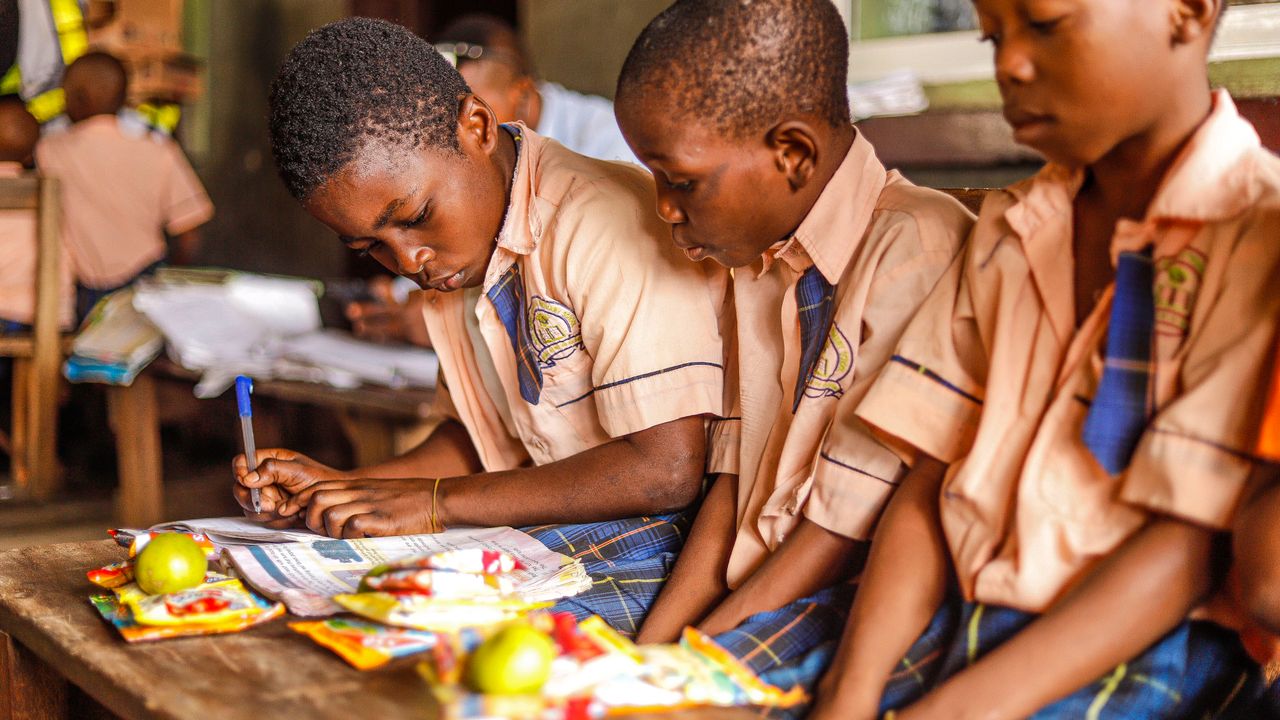
Cover photo: a Kenyan primary-school classroom. Source: Wikimedia Commons (CC BY-SA 4.0).
Grade 6 KPSEA Complete Revision Course
All 5 subjects with notes, questions and marking schemes, ready for the national assessment.
⏳ Only 49 days to the national assessments on 26 October. Start now.
KSH 300 · Get it now → 📱 M-Pesa, instant download · join parents preparing nowHave a CBC question this article didn't answer?
Ask Somo, Kenya's first AI tutor. CBC-grounded, Kenyan examples, instant feedback. Five free questions a day with no signup, or start a 7-day free trial for 30 questions a day.
Try Somo Free →