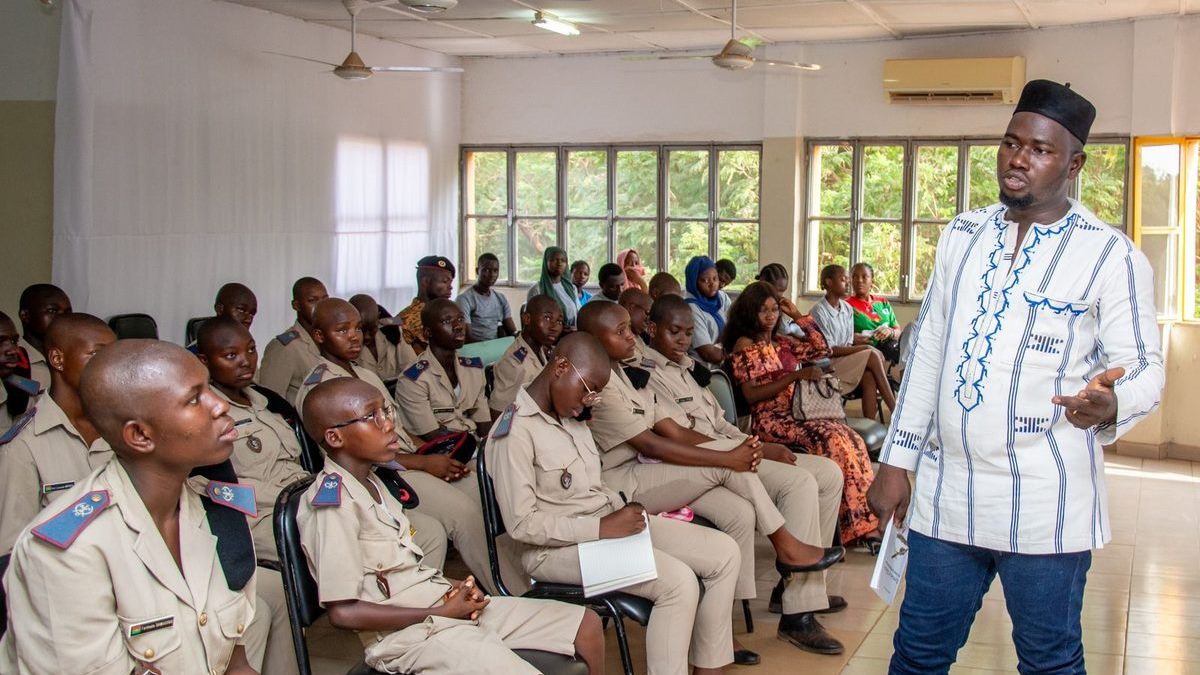
Who this is for
- Parents and guardians of Grade 6 (KPSEA) and Grade 9 (KJSEA) candidates who want to know what actually happens at school on rehearsal day, Friday 23 October 2026.
- It explains, from KNEC's own guidance to centre managers, supervisors and invigilators, what the school checks, what your child is told, and what you should do before and after the day.
- Teachers have their own rehearsal planning guide. This one is for home.
Rehearsal day sounds like a formality, but for a Grade 6 or Grade 9 candidate it is the most useful day of the whole final week. On Friday 23 October 2026 your child walks into the room where they will sit KPSEA or KJSEA, finds a desk with their name and assessment number on it, meets the supervisor and invigilators, and hears the rules in the words that will be used on Monday. Any mistake in their registration details is far easier to fix on Friday than at 8.15 a.m. on exam morning. This guide explains what happens on KPSEA and KJSEA rehearsal day, what KNEC tells schools to check, and the short list of things parents should do so that Monday 26 October holds no surprises.
The date comes from KNEC. The 2026 KPSEA timetable lists Friday 23.10.2026 as "Rehearsal Day", and the 2026 KJSEA timetable lists the same Friday as "Rehearsal". What happens on the day is set out in KNEC's User Guide for the Management and Administration of KPSEA and KJSEA (1st edition, 2025), which describes the roles of the head teacher, the supervisor, the invigilators, the candidates and the parents. We quote it throughout. For the full calendar, see our KJSEA and KPSEA 2026 official calendar.
Information current as of Term 3, October 2026. If your school gives a different reporting time for Friday, follow the school.
Key takeaways
- Rehearsal day for both KPSEA and KJSEA 2026 is Friday 23 October. KNEC's User Guide lists attending rehearsal as one of the things candidates are expected to do.
- Supervisors and invigilators report to the centre by 8.00 a.m. on rehearsal day. They check rooms, label desks with each learner's name and assessment number, and brief candidates on conduct and on how to shade the answer sheet.
- The supervisor uses the attendance register to confirm learners' details. A learner who is not on the register is not allowed to sit without the express authority of KNEC's chief executive, so rehearsal day is when errors must surface.
- Schools with fewer than 30 candidates are hosted by a bigger school in the same zone. If your child is hosted, rehearsal is when they are handed over to the host school's supervisor and learn the new room.
- Your job: get your child there on time, then debrief in the evening with five specific questions (listed below).
What KPSEA and KJSEA rehearsal day is for
Rehearsal day exists so that the first paper on Monday is not the first time anything happens. KNEC's User Guide gives every person in the assessment centre a task for the day, and when you put those tasks together they cover four things: getting the rooms ready, confirming who is sitting, teaching candidates the rules, and settling learners with special needs.
The scale behind this is large. When the 2025 assessments began, the Daily Nation reported on 27 October 2025 that rehearsals had been held on Friday 24 October, and that 1,298,089 Grade 6 learners sat KPSEA and 1,130,669 Grade 9 learners sat KJSEA. The same report listed the people deployed to run the assessments.
| Role (2025 assessments) | Number deployed |
|---|---|
| Invigilators | 125,492 |
| Supervisors | 26,479 |
| Centre managers | 24,213 |
| Security officers | 22,247 |
| Drivers | 2,692 |
Source: Daily Nation, 27 October 2025. Figures for 2026 had not been published at the time of writing.
What happens on KPSEA and KJSEA rehearsal day, step by step
The User Guide sets out the duties of each person for rehearsal day. Here is what that looks like from your child's side of the desk.
1. The rooms are prepared
The head teacher, acting as centre manager, makes sure the assessment rooms are free of "stimulus materials", with no writing on the walls or desks. That means classroom charts, posters and maps come down. Desks are arranged, in the User Guide's words, "1.22 metres apart", and the supervisor checks that rooms hold a maximum of 20 learners. Learners must not sit opposite each other on the same table or desk. A wall clock is placed where every learner can see it. If your child comes home saying their classroom looks bare and strange, that is why, and it is a good thing they saw it on Friday rather than Monday.
2. Each desk gets a name and assessment number
The supervisor ensures "each learner has a desk with a label pasted on it showing the name and assessment number". Your child will be shown which desk is theirs. This is the moment to check the label is right: the spelling of the name and the assessment number. The assessment number is the one issued when your child was registered (for primary learners it is first generated at Grade 3, according to the User Guide, and it follows them through basic education).
3. The attendance register is checked
The supervisor uses the attendance register to confirm that learners' details are accurate and that only genuine registered learners are presented by the head teacher. The User Guide is blunt about what happens if a learner is missing: anyone "NOT on the attendance register will NOT be allowed to sit for the assessment except with the express authority of the Chief Executive Officer" of KNEC, and the supervisor must contact the Sub County Director of Education or KNEC immediately to seek clearance. In practice that means a missing name has to be raised and sorted on Friday. It cannot wait for Monday morning.
4. Candidates are briefed on the rules
The supervisor and invigilators brief learners "on how to conduct themselves during the assessment period", including "how to shade and handle the OMR answer sheets". For KJSEA, invigilators also brief learners "on how to handle answer scripts for the KJSEA structured questions". The rules your child will hear come from the KNEC timetables:
- Be available for searching outside the room and seated 15 minutes before each paper. Morning sessions start at 8.30 a.m.
- A candidate more than half an hour late gets a paper only in exceptional circumstances.
- KPSEA: write and shade name and assessment number on the answer sheet in pencil, never a fountain pen or biro.
- KJSEA: write answers in black or blue ink (fountain pen or ballpoint, not erasable pens); use pencil only for diagrams and shading the multiple-choice answer sheet.
- No phones or electronic communication devices. A candidate found with one will have results cancelled.
- No books, notes or papers in the room except those authorised by KNEC. No communication with other candidates.
- Nobody leaves before the end of the paper without the supervisor's permission, and no paper, used or unused, leaves the room.
The User Guide adds a detail parents rarely hear: during the papers, learners who visit the washroom "must be escorted and searched before re-entering the assessment room". Tell your child this in advance so it does not alarm them.
5. Learners with special needs are settled
The User Guide says learners with special needs and disabilities "who may not be able to shade the OMR answer sheets" will be guided on how to mark or cross their answers on the assessment tools. Learners using braille machines sit in a room of their own with an invigilator; learners with low vision or hearing impairment sit with other learners. If your child has special needs, rehearsal day is when they should see exactly where they will sit and how they will answer. We cover the full KNEC provisions in a separate guide published on 21 October.
6. Hosted learners meet their host school
According to the User Guide, schools with fewer than 30 candidates are hosted by a school with 30 or more in the same zone, served from the same distribution point; special schools are exempt. On rehearsal day the host head teacher receives learners from the smaller school and hands them over to the supervisor. If your child's school is small, ask now whether they are being hosted, and where. A child who has never been to the host school should walk or ride the route on Friday, with you if possible, so that Monday's journey is familiar.
| On rehearsal day the school... | ...so you should |
|---|---|
| Labels each desk with name and assessment number | Ask your child whether the name was spelt correctly. If not, call the head teacher that afternoon. |
| Checks the attendance register | If your child says they were not called or not on the list, contact the head teacher the same day. |
| Briefs candidates on rules and shading | Ask your child to explain the rules back to you. Practise shading on scrap paper if they are unsure. |
| Prepares bare rooms with spaced desks | Ask which room and where in the room. Talk through walking in and sitting down. |
| Hands hosted learners to the host school | Confirm the venue and travel the route. Agree a drop-off and pick-up point. |
| Settles learners with special needs | Ask whether the room, seat, devices and way of answering match what was agreed. |
Before Friday: three things to do at home
Check the reporting time. KNEC's User Guide says supervisors and invigilators report to the assessment centre by 8.00 a.m. on rehearsal day. Your school will tell candidates what time they should arrive. Get your child there at that time, in full uniform, as though it were an exam day. This doubles as a dress rehearsal for the Monday journey.
Find the registration slip. The User Guide asks head teachers to issue a registration slip and explain the importance of the assessment number to learners and parents. If you have the slip, photograph it on your phone and have your child learn the number by heart, or at least recognise it on sight. They need to match it on the desk label and on the personalised answer sheets.
Pack the exam kit for Friday. Bring the same pencils, rubber, sharpener, pens and mathematical instruments your child will use on Monday, in a clear bag. Seeing that the kit works in the real room is reassuring. Our exam-week guide to what to carry and what is not allowed has the full list.
After Friday: the five-question debrief
When your child comes home on Friday, give them a snack and some time, then ask these five questions. They are designed to surface problems while there is still time to fix them, and to turn the unknown into the familiar.
- Where is your room, and where is your desk in it? Have them describe it: near the window, second row, by the door.
- Was your name spelt correctly, and was your assessment number right? If anything was wrong, phone the head teacher that afternoon.
- What did they tell you about the answer sheet? A Grade 6 child should be able to tell you that they shade in pencil. A Grade 9 child should know that answers go in black or blue ink and shading in pencil.
- What time do you need to be there on Monday? Agree the leaving time from home.
- Did anything worry you? Listen. Most worries are small and practical (the clock is behind me; the invigilator was strict) and can be talked through.
Write the answers down. If two candidates live in your house, do this separately for each. On Sunday evening, read them back to your child as part of a calm last check. Our last 72 hours checklist covers the rest of the weekend.
A case study: a hosted Grade 6 learner in Kakamega
Take Achieng, a Grade 6 learner at a small private school in Kakamega with 18 candidates. Because her school has fewer than 30 candidates, KNEC's rules mean her class is hosted by a larger public primary school in the same zone. Her mother learns this at a parents' meeting and asks the head teacher three questions: which school, what time on Friday, and who escorts the learners.
On rehearsal day Achieng's head teacher walks the class to the host school, where the host head teacher receives them and hands them to the supervisor. Achieng finds her desk; the label reads "Achieng" but the second name is misspelt. Because her mother asked her to check, she tells her teacher before leaving. Her mother phones the head teacher that afternoon, and the head teacher raises it through the proper channel so that the details can be checked before Monday. On Saturday the family walks the route to the host school so Achieng knows it. On Monday she arrives at 7.45 a.m., finds her room without help and sits down calmly. A small, early question on Friday saved a frightening scramble on exam morning.
Common mistakes parents make about rehearsal day
- Keeping the child at home because "it is only rehearsal". KNEC's User Guide lists attending rehearsal as an expectation of every candidate, and it is the only chance to see the room and check details.
- Sending the child without the exam kit. Friday is the time to test the pencils and instruments in the real room.
- Not asking about desk labels. Errors in name or assessment number are much easier to raise on Friday than on Monday.
- Assuming the child sits at their own school. Small schools are hosted. Confirm the venue.
- Turning Friday evening into a revision marathon. The term has just closed and your child has had a long, new day. Debrief, eat, rest.
- Sending a phone "just for the journey". KNEC prohibits phones in assessment centres and cancels the results of candidates found with one. Do not let a phone go to school on Friday either; build the habit now.
Related resources after rehearsal day
If your Grade 6 child is unsure about shading after the briefing, our guide to the KPSEA answer sheet and shading technique walks through it, and the KPSEA timetable paper by paper explains each morning. For Grade 9, the KJSEA 2026 timetable, paper by paper sets out what to look over the night before each day.
For short practice that fits the weekend, the free KPSEA mini-mock and KJSEA mini-mock are a good size. Families with the KPSEA complete bundle or KJSEA complete bundle can use one section of a marked paper on Saturday morning. For a quick answer to a last question, try Somo, our AI tutor.
Further reading
Frequently asked questions
When is KPSEA and KJSEA rehearsal day in 2026?
Friday 23 October 2026, according to the KNEC 2026 KPSEA and KJSEA timetables. The first papers follow on Monday 26 October.
Is rehearsal day compulsory?
KNEC's User Guide lists attending rehearsal among the things candidates are expected to do. It is also the day details are checked against the attendance register, so a candidate who misses it risks a problem being discovered only on Monday.
Do candidates sit any paper on rehearsal day?
No paper is scheduled. The timetables list Friday 23 October simply as rehearsal. Candidates see their rooms and desks and are briefed on the rules and on handling answer sheets.
What time should my child arrive on rehearsal day?
Follow the school's instruction. KNEC's User Guide requires supervisors and invigilators to report by 8.00 a.m. on rehearsal day, so candidates are usually asked to come early in the morning in full uniform.
What if my child's name or assessment number is wrong on the desk label?
Tell the head teacher the same day. The supervisor uses the attendance register to confirm details on rehearsal day and must contact the Sub County Director of Education or KNEC if there is a problem. Raising it on Friday gives the school time to act.
My child's school is small. Where will they sit?
KNEC's User Guide says schools with fewer than 30 candidates are hosted by a school with 30 or more in the same zone (special schools are exempt). Ask your head teacher which school is hosting, and travel the route before Monday.
Will they be searched?
Yes. The KNEC timetables tell candidates to be available for searching outside the room before each paper, and the User Guide says learners who go to the washroom are escorted and searched before they return. Female learners are searched by a woman and male learners by a man.
Does school close on rehearsal day?
The Ministry of Education's Term 3 calendar closes basic education institutions on Friday 23 October 2026. Candidates return to their centres on Monday for the assessments.
Conclusion: Friday makes Monday familiar
KPSEA and KJSEA rehearsal day on Friday 23 October 2026 is when your child sees the bare room, the spaced desks and the label with their name and assessment number, hears the rules on shading, ink, phones and timing, and meets the people who will supervise them. For parents, it is a chance to catch problems early. Get your child there on time with the real exam kit, ask the five debrief questions that evening, and act the same afternoon if anything is wrong. Then let the weekend be quiet. Monday will be the second time your child walks into that room, not the first.
Need marked practice for the weekend? The KPSEA complete bundle and the KJSEA complete bundle include answer booklets. Join our WhatsApp community for exam-week reminders: +254 711 344 702.
Grade 9 KJSEA Complete Revision Course
All 9 learning areas in one download: notes, worked examples, topical questions and full marking schemes. Rebuilt for the 26 to 30 October assessment.
⏳ Only 6 days to the national assessments on 26 October. Start now.
KSH 400 · Get it now → 📱 M-Pesa, sent to your email after payment · join parents preparing nowHave a CBC question this article didn't answer?
Ask Somo, Kenya's first AI tutor. CBC-grounded, Kenyan examples, instant feedback. Five free questions a day with no signup, or start a 7-day free trial for 30 questions a day.
Try Somo Free →