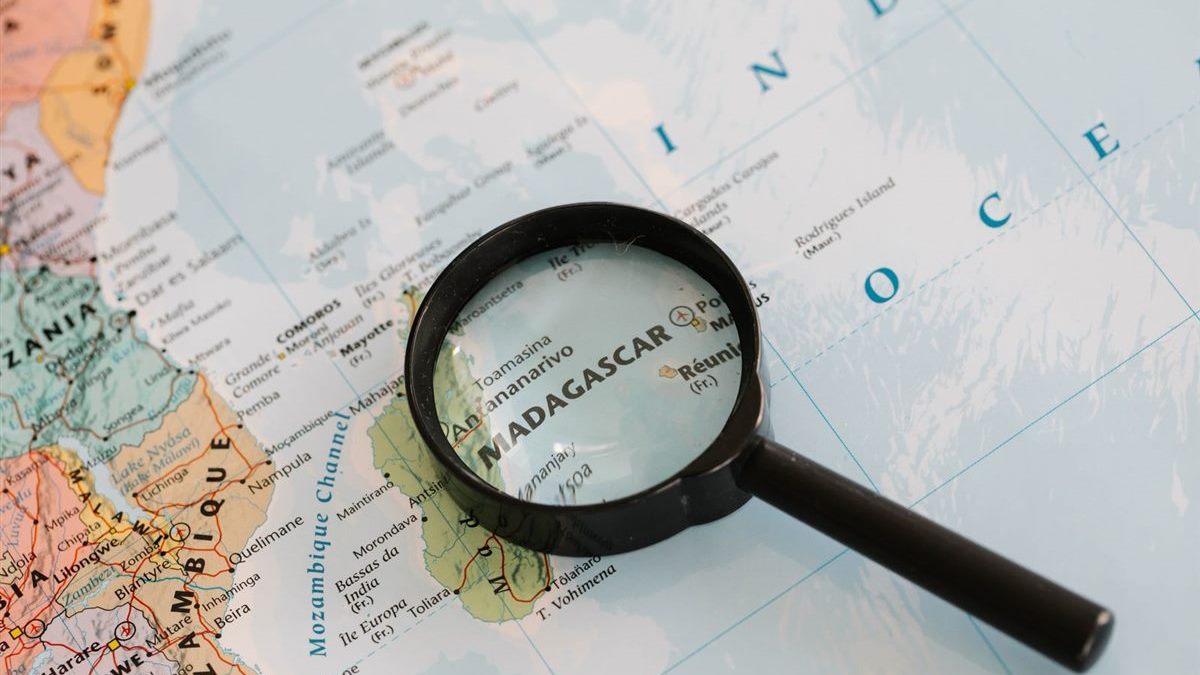
Candidates revise Social Studies as if it were a memory subject, then meet a paper that hands them a map extract and a quoted source and asks them to think. The content matters, governance, history, people and environment, but the grade usually turns on two drilled skills: map work and source interrogation. Both improve faster than memory does.
KJSEA runs from 26 to 30 October 2026, so the time left is measured in weeks, not months. That is exactly why skills deserve the attention: a Grade 9 learner can noticeably sharpen map reading and source answers in a handful of focused sessions, while trying to re-learn every strand from Grade 7 in the same time rarely sticks. This guide covers the question styles, a fixed routine for maps, the discipline sources demand, practice items to try at home, and a weekly loop to run until the paper.
The recurring question styles
| Question style | What it looks like | The drilled habit that earns it |
|---|---|---|
| Map reading | Direction, distance, grid position, symbols from an extract | Read the key first, always; state units in answers |
| Source interpretation | A quotation, photograph or table, then "what does this suggest" | Answer only what the source supports, then add knowledge when asked |
| Content recall | Name, state, list questions on taught strands | Numbered lists recited to the count asked |
| Explanation | "Explain how" governance, trade or environment works | Point plus mechanism plus example, one sentence each |
| Values application | A scenario asking what a good citizen should do | Connect the action to a named value or right |
The map-reading routine
Marks leak on maps through skipped preliminaries. Train one fixed routine: key first, then scale, then orientation. Direction questions want compass bearings stated properly; distance questions want the scale applied with working shown and units given; symbol questions want the key's exact word, not a guess. A candidate who spends the first thirty seconds reading the key and scale answers the whole cluster faster than one who dives at question one.
Practice: distance from scale
This is a practice item written for this guide, not a KNEC question. A map has a scale of 1:50,000. Two schools are 4 cm apart on the map. How far apart are they on the ground?
- 1 cm on the map represents 50,000 cm on the ground.
- 4 cm represents 4 × 50,000 = 200,000 cm.
- 200,000 cm ÷ 100 = 2,000 m, which is 2 km.
The answer "2" on its own is incomplete. "2 km" with the working above it is the full answer. Teach your child to write the conversion lines every time, because a slip in the last step still leaves the method visible.
Practice: direction and symbols
Ask your child to pick two features on any map in their textbook and state the direction of one from the other using the eight compass points. Then ask them to name three symbols using the exact words in the key. If they say "a church" where the key says "place of worship", correct it gently: the key's wording is the answer the marker is looking for.
Sources: the discipline of "suggests"
Source questions mark the difference between what a source shows, what it suggests, and what the candidate knows. When asked what a photograph shows, describe only what is visible. When asked what it suggests, make the inference the source supports. Only when asked to use your own knowledge may the textbook enter. Candidates who pour memorised content into a "what does the source show" question earn nothing for any of it, which is the paper's most quietly expensive mistake.
| Question wording | What to write | Example (practice photograph of a crowded market) |
|---|---|---|
| What does the source show? | Only what is visible | Many people buying and selling fruit and vegetables at open stalls |
| What does the source suggest? | A reasonable inference from what is visible | The market is an important place for local trade |
| Use your own knowledge | Taught content linked to the source | Ways markets support the local economy, as covered in class |
A quick home drill: cut a photograph from a newspaper, and ask the three questions above in order. The point is to feel the difference between the three kinds of answer until it becomes automatic.
Explanations and values: structure beats length
"Explain" questions reward a short chain rather than a long paragraph. Point, then how it works, then an example, one sentence each. For example: "Paying taxes supports public services. The government uses tax revenue to fund schools, hospitals and roads. This is why a new road can be built in a county without each family paying for it directly."
Values questions describe a situation and ask what a responsible citizen should do. The marks come from linking the action to a named value or right. Kenya's national values include, among others, patriotism, integrity, human dignity and the rule of law. An answer that says "report the damage to the area chief, because protecting public property shows patriotism and respect for the rule of law" is stronger than "tell someone".
The same evidence-first discipline runs through the sister papers: our Integrated Science guide covers observation against conclusion, and the Mathematics question types guide covers working shown. Where this paper sits among the nine is in which subjects KJSEA examines.
The revision loop
One map extract and one source set per week, timed, marked against the scheme, from now to assessment week. The extracts, papers and schemes are in the Grade 9 Social Studies Complete Pack, or with every subject in the Grade 9 All Subjects Bundle, and the week-by-week run-in is the free KJSEA countdown plan.
| Session | Activity | Time |
|---|---|---|
| Session 1 | One map extract, timed, key and scale first | About 30 minutes plus marking |
| Session 2 | One source set, labelling each answer show, suggest or knowledge | About 30 minutes plus marking |
| Session 3 | Content recall on one strand, numbered lists said aloud | 20 minutes |
| Session 4 | Redo every question lost this week | 20 to 30 minutes |
For extra questions with worked answers, our KJSEA Social Studies sample questions are free, and the KJSEA Social Studies predictive papers give full timed practice. To fit Social Studies around the other eight learning areas, the three-week KJSEA revision timetable lays out the run-in day by day.
Frequently asked questions
Should my child still memorise content?
Yes, for recall and explanation questions. But in the final weeks, give map work and sources a fixed slot each week as well. Those are the questions where practice turns into marks fastest.
My child is weak at maps. Where do we start?
Start with the key and the scale only. Do several short distance calculations with working and units until they are routine, then move to directions and grid positions.
How do I help with source questions if I am not a teacher?
You do not need subject knowledge. Ask your child, after each answer, "Can you see that in the source, or do you know it from class?" That one question builds the habit the paper rewards.
How many answers should my child give when a question asks for three?
Three, clearly numbered. Extra points rarely add marks and use up time that other questions need.
Grade 9 KJSEA Complete Revision Course
All 9 learning areas in one download: notes, worked examples, topical questions and full marking schemes. Rebuilt for the 26 to 30 October assessment.
⏳ Only 10 days to the national assessments on 26 October. Start now.
KSH 400 · Get it now → 📱 M-Pesa, sent to your email after payment · join parents preparing nowHave a CBC question this article didn't answer?
Ask Somo, Kenya's first AI tutor. CBC-grounded, Kenyan examples, instant feedback. Five free questions a day with no signup, or start a 7-day free trial for 30 questions a day.
Try Somo Free →