
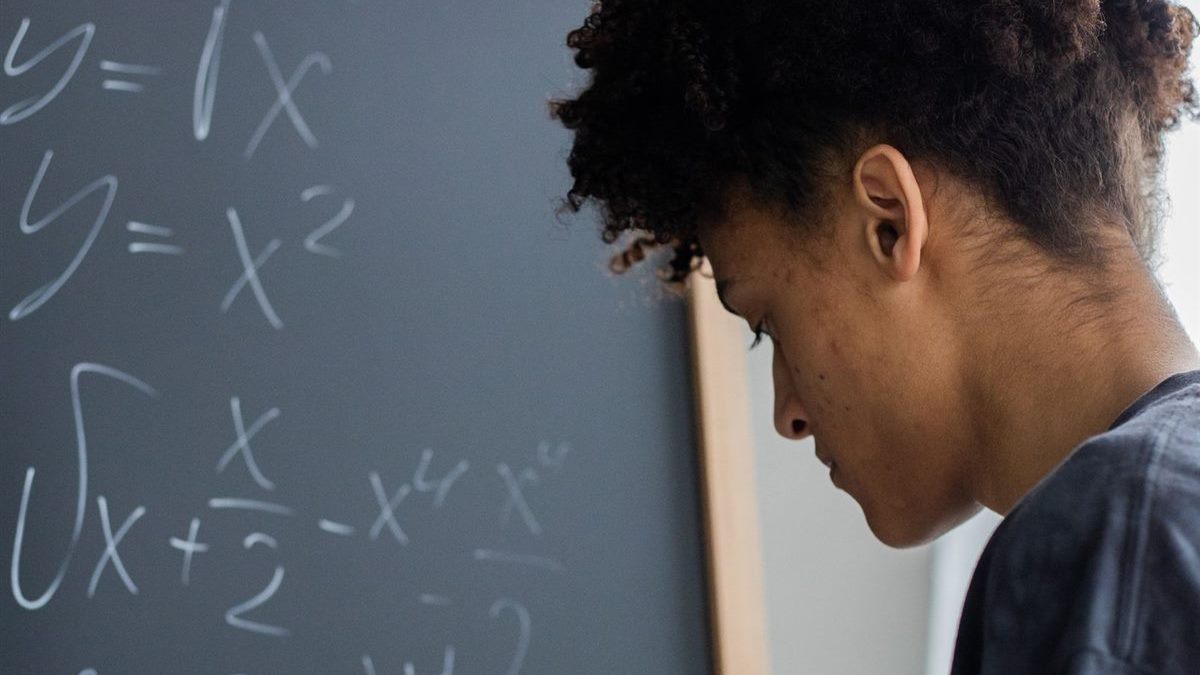
Mathematics frightens more KJSEA candidates than any other paper, yet it is the most predictable paper on the timetable. The strands are fixed, the question families repeat, and the marking rewards a habit any candidate can build in eight weeks: show the working, every time. A wrong answer with correct method earns most of the marks; a right answer alone, where working was required, can earn almost none.
KJSEA runs from Monday 26 to Friday 30 October 2026, with the rehearsal day on Friday 23 October. Eight weeks of preparation has now become under three, so this guide is written for the time that is actually left. The good news is that a predictable paper rewards focused practice, and three weeks of focused practice is worth more than three months of reading notes.
The question families and what they pay
| Question family | Strand it tests | The habit that earns the marks |
|---|---|---|
| Whole numbers and operations | Numbers | Careful place value; estimate first so a slip is visible |
| Fractions, decimals, percentages | Numbers | Convert to one form before comparing or adding |
| Ratio, proportion and rates | Numbers | Write the ratio in words first: what is to what |
| Algebraic expressions and equations | Algebra | One operation per line, balance both sides visibly |
| Linear graphs and gradients | Algebra | Label axes and scale before plotting anything |
| Perimeter, area, volume | Measurements | State the formula before substituting numbers |
| Money, interest and commercial arithmetic | Measurements | Work in one currency step at a time, label every figure |
| Angles, constructions and geometry | Geometry | Carry a sharp pencil; construction marks are visual |
| Data tables, graphs and probability | Data handling | Read the question twice: mean, mode and median are cousins, not twins |
Two families deserve extra respect. Commercial arithmetic, the money questions, carries everyday contexts, matatu fares, market prices, M-Pesa charges, and candidates lose marks by dropping units or mixing shillings and cents. Data handling is the family where a fast reader loses to a careful one: half its lost marks come from answering the mean when the question asked the median.
One practice example from each family
These are practice items written for this guide in the style of the families above. They are not official KNEC questions. The point is to show what the habit looks like on paper.
Fractions, decimals, percentages
Practice: Which is largest: 3/5, 0.58 or 62%? Convert all three to decimals first: 0.6, 0.58 and 0.62. The largest is 62%. A candidate who compares the raw numbers (3, 0.58, 62) gets the right answer here by luck and the wrong one on the next question.
Ratio and proportion
Practice: Share KSh 1,200 between Amina and Baraka in the ratio 3 to 5. Total parts: 8. One part: 1,200 ÷ 8 = 150. Amina gets 3 × 150 = KSh 450 and Baraka gets 5 × 150 = KSh 750. Check: 450 + 750 = 1,200. That last line is the habit that catches errors.
Equations
Practice: Solve 3x + 7 = 25. Line one: 3x = 25 − 7. Line two: 3x = 18. Line three: x = 6. Three short lines, each one a single step, each one earning method credit.
Linear graphs
Practice: Find the gradient of the line through (1, 3) and (4, 12). Change in y over change in x: (12 − 3) ÷ (4 − 1) = 9 ÷ 3 = 3. Write the formula line before the numbers.
Volume
Practice: A tank is a cuboid 12 cm by 5 cm by 4 cm. Find its volume. Formula first: V = l × w × h. Then 12 × 5 × 4 = 240 cubic centimetres, with the unit written.
Commercial arithmetic
Practice: Find the simple interest on KSh 20,000 at 8% per year for 3 years. Interest = P × R × T ÷ 100 = 20,000 × 8 × 3 ÷ 100 = KSh 4,800. If the question asks for the total amount, it is KSh 24,800. Many candidates answer the interest when the question asked for the amount, which is the money version of the mean and median trap.
Data handling
Practice: For the marks 4, 7, 7, 9, 13, find the mean, the median and the mode. Mean: 40 ÷ 5 = 8. Median: the middle value, 7. Mode: the most common value, 7. All three answers are on the page, and only one of them is what a given question wants. Underline the word before calculating.
Angles
Practice: Two angles lie on a straight line and one is 65 degrees. The other is 180 − 65 = 115 degrees. Write the reason in words: angles on a straight line add up to 180.
The family drill
Take one family per revision session, not one strand per week. Do five questions of the same type in a row, marking each against the scheme before the next: the repetition teaches the pattern, and the immediate marking teaches the presentation. The revision papers and marking schemes in the Grade 9 Mathematics Complete Pack are built for exactly this loop, and the whole-grade version sits in the Grade 9 All Subjects Bundle.
With the time now left, this is how the drill fits into the remaining days:
| Stage | What to do | Why |
|---|---|---|
| This week | One full timed Mathematics paper, marked strictly with the scheme | Shows which families are losing marks |
| Next 10 days | The three weakest families, five questions each per session, rotating | Fixes the biggest leaks first |
| Saturday 17 October | A second full timed paper | Measures whether the drill is working |
| Week of 19 October | Short mixed sets across all nine families | Keeps everything warm without new material |
| Weekend before KJSEA | Review your own corrected mistakes only | Confidence comes from seeing errors already fixed |
Candidates who fear the paper should start with the errors that repeat nationally: our KPSEA common errors guide shows the same habits forming at Grade 6, and what KJSEA tests from Grade 8 explains how school-based scores already in the bank change the pressure on this one paper. The full week-by-week plan is on our free KJSEA countdown page.
For papers to sit under timed conditions, the KJSEA Mathematics predictive papers follow the families above, and our free KJSEA Mathematics sample paper with answers is a good first diagnostic. If time is tight across all subjects, the what to revise and what to skip guide helps decide where Mathematics fits in the week.
How parents can help without doing the maths
- Protect the timed paper. Phone away, door closed, clock visible. Timing is a skill, and it is only practised when the conditions are real.
- Ask to see the working. You do not need to check the mathematics. You only need to check that each answer has lines above it.
- Check the corrections happen. A marked paper with no corrections is half a revision session. The learning is in redoing the wrong questions from a blank page.
- Keep the evening calm. A worried candidate rushes, and rushing is exactly what this paper punishes.
On the day
Attempt every question: blank earns nothing, method earns something. Rule the working column, write the formula line first, and keep the last ten minutes for the two questions you skipped. The paper rewards the steady candidate, and steadiness is built in the weeks before it, not on the morning itself. Our guide to what to carry in exam week covers the geometry set, pencils and what stays at home.
Frequently asked questions
Is it worth showing working if I am sure of the answer?
Yes. Where working is asked for, an answer on its own can earn very little even when it is correct. Working also lets you spot your own slips when you check.
Which family should a weak candidate start with?
Fractions, decimals and percentages, because they appear inside other families too. Money, ratio and data questions all lean on them, so fixing them lifts several parts of the paper at once.
How many full papers should my child sit before 26 October?
Two or three, properly timed and properly marked, is enough. The drill sessions in between are where most of the improvement happens.
What if my child panics on a hard question?
Teach the skip rule in practice: mark the question, move on, come back in the last ten minutes. A candidate who has done that in three mock papers will do it on the day.
Grade 9 KJSEA Complete Revision Course
All 9 learning areas in one download: notes, worked examples, topical questions and full marking schemes. Rebuilt for the 26 to 30 October assessment.
⏳ Only 14 days to the national assessments on 26 October. Start now.
KSH 400 · Get it now → 📱 M-Pesa, sent to your email after payment · join parents preparing nowHave a CBC question this article didn't answer?
Ask Somo, Kenya's first AI tutor. CBC-grounded, Kenyan examples, instant feedback. Five free questions a day with no signup, or start a 7-day free trial for 30 questions a day.
Try Somo Free →