
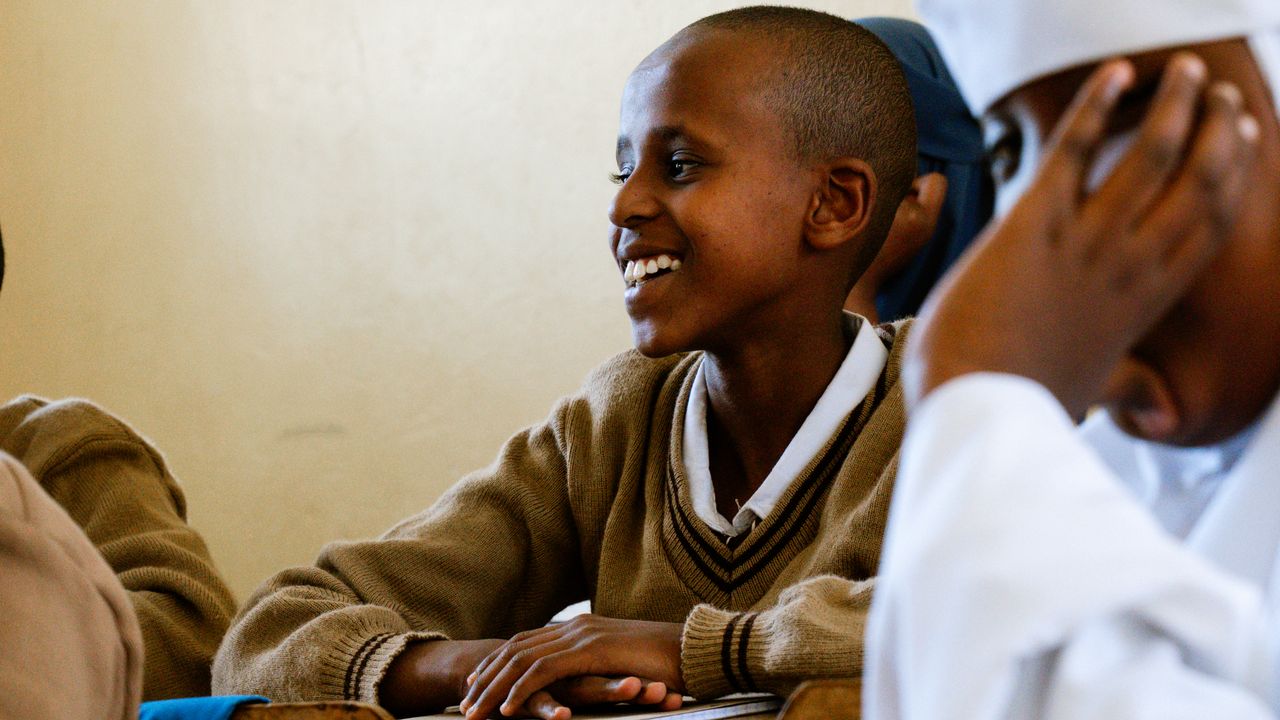
The move from Grade 6 to Grade 7 is the biggest structural change in a CBC learner's school life so far. It is not a small step up, it is a move from Upper Primary into Junior Secondary, often to a new school entirely, with a new timetable, new subjects, and for many families, KPSEA results deciding exactly where that new school will be. This guide walks through what actually changes, how KPSEA feeds into placement, what to expect in the first term, and how to prepare your child so the transition feels like a step forward rather than a shock.
What actually changes between Grade 6 and Grade 7
Grade 7 is the first year of Junior Secondary School, and the shift is real, not cosmetic. Upper Primary groups learning broadly under Science and Technology, Social Studies and a handful of core subjects. Junior Secondary breaks that structure apart into nine distinct compulsory learning areas: English, Kiswahili (or Kenyan Sign Language), Mathematics, Integrated Science, Social Studies, Religious Education, Pre-Technical Studies, Agriculture and Nutrition, and Creative Arts and Sports. Each is now taught with more depth and, often, by a different subject teacher rather than one class teacher covering most of the day.
The physical environment usually changes too. Many learners move to a different school for Junior Secondary, sometimes a dedicated JSS campus, sometimes a secondary school that has absorbed Grades 7 to 9. That means a new building, new teachers, new classmates from other primary schools, and often a longer or different commute. Assessment shifts as well: Grade 7 continues the Strand-Based Assessment approach your child has already met, but the pace and expectations step up, building toward the KJSEA assessment at the end of Grade 9.
How KPSEA decides where your child goes
KPSEA, sat at the end of Grade 6, is the formal assessment that closes out Upper Primary. It does not test your child in isolation, it draws on the competencies built through Grade 4, 5 and 6, so a learner who has been assessed steadily arrives at KPSEA already familiar with how the system marks. The result feeds directly into placement: which Junior Secondary school your child is assigned to, based on their performance, their choices, and available capacity in schools near you.
This is exactly why the transition conversation should start before Grade 6 ends, not after. A learner who understands what KPSEA is for, not just that it is a test to pass, generally approaches Grade 7 with less anxiety, because the connection between the assessment and the next chapter is clear rather than mysterious. If you have not yet worked through the confirmed dates and format, our KJSEA and KPSEA 2026 dates and countdown lays out the full timeline, and our piece on how Grade 4 and 5 SBA quietly shapes the KPSEA result explains the groundwork that leads up to it.
Grade 6 versus Grade 7: what to expect side by side
| Feature | Grade 6 (Upper Primary) | Grade 7 (Junior Secondary) |
|---|---|---|
| Learning areas | Broader groupings, fewer distinct subjects | Nine compulsory learning areas, each distinct |
| Teaching structure | Often one main class teacher | Subject-specialist teachers per learning area |
| School environment | Familiar primary school setting | Often a new school, new classmates |
| Assessment focus | Builds toward KPSEA | Continues SBA, builds toward KJSEA in Grade 9 |
| Independence expected | Guided closely by one teacher | More self-organisation across subjects and teachers |
The adjustment curve: what a typical first term looks like
Most learners do not adjust instantly, and that is normal, not a warning sign. The chart below shows a realistic pattern of settling in over the first term, so you know what to expect and when to actually worry.
That dip in weeks two and three is worth naming out loud to your child before it happens. Knowing that a wobble is expected, and temporary, makes it far easier for a learner to push through it rather than reading it as proof they cannot cope with the new school.
How to prepare your child before the move
A handful of concrete steps in the run-up make a genuine difference. Talk through the practical logistics early: where the new school is, how your child will get there, what the daily schedule looks like, so the unfamiliar parts feel mapped out rather than open-ended. Visit the school if you are able to, even a short visit before term starts turns an abstract new place into a real one your child has already stood in.
Get ahead on the subjects that shift the most. Pre-Technical Studies and Integrated Science are genuinely new groupings for most learners, so a short head start, even just reading through what each subject actually covers, removes one layer of unfamiliarity on day one. Talk openly about having several teachers instead of one; explain that it is normal to like some subjects and teachers more than others, and that this is not a sign anything has gone wrong.
Finally, normalise asking for help in a new environment. A learner who is used to one familiar teacher noticing when they are stuck needs to actively ask a new subject teacher for help instead of waiting to be noticed, and that is a skill worth practising at home before term starts, not learning under pressure in week one.
Getting to know the nine learning areas
A short walk through what each area actually involves helps demystify the list before your child meets it in a timetable. English and Kiswahili (or Kenyan Sign Language) continue building language and communication, now with more demanding texts and written work. Mathematics steps up in abstraction and pace. Integrated Science merges what was previously covered more generally into a single, deeper subject spanning biology, chemistry and physics concepts. Social Studies broadens into citizenship, geography and history at a more analytical level.
Pre-Technical Studies is genuinely new territory for most families: it covers practical, hands-on skills and now includes what used to be taught as Business Studies, giving learners an early, practical introduction to enterprise alongside technical skills. Agriculture, now paired with Nutrition, covers both farming knowledge and food and health literacy. Creative Arts and Sports brings together visual arts, performing arts, music and physical education into one broad, expressive learning area. Religious Education continues along the track your child has already been following, CRE, IRE or HRE, chosen to match your family's faith background. Together these nine make up a genuinely rounded first year of secondary-level learning, not a narrower or harder repeat of Grade 6.
What Junior Secondary asks of parents that Upper Primary did not
Your role shifts too, even if it is less visible than your child's. You will likely be tracking progress across nine learning areas and several teachers instead of one, so a simple habit, a weekly five-minute check-in on how each subject is going, replaces the more constant contact many families had with a single Upper Primary teacher. Report cards and assessment records become more detailed and worth reading closely rather than skimming; our guide to starting Term 3 strong covers exactly what to look for and what questions to ask.
Budget for the shift too. New subjects sometimes mean new material requirements, and if your child has moved to a different school, transport and logistics costs can change. Planning for this before term starts avoids a scramble in the first week.
Why Grade 7 is where the pathway story quietly begins
It rarely feels this way in the first term, but Grade 7 is the opening chapter of a story that ends in a genuine choice: the Senior School pathway your child selects after Grade 9. CBC's Senior School design offers distinct pathways, broadly grouped around Sciences, Technical and Vocational studies, Arts and Sports, and Social Sciences, and the three years of Junior Secondary are where a learner's strengths and interests start to show themselves clearly enough to inform that choice.
This does not mean a Grade 7 learner needs to pick a direction now, they do not, and rushing that decision would be a mistake. What it does mean is that the way your child engages with each of the nine learning areas over these three years is not throwaway information. A learner who consistently lights up in Integrated Science, or who finds real satisfaction in Pre-Technical Studies, or who is quietly strongest in the Creative Arts, is showing you something worth noticing and gently nurturing, not something to correct toward a "safer" subject. Keep a loose mental note across Grade 7, 8 and 9 of where your child's energy naturally goes; by the time the pathway conversation becomes real in Grade 9, you will have three years of genuine evidence instead of a single rushed guess.
Common mistakes families make at this transition
- Treating Grade 7 as "more of the same, just harder." The structural change, new subjects, new teachers, often a new school, deserves its own conversation, not just louder encouragement to work hard.
- Panicking at the week two or three dip. As the settling-in pattern above shows, an early wobble is typical. Reacting with alarm can make a normal adjustment feel like a crisis to your child.
- Waiting until KPSEA results to think about Grade 7 at all. Talking through the transition in the months before Grade 6 ends gives your child time to absorb it, rather than facing everything new all at once in January.
- Assuming one struggling subject means the whole transition has failed. With nine distinct learning areas now assessed separately, it is common and expected for a learner to find one or two harder than the rest.
- Not asking the new school direct questions. Junior Secondary staff are used to transition questions from parents; asking about routines, expectations and how to reach subject teachers early smooths the whole term.
Frequently asked questions
Will my child stay with the same classmates in Grade 7?
Sometimes, but often not entirely, especially where placement draws from several Upper Primary schools into shared Junior Secondary campuses. Preparing your child for some new faces alongside familiar ones helps set realistic expectations.
Is Grade 7 harder than Grade 6, or just different?
Both. The content genuinely deepens, particularly in Mathematics, Integrated Science and the new Pre-Technical Studies area, and the structure asks for more independence. Most learners who struggled with Grade 6 pacing find the more focused subject teaching in Grade 7 actually helps, once the initial adjustment passes.
What if my child is placed in a Junior Secondary school we did not expect?
Placement follows KPSEA performance, stated choices and available capacity. If the outcome is unclear or you believe there has been an error, raise it directly with your county education office as soon as results and placement are released, rather than waiting.
How can I help with a subject I do not understand myself, like Pre-Technical Studies?
You do not need subject expertise to help. Ask your child to explain what they learned that day in their own words, since teaching a parent is one of the fastest ways to consolidate new material, and use structured revision materials that walk through the syllabus clearly for both of you.
How long does the settling-in period usually last?
Most learners find their footing within the first four to six weeks, broadly matching the pattern in the chart above. If real difficulty continues well beyond mid-term, it is worth a direct conversation with the class or subject teacher rather than assuming it will resolve on its own.
Should I already be thinking about Senior School pathways in Grade 7?
Not in the sense of deciding anything. But it is worth quietly noticing which learning areas genuinely engage your child, since that observation, built up honestly over Grade 7 to 9, becomes valuable information when the real pathway choice arrives after Grade 9. There is no need to steer or push in Grade 7 itself.
The bottom line
The move into Grade 7 is a genuine structural shift, not just a harder version of Grade 6, and treating it that way is exactly what makes it manageable. Prepare your child for the practical changes, expect a normal early wobble rather than panicking at it, and stay engaged across nine learning areas instead of one. Handled this way, Junior Secondary becomes what it is meant to be: the real start of your child's path toward the pathway choices ahead in Grade 10, not a rocky detour.
Grade 6 KPSEA Complete Revision Course
All 5 subjects with notes, questions and marking schemes, ready for the national assessment.
⏳ Only 42 days to the national assessments on 26 October. Start now.
KSH 300 · Get it now → 📱 M-Pesa, instant download · join parents preparing nowHave a CBC question this article didn't answer?
Ask Somo, Kenya's first AI tutor. CBC-grounded, Kenyan examples, instant feedback. Five free questions a day with no signup, or start a 7-day free trial for 30 questions a day.
Try Somo Free →