
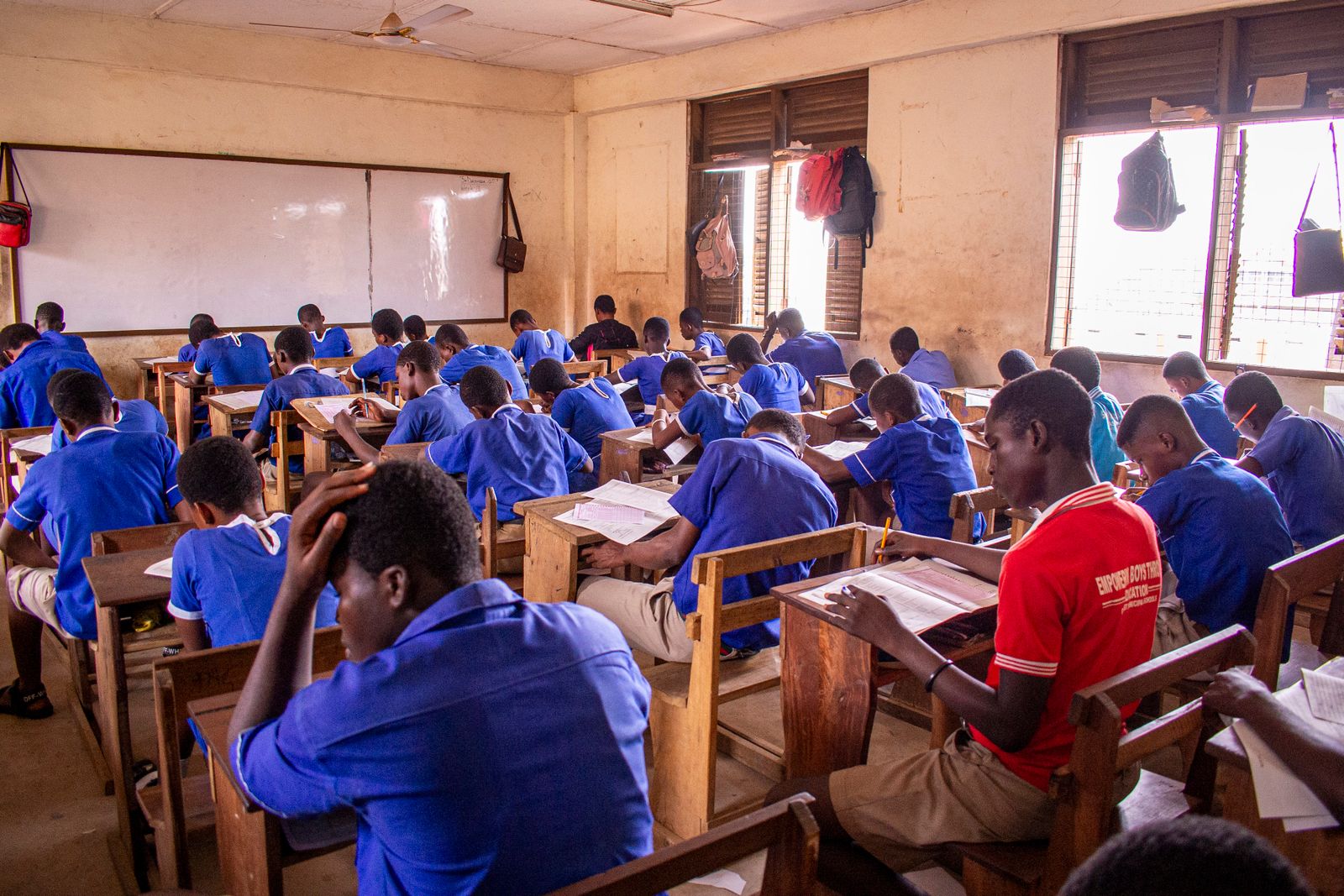
Information current as of Term 2, 2026. KJSEA written assessments run 26 October to 20 November 2026.
If your child sits the Kenya Junior School Education Assessment (KJSEA) this October, you have roughly 15 weeks of preparation time left. The challenge most Grade 9 parents tell us about is not effort, it is scatter: notes from three different years, past papers from WhatsApp groups with no marking schemes, and no way to know whether any of it matches the rationalised nine learning areas KICD now examines. This guide lists, item by item, everything inside the KJSEA revision materials bundle we built to solve exactly that problem: one 144-page download covering all 9 examinable subjects, each with revision notes, topical questions with full marking schemes, and format-accurate mock papers. You will see precisely what is in every subject section, how the three-part structure works, what it costs compared to buying subjects individually, and a practical week-by-week way to use it between now and the examination window. By the end you will know exactly what you are getting before you spend a shilling.
- The bundle covers all 9 compulsory KJSEA learning areas in one 144-page PDF: KSH 400, against KSH 1,350 if bought subject by subject (a 70% saving).
- Every subject has three parts: revision notes with worked examples, topical questions with full marking schemes, and a format-accurate mock paper with its marking scheme.
- Content covers the full Grade 7, 8 and 9 cycle, because KJSEA examines the whole Junior School syllabus, not just Grade 9 work.
- The KJSEA summative examination carries 60% of your child's final score under KNEC's model, the single biggest lever left to influence before Senior School placement.
- Kiswahili materials are written fully in Kiswahili, matching how the paper is set.
Why KJSEA Revision Materials Matter More in 2026
The KJSEA is Kenya's national assessment at the end of Junior School, and 2026 is only its second sitting. That newness matters: there is no 20-year archive of past papers the way KCPE candidates once had, so structured, syllabus-matched practice material is scarce. It is also high-stakes. Under the Kenya National Examinations Council (KNEC) competency-based model, your child's final Grade 9 outcome, which drives Senior School placement and pathway selection, is built from three components:
| Component | When it happened | Weight |
|---|---|---|
| KPSEA (Grade 6 national assessment) | End of Grade 6 | 20% |
| School-Based Assessments (SBAs) | Grades 7 and 8 | 20% |
| KJSEA summative examination | 26 Oct to 20 Nov 2026 | 60% |
The KPSEA and SBA components are already locked in. The 60% is not. That is why focused revision between July and October moves placement outcomes more than anything a family did in Grade 7 or 8. A glossary note for first-time CBE parents: a strand is a major area within a subject (like Algebra in Mathematics), a sub-strand is a unit within it, and SBA means School-Based Assessment, the classroom projects and tests KNEC collects from schools. The full subject structure is set out in the Grade 9 KICD curriculum design guide, and you can verify any subject fact against the official KICD curriculum designs.
What Is Inside the KJSEA Revision Materials Bundle
The bundle is a single PDF of 144 pages covering the nine compulsory learning areas every Grade 9 candidate sits. Each subject follows the same three-part structure, so a learner always knows how to work through it:
- Part 1: Revision notes. Strand-by-strand summaries of the full Grade 7 to 9 cycle with key points and worked examples, because KJSEA examines the whole Junior School syllabus, not only Grade 9 content.
- Part 2: Topical questions with marking schemes. Practice questions arranged by strand, each with a complete marking scheme so learners see exactly how marks are awarded, point by point.
- Part 3: Format-accurate mock paper with marking scheme. A full paper mirroring the KJSEA structure (multiple choice, structured and extended sections where applicable), timed and weighted like the real assessment.
Here is the complete subject-by-subject contents list:
| Learning area | Strands covered in the notes | Pages | Mock papers |
|---|---|---|---|
| Mathematics | Numbers; Algebra; Measurement; Geometry; Data Handling and Probability | 31 | 2 full papers + schemes |
| Integrated Science | Scientific Investigation; Mixtures, Elements and Compounds; Living Things and Their Environment; Force and Energy; The Earth and the Universe | 14 | 1 + scheme |
| English | Listening and Speaking; Reading (Comprehension); Grammar (Language Use); Writing | 13 | 1 + scheme |
| Kiswahili (fully in Kiswahili) | Kusikiliza na Kuzungumza; Kusoma; Kuandika; Sarufi | 14 | 1 + mwongozo |
| Social Studies | The Natural Environment; People and Population; Resources and Economic Activities; Political Developments and Governance; Culture and Social Organisation | 14 | 1 + scheme |
| Pre-Technical Studies (includes Business) | Safety and Tools; Communication (Technical Drawing); Materials and Production; Business and Entrepreneurship; Energy and Digital Technology | 14 | 1 + scheme |
| Agriculture and Nutrition | Soil and the Environment; Crop Production; Livestock Production; Food and Nutrition; Farm Management and Agricultural Technology | 14 | 1 + scheme |
| Creative Arts and Sports | Foundations of Creative Arts; Visual Arts and Craft; Music; Dance and Drama; Sports and Physical Education | 14 | 1 + scheme |
| Religious Education (CRE) | Creation and Human Life; The Bible; The Life and Ministry of Jesus Christ; Christian Values and Moral Responsibility; Christianity and Contemporary Issues | 14 | 1 + scheme |
A few details worth noting from that table. Mathematics is the heavyweight section at 31 pages with two complete mock examinations (Section A short answer, 40 marks; Section B longer response, 60 marks), because it is the subject where structured practice moves marks fastest; the approach follows the same logic as our 10 worked KJSEA Mathematics examples. The Kiswahili section is written entirely in Kiswahili, notes, maswali and miongozo ya kusahihisha alike, because revising Kiswahili through English summaries is one of the quietest ways learners lose marks. Pre-Technical Studies includes the Business and Entrepreneurship strand, reflecting the 2024 KICD rationalisation that merged Business Studies into Pre-Technical, and Creative Arts and Sports includes Physical Education, which is no longer a separate subject. The Religious Education section follows the CRE option, which the large majority of candidates take.
How to Use the KJSEA Bundle Between Now and October
Materials only matter if they get used well. With roughly 15 weeks between mid-July and the start of the written window on 26 October, here is the routine we recommend, adapted from our full KJSEA study plan for all nine learning areas:
- Weeks 1 to 9 (notes plus topical questions): take one learning area per week. Read Part 1 strand by strand, attempt the practice items under each strand, then do the Part 2 topical questions and mark them honestly against the scheme. One subject a week covers all nine areas in nine weeks, alongside normal schoolwork.
- Weeks 10 to 13 (mock season): sit the Part 3 mock papers under timed, phone-free conditions, two or three papers a week. Mark with the scheme the same day. Mock practice is the single highest-yield activity in the final stretch, and the evidence on why mock papers lift grades is consistent: they train timing, question interpretation and mark-scheme thinking at once.
- Weeks 14 to 15 (targeted repair): go back only to the strands where mock marks were weakest. Re-read those note sections, redo those topical questions. No new material in the last fortnight.
Teach your child to read marking schemes actively, not just check answers. A scheme that says "any 3 points, 1 mark each" is telling the learner how to structure the answer next time; our guide on how to read a KJSEA marking scheme walks through this skill in detail. And when a learner gets stuck on a concept at 8pm with no teacher available, Somo, our CBE-grounded AI tutor, can explain it step by step for KSH 300 a month.
Take Wanjiru, a Grade 9 learner in Eldoret whose Term 1 report showed Approaching Expectations in Integrated Science and Mathematics but Meeting Expectations everywhere else. Instead of a blanket "revise everything" instruction, her mother used the bundle diagnostically: Wanjiru sat the Integrated Science mock cold in week one, discovered she was losing most marks in Mixtures, Elements and Compounds, and spent her weekly science slots on that strand's notes and topical questions rather than re-reading what she already knew. That is the pattern the three-part structure is designed for: test, locate, repair.
Pricing, Value and What to Study Next
Every subject in the bundle is also sold separately, so here is the honest arithmetic:
| Option | Price | Cost per subject |
|---|---|---|
| Single subject course (any of the 9) | KSH 150 | KSH 150 |
| All 9 bought individually | KSH 1,350 | KSH 150 |
| Complete bundle (all 9 subjects, 144 pages) | KSH 400 | About KSH 44 |
Payment is by M-Pesa on the checkout page and the PDF download arrives by email immediately after confirmation, with the link valid for a full year. If your child only needs one or two subjects, the singles are on the Grade 9 hub alongside term exams, schemes of work and notes. If you also have a Grade 6 candidate at home, the same three-part course exists for KPSEA (Grade 4 to 6) as a five-subject bundle at KSH 300. And for continuous practice beyond assessment season, the Grade 9 exams and marking schemes catalogue has full end-of-term papers for every learning area.
Common Mistakes to Avoid in KJSEA Revision
- Revising only Grade 9 work. KJSEA examines the full Grade 7 to 9 cycle. A learner who ignores Grade 7 and 8 content walks into the paper with two-thirds of the syllabus unrevised. The bundle's notes deliberately span all three years.
- Practising without marking schemes. Doing questions and never seeing how marks are awarded builds confidence, not competence. Every question set in the bundle carries its scheme for a reason.
- Ignoring the "small" subjects. All nine learning areas count in the KJSEA. Creative Arts and Sports, Agriculture and Nutrition and Religious Education are the cheapest marks on the timetable for learners who give them even one focused week.
- Leaving mocks until October. A first timed mock in the exam month tells you what is broken with no time to fix it. Sit the first one in August.
- Revising Kiswahili in English. Summaries and marking language should be in Kiswahili, as the paper will be.
- Buying material that predates the 2024 rationalisation. Anything listing Business Studies, Home Science or PE as separate Grade 9 subjects is describing a curriculum that no longer exists.
Frequently Asked Questions
What is inside the KJSEA complete revision bundle?
One 144-page PDF covering all 9 examinable learning areas: Mathematics, Integrated Science, English, Kiswahili, Social Studies, Pre-Technical Studies, Agriculture and Nutrition, Creative Arts and Sports, and Religious Education. Each subject has revision notes for the full Grade 7 to 9 cycle, topical questions with complete marking schemes, and a format-accurate mock paper with its marking scheme. Mathematics has two full mock papers.
How much does the KJSEA revision bundle cost?
KSH 400 for all 9 subjects, paid by M-Pesa. Individual subjects cost KSH 150 each, so the bundle saves KSH 950 (70%) against buying all nine separately.
Does the bundle cover Grade 7 and Grade 8 content or only Grade 9?
It covers the full Grade 7, 8 and 9 cycle. The KJSEA is a Junior School exit assessment, so questions can draw on any of the three years, and the notes are structured strand by strand across the whole cycle.
Is the material aligned to the rationalised 9 learning areas?
Yes. It follows the 2024 KICD rationalisation: Business content sits inside Pre-Technical Studies, Home Science content inside Agriculture and Nutrition, and PE inside Creative Arts and Sports. There are no obsolete standalone subjects.
How is the bundle delivered after payment?
Instantly. After M-Pesa confirmation, the download link is emailed to you automatically. The link allows 5 downloads and stays valid for 365 days, so you can save the PDF to a phone, print sections, or both.
When exactly is KJSEA 2026?
The written assessment window runs from 26 October to 20 November 2026, per the KNEC calendar. Always confirm current dates on the official KNEC site, as schedules can be adjusted.
Is there an equivalent bundle for KPSEA (Grade 6)?
Yes. The KPSEA Complete Revision Course covers the five assessed areas (Mathematics, English, Kiswahili, Science and Technology, and Social Studies with Religious Education) in the same three-part format for KSH 300.
Conclusion
The 60% that KJSEA contributes to your child's final Grade 9 score is still entirely open, and 15 weeks is enough time to prepare for it properly if the material is organised, syllabus-correct and honest about how marks are awarded. That is what this bundle was built to be: all 9 learning areas, notes, topical questions, marking schemes and mock papers, in one 144-page download for KSH 400. Get the KJSEA Complete Revision Bundle here, or start with a single subject at KSH 150 from the Grade 9 hub. Questions before you buy? WhatsApp us on +254 711 344 702 and we will answer personally.
Grade 9 KJSEA Complete Revision Course
All 9 learning areas in one download: notes, topical questions and full marking schemes. Built for the 26 October assessment.
⏳ Only 64 days to the national assessments on 26 October. Start now.
KSH 400 · Get it now → 📱 M-Pesa, instant download · join parents preparing nowHave a CBC question this article didn't answer?
Ask Somo, Kenya's first AI tutor. CBC-grounded, Kenyan examples, instant feedback. Five free questions a day with no signup, or start a 7-day free trial for 30 questions a day.
Try Somo Free →