
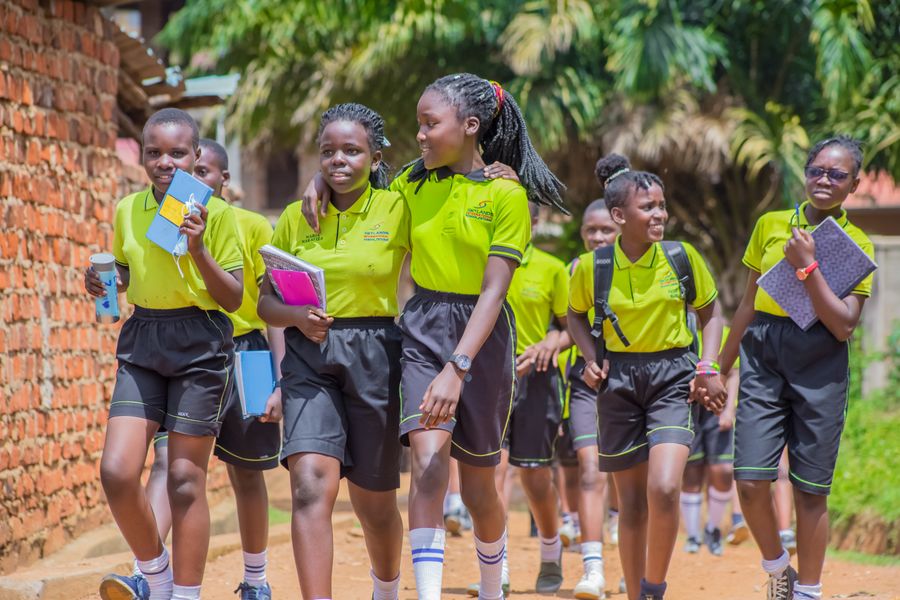
The Kenya Junior Secondary Education Assessment (KJSEA) is the national examination that every Grade 9 learner sits at the end of Junior Secondary School. It replaced the old KCPE as the key transition exam under Kenya's Competency-Based Curriculum. For the first cohort who sat KJSEA in 2025, and for every class that follows, this exam is the single most important factor in determining which Senior Secondary school your child will attend — and which pathway (STEM, Social Sciences, or Arts & Sports) they will follow.
This article breaks down everything parents, teachers, and learners need to know about KJSEA: how it is scored, what the placement formula looks like, what minimum scores each pathway requires, and what you can do to prepare your child.
What Is KJSEA?
KJSEA stands for Kenya Junior Secondary Education Assessment. It is a national examination administered by the Kenya National Examinations Council (KNEC) at the end of Grade 9. Every learner enrolled in a registered school must sit the exam.
Unlike the old KCPE which was a single high-stakes exam, KJSEA is part of a broader assessment framework. The Kenya Institute of Curriculum Development (KICD) designed the CBC (now CBE) assessment system to evaluate learners across three components:
- KJSEA (60%) — The national examination sat at the end of Grade 9
- KPSEA (20%) — The Kenya Primary School Education Assessment, sat at the end of Grade 6
- School-Based Assessments (20%) — Continuous assessment conducted by teachers throughout Grade 7, 8, and 9
This three-part formula means that your child's educational journey from Grade 6 onwards is cumulative. A strong KPSEA performance in Grade 6 gives your child a head start. Consistent school-based assessment scores in Grade 7-9 add another layer. And then KJSEA provides the final 60%.
The Scoring Breakdown — How the Final Score Is Calculated
Let us walk through the exact formula with a worked example:
| Component | Weight | What It Covers | Example Score |
|---|---|---|---|
| KJSEA (National Exam) | 60% | End of Grade 9 national examination across all examinable subjects | 72/100 × 0.6 = 43.2 |
| KPSEA (Grade 6 Exam) | 20% | Kenya Primary School Education Assessment sat at end of Grade 6 | 65/100 × 0.2 = 13.0 |
| School-Based Assessment | 20% | Continuous assessment by teachers across Grade 7-9 (projects, practicals, portfolios, end-of-term exams) | 80/100 × 0.2 = 16.0 |
| FINAL SCORE | 100% | Composite placement score | 72.2 / 100 |
In this example, the learner scored 72 on KJSEA, 65 on KPSEA, and 80 on school-based assessments. Their composite score is 72.2 out of 100. This composite score — not just the KJSEA mark alone — is what determines Senior Secondary placement.
What Subjects Are Examined in KJSEA?
KJSEA covers the core examinable subjects taught in Junior Secondary (Grade 7-9). These include:
- English
- Kiswahili / Kenya Sign Language (KSL)
- Mathematics
- Integrated Science
- Social Studies (including Health Education components)
- Pre-Technical Studies
- Agriculture and Nutrition
- Religious Education (CRE, IRE, or HRE)
- Business Studies
Non-examinable subjects at national level — such as Life Skills Education, Sports & Physical Education, and optional subjects — are assessed through school-based assessment and contribute to the SBA component.
Senior Secondary Pathway Requirements
After KJSEA, learners are placed into one of three Senior Secondary pathways based on their composite score and their expressed preferences. Each pathway has minimum score requirements:
| Pathway | Minimum Composite Score | Focus Areas | Career Directions |
|---|---|---|---|
| STEM | 20+ | Mathematics, Physics, Chemistry, Biology, Computer Science, Agriculture | Engineering, Medicine, Technology, Agricultural Science |
| Social Sciences | 25+ | History, Geography, Business Studies, CRE/IRE, Government & Governance | Law, Journalism, Business, Public Administration, Social Work |
| Arts & Sports | 25+ | Fine Art, Music, Theatre, Physical Education, Film Studies | Creative Industries, Performing Arts, Sports Management, Media |
How School Placement Works — The CRA Formula
Once composite scores are calculated, learners are placed into specific Senior Secondary schools using the Criteria for Resource Allocation (CRA) formula. This formula was designed to ensure equitable access to quality education across Kenya's 47 counties.
The CRA formula weights the following factors:
| Factor | Weight | What It Means |
|---|---|---|
| County Population | 42% | Counties with larger populations receive proportionally more slots in national and extra-county schools |
| Poverty Index | 14% | Learners from poorer counties get additional consideration to promote equity |
| Distance to School | 13% | Learners in remote areas where schools are far apart receive priority for boarding placement |
| School Infrastructure | 9% | Counties with fewer secondary schools receive additional consideration |
| Other Factors | 22% | Special needs considerations, gender balance, county-specific needs |
This means that two learners with the same composite score may be placed in different schools depending on their county of origin and other equity factors. The system is designed to prevent a situation where learners from well-resourced counties dominate all the top national schools.
The Choice Revision Window — 2 Weeks to Revise Preferences
After KJSEA results are released, learners and their parents are given a 2-week window to revise their school and pathway choices. This is a critical period. Here is what happens:
- Results released — KNEC publishes composite scores and preliminary pathway placement
- Choice revision opens — Learners can log into the KNEC portal to view their placement and modify their school preferences
- Guidance counselling — Schools are expected to provide guidance to help learners make informed pathway choices based on their scores and interests
- Final submission — After 2 weeks, choices are locked and the placement algorithm runs
- Placement results — Final school placements are announced
How School-Based Assessment (SBA) Works
The 20% SBA component is compiled from continuous assessment throughout Grade 7, 8, and 9. This includes:
- End-of-term examination papers — Marked by teachers and moderated internally
- Projects and practical work — Assessed using CBA rubrics (BE, AE, ME, EE scale)
- Portfolio assessments — Collections of learner work demonstrating competency development
- Observation-based assessment — Teacher observations of practical skills, teamwork, and oral communication
SBA scores are submitted by schools to KNEC, which applies moderation to ensure consistency across schools. A school that grades too generously will have its SBA scores adjusted downward. This moderation process prevents inflation and ensures fairness.
For parents, this means that every term matters. A learner who coasts through Grade 7 and 8 hoping to "catch up" in Grade 9 will find that their SBA component drags down their composite score even if they perform brilliantly on KJSEA itself.
How to Prepare Your Child for KJSEA
Preparation for KJSEA should begin in Grade 7 — not Grade 9. Here is a practical timeline:
Grade 7: Build the Foundation
- Ensure your child has quality notes for all 13 learning areas
- Practice with end-of-term papers after every term
- Build good study habits early — they compound over 3 years
- Focus on understanding, not memorisation (CBA rewards application of knowledge)
Grade 8: Strengthen Weak Areas
- Identify subjects where your child scores AE or BE consistently
- Get targeted revision materials for weak learning areas
- Start practising with past KJSEA-style papers
- Ensure SBA portfolio work is complete and well-organised
Grade 9: Final Push
- Intensive revision using past papers and marking schemes
- Focus on subjects with the highest weighting in the KJSEA composite
- Practice exam timing — KJSEA papers are time-limited
- Discuss pathway preferences early so your child knows their target score
What Happens After Placement?
Once placed in a Senior Secondary school, your child will study 7 examinable subjects: 4 compulsory core subjects (English, Kiswahili/KSL, Mathematics, Community Service Learning) plus 3 electives from their chosen pathway. Physical Education and ICT are offered to all learners but are non-examinable at national level.
The pathway chosen at this stage shapes your child's career options. STEM pathway learners can pursue engineering, medicine, and technology degrees at university. Social Sciences learners can go into law, business, and public administration. Arts & Sports learners can pursue creative industries, media, and sports management.
Frequently Asked Questions
Can my child change pathways after being placed in Senior Secondary?
Pathway changes after placement are possible but difficult. The Ministry of Education allows transfers in exceptional circumstances, usually within the first term of Grade 10. However, changing pathways may require repeating coursework and meeting the minimum score for the new pathway. It is far better to choose the right pathway during the 2-week revision window than to try to change later.
What happens if my child does not meet any pathway minimum score?
Learners who score below the minimum thresholds for all pathways are directed to TVET (Technical and Vocational Education and Training) institutions. TVET pathways lead to practical certifications and diplomas in trades like mechanics, catering, ICT, and beauty therapy. TVET is a legitimate and valuable educational track — not a failure route.
Is the KPSEA score from Grade 6 really counted in the final placement?
Yes. The KPSEA score contributes 20% to the final composite score. This means what your child achieved in Grade 6 continues to matter through Grade 9. A learner who scored poorly on KPSEA can still achieve a strong composite through excellent KJSEA performance (60%) and strong SBA scores (20%), but they carry a slight disadvantage compared to a peer who performed well at KPSEA.
How can I check my child's KJSEA results?
KJSEA results are released by KNEC through the official KNEC portal (knec.ac.ke) and via SMS to the phone number registered during exam registration. Schools also receive official result slips. Results typically come out within 2-3 months after the examination. The 2-week choice revision window opens immediately after results are released.
Does KJSEA replace KCPE?
Not directly. KCPE was the Grade 8 exit exam under the 8-4-4 system. Under CBC (now CBE), the transition exam is KJSEA at Grade 9 — one year later. Additionally, KJSEA is only 60% of the placement score (compared to KCPE which was 100%). The KPSEA at Grade 6 serves as the primary school exit assessment, but it is lower-stakes since it only contributes 20% to the eventual placement.
Summary
KJSEA is the most important exam in your child's Junior Secondary journey, but it is not the only thing that matters. The composite formula (60% KJSEA + 20% KPSEA + 20% SBA) means that consistent performance from Grade 6 through Grade 9 is rewarded. Start preparing early, ensure your child has quality revision materials for every learning area, and use the 2-week choice revision window wisely.
For complete Grade 7-9 revision materials — notes, past papers, marking schemes, and rubrics for every subject — visit cbcedukenya.com/shop.
Grade 9 KJSEA Complete Revision Course
All 9 learning areas in one download: notes, topical questions and full marking schemes. Built for the 26 October assessment.
⏳ Only 91 days to the national assessments on 26 October. Start now.
KSH 400 · Get it now → 📱 M-Pesa, instant download · join parents preparing nowHave a CBC question this article didn't answer?
Ask Somo, Kenya's first AI tutor. CBC-grounded, Kenyan examples, instant feedback. Five free questions a day with no signup, or start a 7-day free trial for 30 questions a day.
Try Somo Free →