
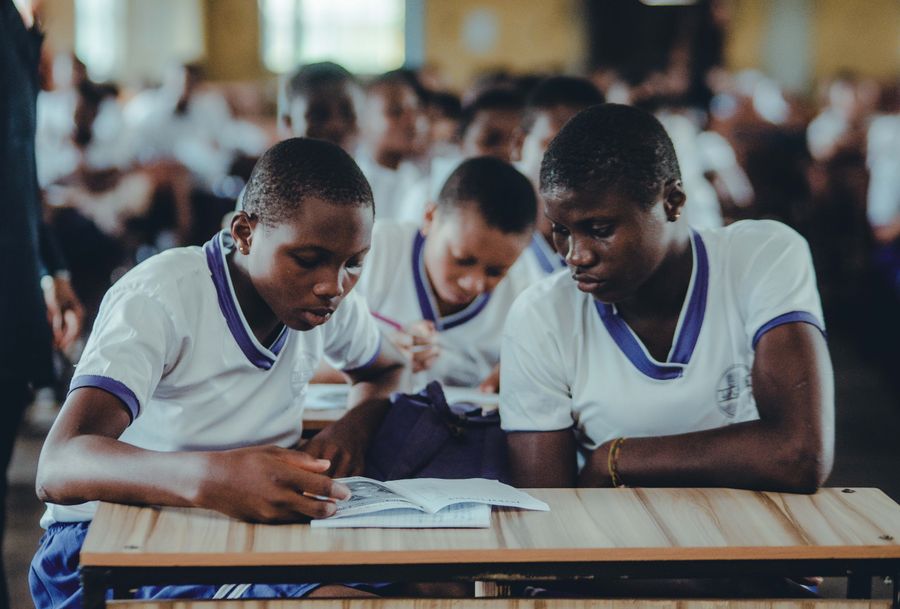
One of the biggest changes the Competency-Based Curriculum (CBC (now CBE)) introduced is the concept of pathways in Senior Secondary School (Grade 10–12). Unlike the old 8-4-4 system where Form 1–4 students all followed a broadly similar curriculum, CBC (now CBE) requires every learner to choose a specialised pathway after Grade 9.
This decision shapes the subjects a learner takes, the skills they develop, and the career options open to them after Grade 12. Getting it right matters — and this guide explains everything parents, teachers, and learners need to know.
The Four Senior Secondary Pathways
Here is a clear breakdown of each pathway, the subjects it includes, and the types of careers it prepares learners for:
Pathway 1: STEM (Science, Technology, Engineering, Mathematics)
The STEM pathway is designed for learners with strong aptitude in science and mathematics. It is the most popular pathway among parents who want their children to pursue medicine, engineering, or technology careers.
STEM Subjects
| Subject | Focus Areas |
|---|---|
| Mathematics | Advanced algebra, calculus, trigonometry, statistics |
| Physics | Mechanics, electricity, waves, modern physics |
| Chemistry | Organic, inorganic, and physical chemistry; laboratory skills |
| Biology | Human biology, ecology, genetics, cell biology |
| Computer Science | Programming, algorithms, data structures, cybersecurity |
| Agriculture | Advanced crop science, agribusiness, soil science, agricultural technology |
STEM Career Paths
Medicine, engineering (civil, mechanical, electrical, software), pharmacy, architecture, data science, artificial intelligence, agricultural science, veterinary science, nursing, laboratory technology, and aviation.
Pathway 2: Arts and Sports
This pathway is for learners with talents in creative expression and physical performance. It is the most misunderstood pathway — many parents dismiss it, but it opens doors to some of the fastest-growing industries in Africa.
Arts and Sports Subjects
| Subject | Focus Areas |
|---|---|
| Fine Art | Drawing, painting, sculpture, digital art |
| Music | Theory, composition, performance, music technology |
| Theatre | Acting, directing, script writing, stage design |
| Physical Education | Sports science, coaching, nutrition, sports management |
| Film Studies | Filmmaking, video production, media studies, animation |
Arts and Sports Career Paths
Professional athlete, sports coach, graphic designer, animator, filmmaker, musician, actor, fashion designer, content creator, sports journalist, events manager, and art director.
Pathway 3: Social Sciences
The Social Sciences pathway is designed for learners interested in how societies work — governance, economics, business, and human behaviour. It is the closest equivalent to the old "Arts" stream in 8-4-4.
Social Sciences Subjects
| Subject | Focus Areas |
|---|---|
| History | Kenyan history, African history, world history, historiography |
| Geography | Physical geography, human geography, fieldwork, GIS |
| Business Studies | Accounting, marketing, entrepreneurship, business law |
| CRE / IRE | Advanced religious studies, ethics, theology |
| Government | Political science, constitution, governance, international relations |
Social Sciences Career Paths
Law, journalism, diplomacy, public administration, human resources, social work, teaching, banking, marketing, urban planning, and political leadership.
Pathway 4: Languages
The Languages pathway is for learners with strong communication skills and a love of literature. It includes both local and international languages.
Languages Subjects
| Subject | Focus Areas |
|---|---|
| English Literature | Set texts, literary criticism, creative writing, poetry |
| Kiswahili | Advanced fasihi, creative writing, translation studies |
| French | Conversation, composition, French literature, culture |
| German | Language proficiency, German studies, European culture |
| Mandarin | Chinese language, characters, Chinese culture, trade language |
| Arabic | Arabic language, Islamic civilisation, Middle Eastern studies |
Languages Career Paths
Translation and interpretation, journalism, publishing, teaching, diplomacy, international business, tourism, public relations, copywriting, and content creation.
Core Subjects — Taken by ALL Pathways
Regardless of which pathway a learner chooses, they must take these three core subjects:
- English — communication, comprehension, and basic composition
- Kiswahili — national language proficiency
- Mathematics — numeracy and basic mathematical reasoning
Additionally, all learners participate in Community Service Learning — a compulsory programme where learners engage in projects that benefit their local community. This is assessed through portfolios and reflections.
How Pathway Selection Works After Grade 9
Pathway selection is not entirely the learner's free choice. It is guided by three factors:
- KJSA Results — The Kenya Junior School Assessment (sat at the end of Grade 9) determines which pathways a learner qualifies for. Strong performance in sciences, for example, opens the STEM pathway.
- Learner Interest and Aptitude — CBC (now CBE) emphasises learner-centred decisions. Career guidance counsellors at the school help learners explore their strengths and interests.
- School Capacity — Not every school offers all four pathways. Rural schools may offer only STEM and Social Sciences. International schools may offer all four plus IGCSE options. Parents must confirm what is available at their child's school.
Comparison Table: All Four Pathways at a Glance
| Feature | STEM | Arts & Sports | Social Sciences | Languages |
|---|---|---|---|---|
| Subjects | 6 | 5 | 5 | 6 |
| Practical Component | High (labs, coding) | Very High (performance, sport) | Medium (fieldwork) | Medium (oral exams) |
| Best For | Analytical, problem-solving minds | Creative, physically talented learners | Curious about society, business, law | Strong communicators, multilingual |
| University Entry | Science, engineering, medical degrees | Fine arts, media, sports science degrees | Law, business, social science degrees | Humanities, education, international studies |
What Parents Should Do Now
If your child is in Grade 7, 8, or 9, pathway selection is approaching. Here is what you can do:
- Talk to your child about their interests and strengths. Do not impose your own career preferences.
- Review their CBA reports — which subjects do they score ME or EE in? That shows natural aptitude.
- Visit the school and ask which pathways will be offered in Grade 10.
- Use Grade 9 revision materials to prepare for the KJSA — strong results open more pathway choices.
Prepare for Grade 9 KJSA and Senior Secondary
Revision papers · Notes · Rubrics — all subjects, all grades
Grade 9 Materials → Holiday Revision →Frequently Asked Questions
How many pathways are there in CBC (now CBE) Senior Secondary?
There are four pathways: STEM (Science, Technology, Engineering, Mathematics), Arts and Sports, Social Sciences, and Languages. Every learner also takes three core subjects — English, Kiswahili, and Mathematics — regardless of pathway.
Can my child change pathways after Grade 10?
Pathway changes after Grade 10 are extremely difficult because each pathway has its own syllabus. A learner switching from Social Sciences to STEM, for instance, would have missed an entire year of Physics and Chemistry. It is best to choose carefully at the start. Schools may allow limited flexibility in exceptional cases.
What if my child's school does not offer the pathway they want?
Not all schools offer all four pathways. If your child's current school does not offer their preferred pathway, you may need to transfer them to a school that does. Check with the county education office for a list of schools and the pathways they offer.
Which pathway leads to the best jobs?
There is no single "best" pathway. STEM leads to high-demand careers in technology and medicine. Social Sciences leads to law and business. Arts and Sports is growing rapidly with Kenya's creative economy. Languages opens international opportunities. The best pathway is the one that aligns with your child's strengths and interests.
What subjects are in Grade 10 under CBC (now CBE)?
Grade 10 subjects depend on the chosen pathway. All learners take English, Kiswahili, and Mathematics as core subjects. STEM learners add Physics, Chemistry, Biology, Computer Science, and Agriculture. Social Sciences learners add History, Geography, Business Studies, Government, and CRE/IRE. Arts learners add Fine Art, Music, Theatre, PE, and Film Studies. Languages learners add English Literature, French, German, Mandarin, and Arabic.
August Complete Bundle: Every Grade
All subjects plus the Holiday Revision Pack in one download, PP1 to Grade 12. Built for the August holiday, the longest revision window before October.
⏳ Only 44 days to the national assessments on 26 October. Start now.
from KSH 300 · Get it now → 📱 M-Pesa, instant download · join parents preparing nowHave a CBC question this article didn't answer?
Ask Somo, Kenya's first AI tutor. CBC-grounded, Kenyan examples, instant feedback. Five free questions a day with no signup, or start a 7-day free trial for 30 questions a day.
Try Somo Free →