Who this is for
- Parents, guardians and teachers of Grade 6 and Grade 9 learners with visual, hearing or physical impairments who are sitting KPSEA (26 to 28 October 2026) or KJSEA (26 to 30 October 2026).
- It sets out exactly what KNEC provides: adapted papers, published timings, seating, extra time letters and how answers are recorded. It also covers learners in the stage-based pathway, who sit KILEA instead.
- For the wider picture of special needs support in CBE, including EARC assessment, see our general parent guide linked below. This article is about the assessment week itself.
If your child has a disability, the week before KPSEA or KJSEA brings a particular worry: will the support they need actually be there on the day? KNEC does publish what it provides for learners with special needs, but the information is spread across the timetables and a long administration manual that most parents never see. This guide brings it together. It explains the KPSEA and KJSEA 2026 special needs provisions in plain words: braille, large print and hearing impaired papers and their exact timings, where your child will sit, how extra time is authorised, what happens if your child cannot shade an answer sheet, and what you can still check with the school before Monday 26 October.
Our sources are KNEC's 2026 KPSEA timetable and KJSEA timetable, KNEC's User Guide for the Management and Administration of KPSEA and KJSEA (1st edition, 2025), and reporting by The Star and the Daily Nation. Where KNEC has not published something, we say so rather than guess.
Information current as of Term 3, October 2026.
Key takeaways
- KNEC's User Guide lets learners with visual impairment (low vision and blind), hearing impairment (hard of hearing and deaf) and physical impairment (including mild cerebral palsy, epilepsy, amputees and malformed limbs) sit KPSEA and KJSEA in the age-based pathway.
- The 2026 timetables publish separate timings for braille, large print (KPSEA) and hearing impaired papers. KPSEA braille papers run 20 to 30 minutes longer; KJSEA braille papers run 30 minutes longer.
- Learners using braille machines sit in a room of their own with an invigilator. Learners with low vision or hearing impairment sit with other learners.
- Extra time beyond the printed timings is given only when KNEC issues a letter to the supervisor before the assessment. Supervisors must not add time on their own.
- Learners in the stage-based pathway sit KILEA (or KPLEA), which is performance-based and scored by their teachers, not a written paper. In 2025, 3,751 learners sat KILEA.
Quick glossary
Age-based pathway: the ordinary CBC route by grade; learners sit KPSEA at Grade 6 and KJSEA at Grade 9.
Stage-based pathway: a route for learners with severe or profound disabilities, who progress by level rather than age.
KILEA: Kenya Intermediate Level Education Assessment, the summative assessment at the intermediate level of the stage-based pathway.
OMR sheet: the optical mark reader answer sheet where multiple-choice answers are shaded in pencil.
EARC: Educational Assessment and Resource Centre, which carries out functional assessments of learners with special needs.
Who the KPSEA and KJSEA special needs provisions cover
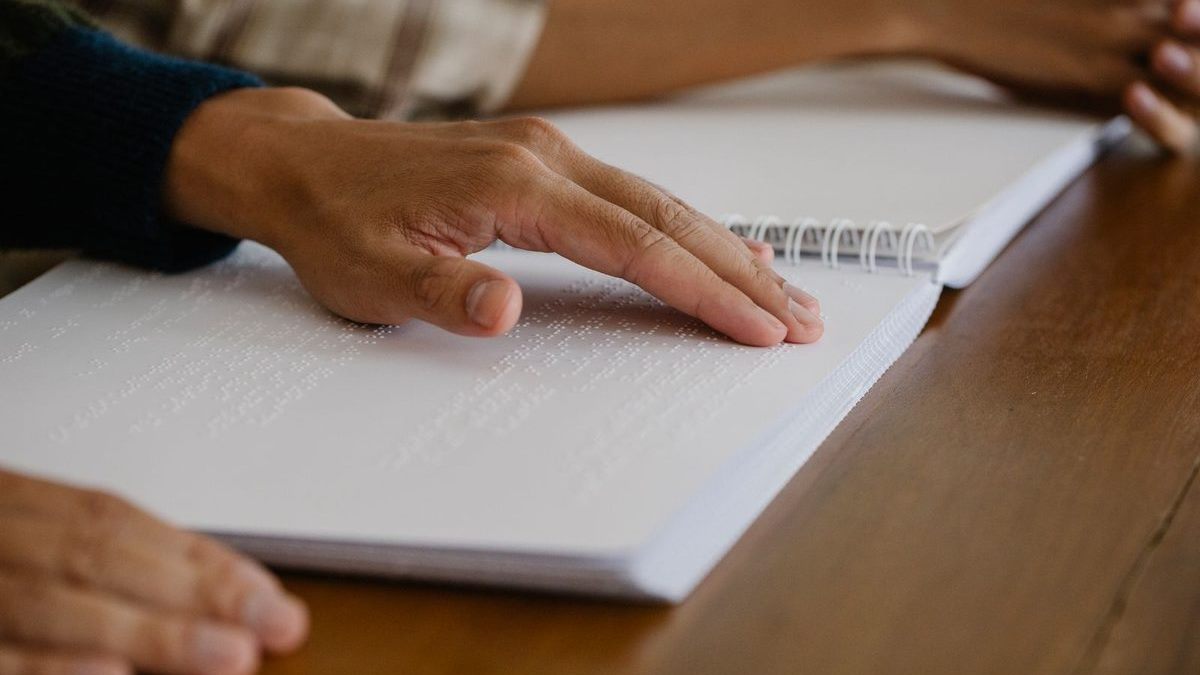
KNEC's User Guide sets out two routes. Learners with visual impairment (low vision and blind), hearing impairment (hard of hearing and deaf) and physical impairment ("mild cerebral palsy, epilepsy, amputees, malformed limbs among others") may be registered in the age-based pathway. They sit the same KPSEA and KJSEA as everyone else, with adapted papers and support.
Learners with severe or profound disabilities, which the User Guide lists as intellectual disabilities, deaf-blindness, severe autism, multiple handicaps and severe cerebral palsy, follow the stage-based pathway. They do not sit KPSEA or KJSEA. At the intermediate level they sit KILEA, which the User Guide describes as performance-based: "they will be assessed directly as they perform the tasks", administered and scored by their subject teachers, with school-based assessment contributing 60 per cent and the summative assessment 40 per cent. As The Star explained in May 2024, learners in this pathway "perform a task as the teacher observes and marks".
The numbers are not small. The Daily Nation reported in January 2026 that 3,751 special needs candidates completed KILEA in 2025. The Ministry of Education's Term 3 calendar, as reported by K24 Digital in August 2026, confirms that special needs candidates take KILEA alongside KJSEA in the same window this year.
KPSEA and KJSEA 2026 adapted papers and timings
This is the part most parents have never seen laid out. The KNEC timetables give every adapted version of each paper its own start and finish time. All adapted papers start at the same time as the standard paper; the User Guide says "the assessment for the learners should be started at the same time with all the other learners". The longer versions simply finish later.
KPSEA 2026 (Grade 6)
| Paper and day | Standard | Large print | Braille | Hearing impaired / KSL |
|---|---|---|---|---|
| Mathematics, Mon 26 | 8.30 to 9.50 (80 min) | 8.30 to 9.50 (80 min) | 8.30 to 10.20 (110 min) | Not listed separately |
| English, Mon 26 | 10.50 to 11.50 (60 min) | 10.50 to 11.50 (60 min) | 10.50 to 12.10 (80 min) | Hearing impaired: 10.50 to 12.10 (80 min) |
| Integrated Science, Tue 27 | 8.30 to 10.10 (100 min) | 8.30 to 10.10 (100 min) | 8.30 to 10.40 (130 min) | Not listed separately |
| Kiswahili, Tue 27 | 11.10 to 12.10 (60 min) | 11.10 to 12.10 (60 min) | 11.10 to 12.30 (80 min) | Kenyan Sign Language: 11.10 to 12.10 (60 min) |
| Creative Arts and Social Studies, Wed 28 | 8.30 to 10.10 (100 min) | 8.30 to 10.10 (100 min) | 8.30 to 10.40 (130 min) | Not listed separately |
Source: KNEC 2026 KPSEA Timetable, Instructions and Guidelines (KNEC/TD/SE/KPSEA/TT/26/001). Kenyan Sign Language is taken in the Kiswahili slot.
KJSEA 2026 (Grade 9)
| Paper and day | Standard | Braille | Hearing impaired / KSL |
|---|---|---|---|
| 901/1 English Language, Mon 26 | 8.30 to 10.10 (100) | 8.30 to 10.40 (130) | HI: 8.30 to 10.20 (110) |
| 901/2 English Composition and Literary Analysis, Mon 26 | 11.10 to 12.55 (105) | 11.10 to 1.25 (135) | HI: 11.10 to 1.05 (115) |
| 902/1 Kiswahili Lugha, Tue 27 | 8.30 to 10.10 (100) | 8.30 to 10.40 (130) | KSL 904/1: 8.30 to 10.10 (100) |
| 902/2 Kiswahili Insha na Utangulizi wa Fasihi, Tue 27 | 11.10 to 12.55 (105) | 11.10 to 1.25 (135) | KSL 904/2: 11.10 to 12.50 (100) |
| 903 Mathematics, Wed 28 | 8.30 to 10.30 (120) | 8.30 to 11.00 (150) | Not listed separately |
| 906/1 Agriculture, Wed 28 | 11.30 to 1.10 (100) | 11.30 to 1.40 (130) | Not listed separately |
| 905/1 Integrated Science, Thu 29 | 8.30 to 10.10 (100) | 8.30 to 10.40 (130) | Not listed separately |
| 907 Social Studies, Thu 29 | 11.10 to 12.40 (90) | 11.10 to 1.10 (120) | Not listed separately |
| 911/2 Creative Arts and Sports, Thu 29 | 2.00 to 3.40 (100) | 2.00 to 4.10 (130) | Not listed separately |
| 912/1 Pre-Technical Studies, Fri 30 | 8.30 to 10.10 (100) | 8.30 to 10.40 (130) | Not listed separately |
| 908/909/910 CRE, IRE or HRE, Fri 30 | 11.10 to 12.40 (90) | 11.10 to 1.10 (120) | Not listed separately |
| 905/2 Integrated Science, Fri 30 | 2.00 to 3.00 (60) | 2.00 to 3.30 (90) | Not listed separately |
Source: KNEC 2026 KJSEA Timetable and Instructions (KNEC/TD/SE/KJSEA/TT/2026/003). Times in minutes in brackets. The KJSEA timetable lists no separate large print timings; ask the school how your child's accessible paper will be provided.
Two patterns are worth noticing. Every KJSEA braille paper is exactly 30 minutes longer than the standard paper, and the hearing impaired English papers are 10 minutes longer. On KJSEA Thursday, a braille candidate finishes Creative Arts and Sports at 4.10 p.m., half an hour after other candidates; plan pick-up accordingly. On KPSEA, large print papers keep the standard times, while braille papers add 20 or 30 minutes.
Seating, support and the extra time letter
Section 11.12 of KNEC's User Guide lists what heads of institutions must ensure for learners with special needs and disabilities during the assessment. In plain words:
- A safe, secure and conducive environment, "free from distraction", with an allowance for preferential seating.
- Assessments in familiar environments to reduce anxiety.
- Adequate space and lighting, especially for learners with low vision.
- Materials, tools and equipment kept in a familiar, consistent place.
- Adjustable work surfaces and adapted furniture for learners with physical impairments.
- Assessment tools in an accessible format: appropriate print type and size, or braille.
- Learners using braille machines seated in a room of their own with an invigilator; learners with low vision or hearing impairment seated with other learners.
- Letters authorising extra time and support for learners with visual impairment, hearing impairment and intellectual disabilities, issued by KNEC to the supervisor before the assessment starts.
- Braille answer scripts collected, counted and packed separately after each session.
The User Guide also says that at assessment centres with learners with special needs, "the supervisor or at least one invigilator should be trained in Special Needs Education", preferably a specialist in the disability category of the school. And on rehearsal day, learners "who may not be able to shade the OMR answer sheets" are guided on how to mark or cross their answers on the assessment tools instead.
How the support was arranged
Under section 12 of the User Guide, heads of institutions with learners who need special consideration during KPSEA and KJSEA tell KNEC at the close of registration, attaching four documents: a recent medical report from a qualified medical practitioner; a head teacher's report on the disability and the consideration required; a full-size photograph showing the nature of the disability where applicable; and a functional assessment report from the EARC or the Curriculum Support Officer for special needs education. KNEC verifies the documents and prepares an assessment schedule for each learner "where applicable".
That registration window is long past for 2026. But the User Guide also says learners who need special assistance "not captured by the school during registration should be brought to the attention of the Chief Executive Officer, KNEC for further guidance and direction". If you discover this week that your child's needs were never recorded, that is the route, and only the head teacher can start it. Do not wait.
What to check with the school before Monday
- Is my child's special need on KNEC's record? Ask the head teacher directly, and ask which paper version (braille, large print, hearing impaired, Kenyan Sign Language) your child will receive.
- Has the extra time and support letter arrived? The supervisor should have it before the first paper. You will not see it, but you can ask whether it is expected.
- Where will my child sit? A braille machine user should be in a separate room with an invigilator. A child with low vision should be near good light. A child with a physical impairment should have suitable furniture.
- How will my child record answers? If shading the OMR sheet is hard, confirm how they will mark or cross answers and that they practised it on rehearsal day.
- What devices are allowed? Hearing aids, magnifiers and braille equipment should be discussed and, where needed, checked during rehearsal on Friday 23 October.
- Who on the supervision team has special needs training? The User Guide expects at least one at centres with learners with special needs.
A case study: a Grade 9 braille candidate in Thika
Take Wanjiku, a Grade 9 learner who is blind and sits KJSEA in braille at an integrated unit in Thika. Her mother reads the KJSEA timetable with her teacher on the Wednesday before the assessment. Together they note that Wanjiku's Mathematics paper runs from 8.30 to 11.00 a.m., half an hour longer than her classmates', and that on Thursday her Creative Arts and Sports paper ends at 4.10 p.m.
At rehearsal on Friday Wanjiku is shown a separate room with one invigilator and her own braille machine, set on a table at the right height. Her teacher confirms the extra time letter is expected from KNEC. Her mother arranges for her uncle to collect her at 4.30 p.m. on Thursday instead of 3.45 p.m. On Monday Wanjiku sits in a room she already knows, with equipment she has already used, and starts with everyone else at 8.30 a.m. None of this was a favour; it is what KNEC's published rules provide. Her mother's part was simply to know them and ask.
Common mistakes to avoid
- Assuming the support is automatic. It depends on registration and documents. Ask the head teacher to confirm.
- Not planning for later finishing times. Braille papers end 20 to 30 minutes later. Plan transport and pick-up.
- Bringing new equipment on exam day. Any device should be one your child already uses and should be checked at rehearsal.
- Expecting the supervisor to give extra time on request. The User Guide says supervisors should not add time unless KNEC advises in writing.
- Keeping a child at home because they "will not cope". If your child is registered for KPSEA or KJSEA, missing a paper means being marked absent. Talk to the head teacher and the EARC about support instead.
- Confusing KILEA with KPSEA or KJSEA. Stage-based learners are assessed by their teachers through tasks. If your child is in this pathway, ask the teacher how and when the tasks are done.
Related resources and support
For the wider process, including EARC functional assessments and the difference between the two pathways, read our parent guide to special needs support in CBE and the background on reviving EARCs and assessment for learners with special needs. If you suspect a learning difficulty that was never assessed, our guide to spotting dyslexia and learning difficulties early explains the next steps after the exams.
For the assessment week itself, the last 72 hours checklist and the what to carry guide apply to every candidate. Practice materials such as the KPSEA complete bundle and the KJSEA complete bundle can be enlarged or read aloud at home for children with low vision, and Somo, our AI tutor, can explain a worked answer step by step when a question comes up at home.
Further reading
Frequently asked questions
Do learners with special needs sit KPSEA and KJSEA?
Learners with visual, hearing and physical impairments in the age-based pathway sit KPSEA and KJSEA with adapted papers and support. Learners with severe or profound disabilities in the stage-based pathway sit KILEA or KPLEA instead, which are performance-based and scored by teachers.
How much extra time do braille candidates get in KPSEA 2026?
The KNEC 2026 KPSEA timetable gives braille papers 30 extra minutes for Mathematics, Integrated Science, and Creative Arts and Social Studies, and 20 extra minutes for English and Kiswahili. Large print papers keep the standard times.
How much extra time do braille candidates get in KJSEA 2026?
Every KJSEA 2026 braille paper is 30 minutes longer than the standard version. The hearing impaired English papers 901/1 and 901/2 are 10 minutes longer.
Can the supervisor give my child more time on the day?
Not on their own. KNEC's User Guide says supervisors should not allocate extra time unless advised by KNEC in writing. Letters authorising extra time and support are issued by KNEC to the supervisor before the assessment.
Where will a blind candidate sit?
The User Guide says learners using braille machines should be seated in a room of their own with an invigilator. Learners with low vision or hearing impairment sit with other learners.
What if my child cannot shade the answer sheet?
KNEC's User Guide says learners with special needs who cannot shade the OMR answer sheets are guided on how to mark or cross their answers on the assessment tools. This is explained on rehearsal day, Friday 23 October.
My child's needs were not recorded at registration. Is it too late?
The User Guide says learners who need special assistance not captured during registration should be brought to the attention of KNEC's chief executive for guidance. Ask the head teacher to do this immediately.
Is Kenyan Sign Language offered in KPSEA and KJSEA?
Yes. KPSEA 2026 has a Kenyan Sign Language paper in the Kiswahili slot on Tuesday 27 October, and KJSEA 2026 has Kenyan Sign Language papers 904/1 and 904/2 on the same Tuesday.
Conclusion: know the provisions, then ask
KNEC's KPSEA and KJSEA 2026 special needs provisions are more detailed than most parents realise. Braille, large print, hearing impaired and Kenyan Sign Language versions have published timings; braille users sit in their own room; extra time and support come through a KNEC letter to the supervisor; and learners who cannot shade are shown another way to answer. Learners in the stage-based pathway are assessed through tasks in KILEA. The rules exist on paper. Your job this week is to ask the head teacher the six questions above, make sure your child sees the room and equipment at rehearsal on Friday 23 October, and plan for later finishing times. Then your child can walk in on Monday 26 October knowing exactly what to expect.
Join our WhatsApp community for exam-week updates and support: +254 711 344 702.
Grade 9 KJSEA Complete Revision Course
All 9 learning areas in one download: notes, worked examples, topical questions and full marking schemes. Rebuilt for the 26 to 30 October assessment.
⏳ Only 3 days to the national assessments on 26 October. Start now.
KSH 400 · Get it now → 📱 M-Pesa, sent to your email after payment · join parents preparing nowHave a CBC question this article didn't answer?
Ask Somo, Kenya's first AI tutor. CBC-grounded, Kenyan examples, instant feedback. Five free questions a day with no signup, or start a 7-day free trial for 30 questions a day.
Try Somo Free →