
Most KJSEA content online speaks to Grade 9 parents. On the surface that makes sense: Grade 9 learners sit the written papers, and the national assessment window opens on 26 October 2026. But it hides something that matters far more for Grade 7 and 8 families. A large share of your child's final KJSEA mark is being earned right now, in ordinary terms like the one starting on 24 August.
The 40% that is already on the clock
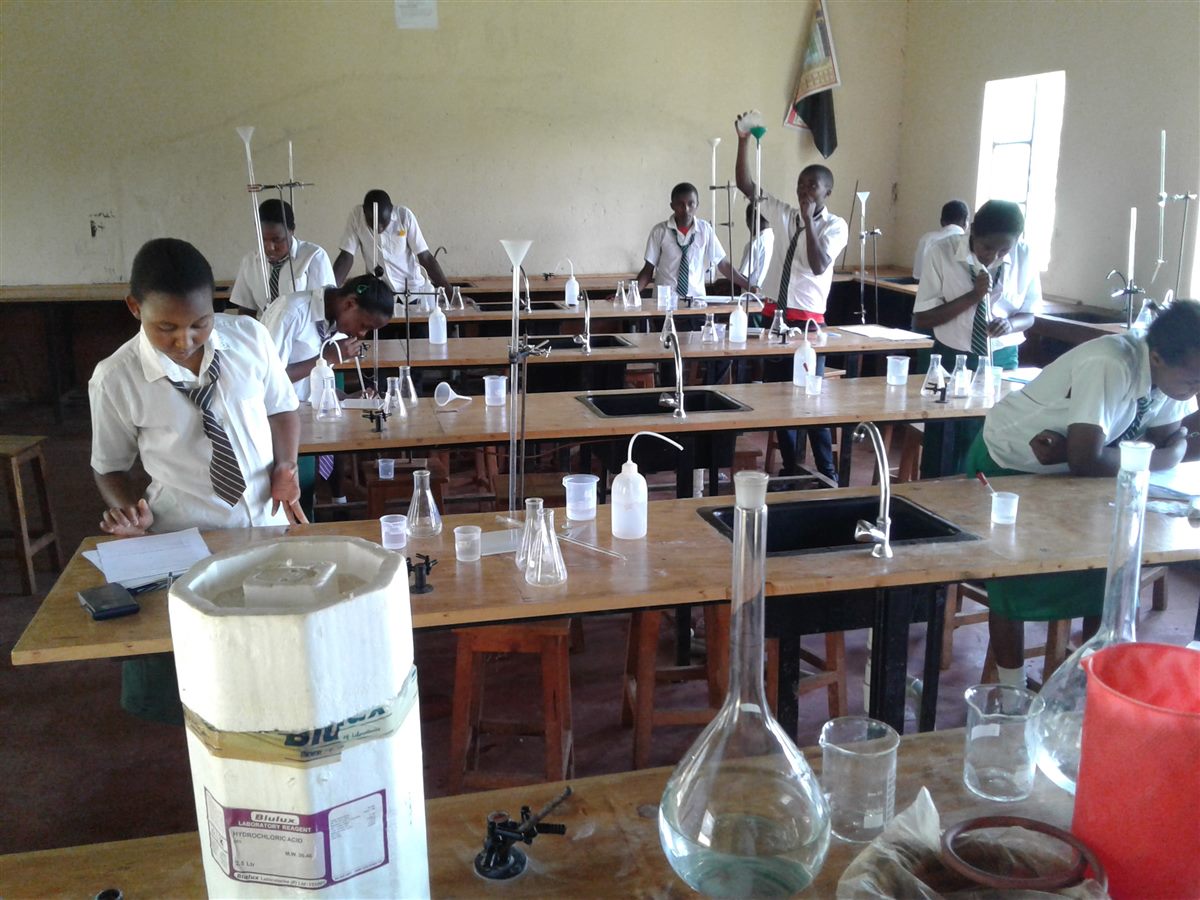
KJSEA (the Kenya Junior School Education Assessment) is not a single exam. The final result blends two components: 60% comes from the written assessment sat at the end of Grade 9, and 40% comes from school-based assessment (SBA) accumulated across Grades 7, 8 and 9. The projects, practicals and portfolios your child completes this term feed directly into that 40%.
The assessment covers 9 learning areas, each scored out of 8 points, for a total of 72 points. So a Grade 7 learner who rushes a Social Studies project or skips an Integrated Science practical is not just losing a classroom mark; they are quietly giving away part of a national score they will not sit for another two years. For the full breakdown of how the components combine, read our guide on how CBA weighting works.
Term 3 exams: a dress rehearsal two years early
End-of-term exams in Grade 7 and 8 do something no Grade 9 revision blitz can do: they show you gaps while there is still time to close them cheaply.
Learning areas build on themselves. A Grade 7 learner who never quite mastered fractions will struggle with ratio and algebra in Grade 8, and by Grade 9 the problem looks like "weak in Mathematics" when it is really one unfixed sub-strand from two years earlier. The same pattern shows up in Kiswahili sarufi, in English composition structure, and in Integrated Science, where later strands assume earlier ones.
Treat every Term 3 exam paper as diagnostic data. When the marked paper comes home, sit with your child and sort the lost marks into two piles: careless errors (misread the question, ran out of time) and genuine gaps (did not know the content). Careless errors need exam habits. Gaps need targeted revision, and a gap found in Grade 7 costs twenty minutes a day to fix. The same gap found in September of Grade 9 competes with everything else.
How to read the Term 3 report for early warnings
CBC reports do not use raw percentages alone. Look for the performance-level language against each learning area:
- Below Expectation (BE): a genuine red flag. Do not wait for the school to raise it; ask the class teacher which specific strands are the problem.
- Approaching Expectation (AE): the most dangerous level for parents, because it sounds almost fine. It means the foundations are shaky. This is where early intervention pays off most.
- Meeting Expectation (ME): solid. Maintain the routine.
- Exceeding Expectation (EE): stretch the learner; boredom causes its own problems.
Also read the teacher's comments for verbs like "struggles to", "with support" or "inconsistent". Those phrases usually point at specific sub-strands. We have a full walkthrough in how to read a CBC report card.
A simple termly routine that protects the 40%
You do not need a tutor or a complicated system. Three habits, kept up every term from Grade 7, do most of the work:
- File every project and practical. Keep a physical folder (an ordinary box file works) per learning area. Photograph project work on a phone before it is handed in. If a mark ever needs to be queried, or a portfolio rebuilt, you have the evidence.
- Keep a gap list per learning area. One exercise book page per learning area. After every exam or marked assignment, write down the strand or sub-strand where marks were lost. Cross items off as they are fixed. By Grade 9 this becomes a personalised revision syllabus.
- Revise little and often. Twenty to thirty minutes a day on gap-list items beats a frantic weekend before exams. Short daily practice is also how the written 60% is eventually won.
Why Term 3 2026 is the term to start
Term 3 2026 opens on 24 August and closes on 23 October: nine straight weeks with no half-term break. That is a long, uninterrupted stretch, which cuts both ways. A learner with a routine compounds steadily for nine weeks; a learner without one drifts for nine weeks. Set the routine in week one, not week seven.
It is also the term when many schools finalise the year's SBA marks and projects, so the work your child hands in between now and October is exactly the work that counts.
Start now, not in Grade 9
The parents who find KJSEA stressful in 2028 will mostly be the ones who treated Grades 7 and 8 as a warm-up. The ones who find it manageable will have a folder of filed projects, a short gap list, and a child used to daily practice.
If you want structured revision material to support the routine, our Grade 7 materials and Grade 8 materials are organised by learning area and aligned to KICD strands and sub-strands, so you can match them directly to the gap list. Whatever resources you use, the principle is the same: KJSEA preparation is not an event. It is a habit that starts this term.
Grade 9 KJSEA Complete Revision Course
All 9 learning areas in one download: notes, worked examples, topical questions and full marking schemes. Rebuilt for the 26 to 30 October assessment.
⏳ Only 31 days to the national assessments on 26 October. Start now.
KSH 400 · Get it now → 📱 M-Pesa, instant download · join parents preparing nowHave a CBC question this article didn't answer?
Ask Somo, Kenya's first AI tutor. CBC-grounded, Kenyan examples, instant feedback. Five free questions a day with no signup, or start a 7-day free trial for 30 questions a day.
Try Somo Free →