
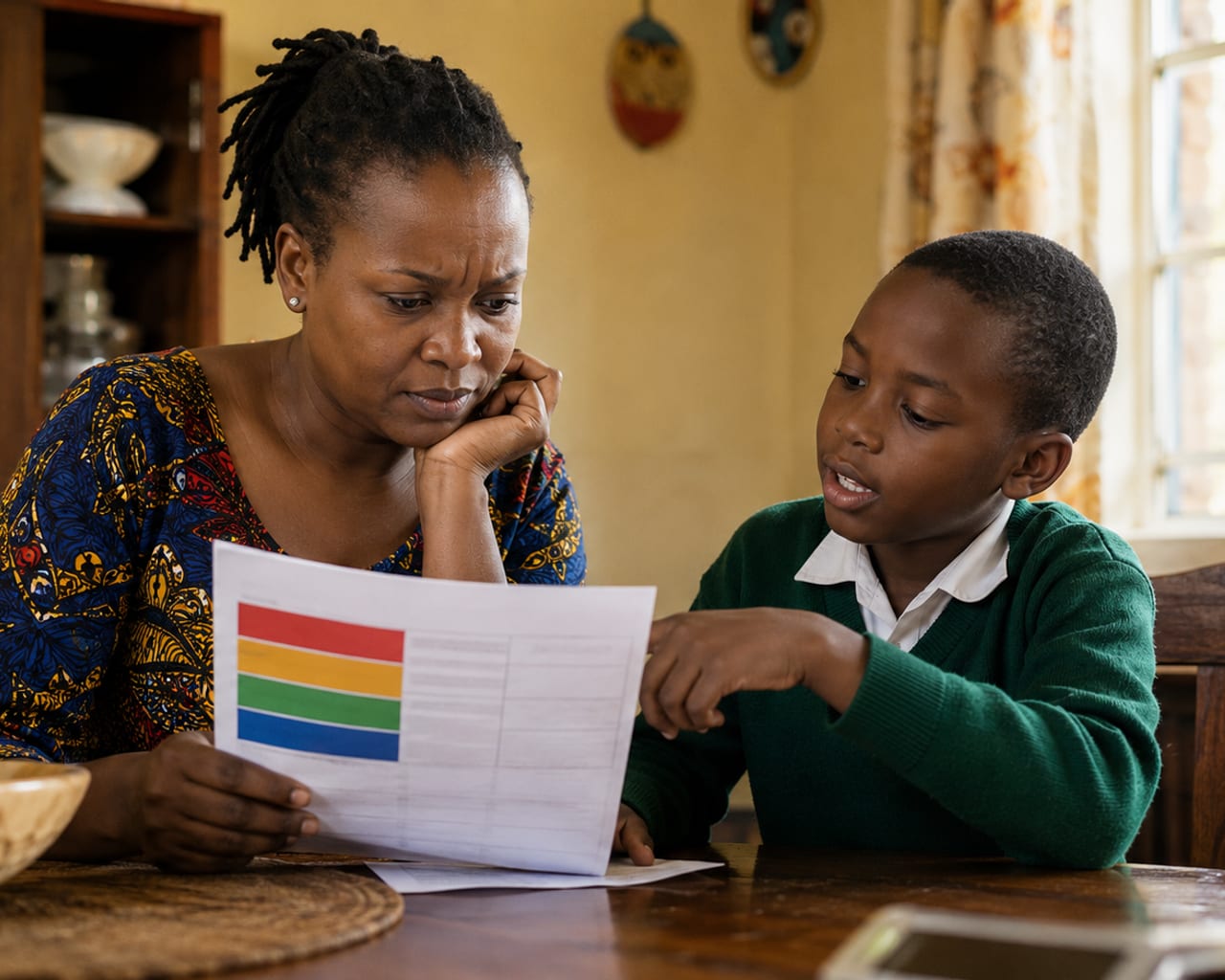
Your child comes home with a CBA report card. Next to Mathematics it says ME. Next to Kiswahili it says BE. You stare at the four letters and wonder: is that good, bad, or somewhere in between? This is the assessment language every Kenyan school now uses under CBC (now CBE), and most parents are still guessing what the bands actually mean. Here is the clear, honest explanation.
The four bands, in plain language
KICD uses four assessment bands to describe how well a learner is meeting the expected learning outcomes for each strand. They are not exam scores. They are a teacher's professional judgement of where the learner currently sits against the expected standard.
- BE: Below Expectation. The learner is still grasping the foundational concepts of this strand. With more support, time and practice, they will move up. BE is not a failure: it is an honest signal that the learner needs more help here.
- AE: Approaching Expectation. The learner partly demonstrates the outcome but still needs guidance to get it right consistently. They are on the path, just not there yet.
- ME: Meeting Expectation. The learner independently demonstrates the outcome at the level expected for their grade. This is the goal: your child is exactly where they should be.
- EE: Exceeding Expectation. The learner not only demonstrates the outcome but applies it flexibly to new and unfamiliar situations. They are extending themselves beyond what was taught.
What the bands replace (and why)
Before CBC, Kenyan reports used numeric scores out of 100: your child got 67% in Maths or 82% in English. KICD moved to descriptive bands because numeric scores hide what a learner can actually do. A child scoring 60% on a test could be 60% solid across the board, OR 100% great at the easy parts and 0% on the hard parts. The bands force teachers to describe the learner's mastery per strand, not just average it.
It also changes what parents can do about poor results. A "67% in Maths" gives you nothing to act on. "BE in Algebra, ME in Geometry" tells you exactly where to focus the extra help. The bands trade convenience for usefulness.
What a BE in a strand actually means (no panic required)
A BE result on one strand does NOT mean your child is failing the subject. It means that on the specific strand assessed, they are not yet at the expected standard. Three honest things to do:
- Read the strand name carefully. "BE in Algebra" is very different from "BE in Mathematics overall". The first is fixable in a few weeks of focused practice. The second would be a deeper concern.
- Talk to the teacher. Ask what specifically the learner got wrong. KICD trains teachers to be specific: "your child struggles with simplifying fractions" is actionable; "they're weak in maths" is not.
- Practise that strand specifically. Don't buy a generic revision pack: buy or download materials for that exact strand and sub-strand. Most CBC publishers (including this site) organise materials by strand for this reason.
What ME and EE mean for your child's future
ME consistently across all strands is the "on-track" signal. It tells you your child is exactly where the curriculum expects them to be. There is nothing to fix.
EE means your child is ready for more challenge. If you see repeated EE on the same subject, talk to the school about enrichment activities: competitions, extra reading, peer tutoring, or simply harder problems. Without challenge, EE learners can grow bored and slip down to ME or worse.
Crucially: the bands are not a permanent grade. A Grade 6 learner with BE in Geography this term can be at ME by the end of next term with focused work. The whole purpose of the CBA system is to identify and respond, not to label.
Are the bands fair? Two honest concerns
Two valid criticisms parents raise about the band system:
1. Teacher subjectivity. Two teachers assessing the same piece of work could band it differently. KICD mitigates this with rubrics: pre-written descriptors of what BE / AE / ME / EE look like for each strand. The best schools use these rubrics consistently. The weakest ones don't. If you suspect a band is inconsistent, ask to see the rubric the teacher used.
2. No raw mark. Some parents miss the precision of a numeric score. The honest answer: under CBC most teachers still record raw marks internally; the band is what they share with parents. If you specifically want the raw mark, ask for it. Reasonable schools will share.
How CBCEduKenya helps with each band
If your child sat their last CBA with a BE or AE result you want to move:
- Notes & revision packs are organised per strand. Browse the library by grade, then pick the specific strand your child needs.
- Term 2 / Term 3 revision packs include 40 MCQs + 24 short answers per subject, with full mark schemes: so you can practise with your child and check answers without being a maths or science teacher yourself.
- Somo AI tutor (free) explains strand-specific questions step by step in English or Kiswahili. Try Somo or talk to Somo on WhatsApp.
For teachers reading this: we built a free CBA Rubric & Report Card Builder. Paste your learner names, mark each one BE/AE/ME/EE per strand, and the tool generates printable KICD-format report cards for the whole class. → Open the CBA Rubric Builder (free for one class; CBCEduKenya Plus members save unlimited classes online).
Or get everything in one membership: CBCEduKenya Plus (KSH 599/month) bundles every CBC revision pack, lesson plans, notes, mark schemes and the Somo AI tutor: for the price of one tutoring hour in Nairobi. → See Plus plans.
Sources: KICD CBC assessment framework; KNEC CBA guidelines 2024-2026; teacher rubric workshops attended by CBC Edu Kenya. Last updated: June 2026.
August Complete Bundle: Every Grade
All subjects plus the Holiday Revision Pack in one download, PP1 to Grade 12. Built for the August holiday, the longest revision window before October.
⏳ Only 87 days to the national assessments on 26 October. Start now.
from KSH 300 · Get it now → 📱 M-Pesa, instant download · join parents preparing nowHave a CBC question this article didn't answer?
Ask Somo, Kenya's first AI tutor. CBC-grounded, Kenyan examples, instant feedback. Five free questions a day with no signup, or start a 7-day free trial for 30 questions a day.
Try Somo Free →