
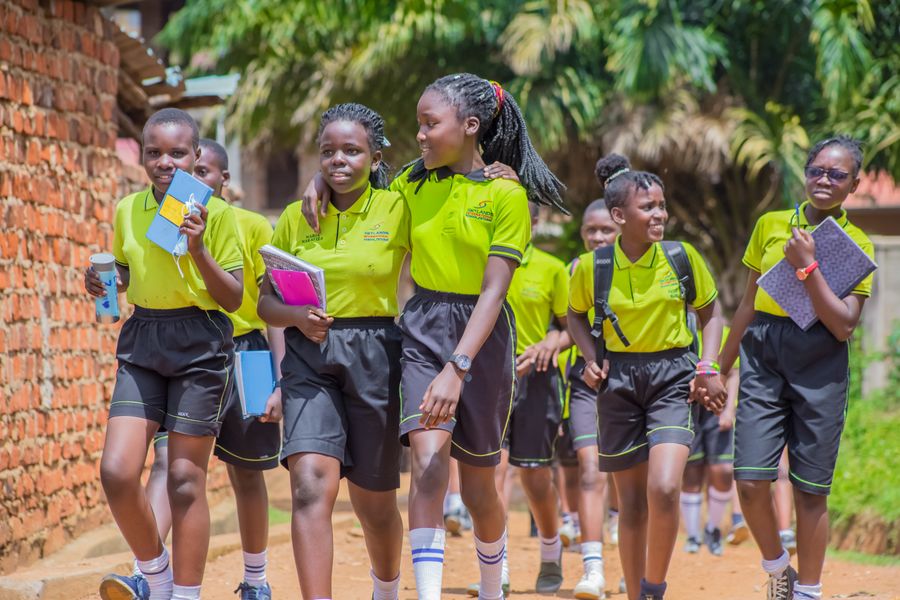
Cambridge IGCSE is one of the most recognised qualifications in the world. In Kenya, hundreds of learners sit IGCSE examinations every year, and the demand for quality preparation materials is growing rapidly. Whether you are a parent considering IGCSE for your child, a learner already enrolled, or a teacher delivering Cambridge syllabi in Kenya, this guide covers everything.
What Is Cambridge IGCSE?
IGCSE is a two-year qualification (typically studied in Years 10 and 11) culminating in external examinations marked by Cambridge in the UK. It is offered in 70+ subjects across Sciences, Humanities, Languages, Arts, and Technical subjects.
IGCSE is internationally portable, universities and employers worldwide recognise it. Strong IGCSE results (especially in core subjects like Maths, Sciences, and English) open doors to AS/A Level programmes, IB Diploma, and university admissions globally.
IGCSE vs CBC (now CBE), What Is the Difference?
| Feature | Cambridge IGCSE | Kenya CBC (now CBE) |
|---|---|---|
| Awarding body | Cambridge Assessment International Education (UK) | Kenya National Examinations Council (KNEC) / KICD |
| Assessment | Written exams (+ coursework for some subjects) | Continuous CBA + end-of-term exams + national KJSA |
| Grading | A* to G (per subject) | EE, ME, AE, BE (competency levels) |
| Exam sessions | May/June and October/November annually | End of Grade 9 (KJSA) and Grade 12 (KSSA) |
| International recognition | Recognised globally | Recognised within Kenya; limited international portability currently |
| Cost | Higher (private school fees + exam fees) | Available in public schools (government funded) |
| Language of instruction | English throughout | English + Kiswahili (both compulsory) |
Schools Offering IGCSE in Kenya
Over 80 schools in Kenya are registered Cambridge examination centres. They range from elite international schools to mid-range private schools. Here are the main categories:
International Schools (Highest Fees)
- International School of Kenya (ISK), Nairobi; full IB + IGCSE programme
- Aga Khan Academy Nairobi, IB + IGCSE; highly selective
- Brookhouse School, Karen and Runda campuses; strong IGCSE results
- Rosslyn Academy, Nairobi; missionary school with IGCSE
- Peponi School, Ruiru; boarding school with strong IGCSE programme
Private Schools (Mid-Range Fees)
- Strathmore School, Nairobi; British curriculum, IGCSE + A Level
- Braeburn Schools, multiple Nairobi campuses; Cambridge curriculum
- Hillcrest Secondary School, Karen; known for IGCSE sciences
- Riara Schools, Nairobi; IGCSE + Cambridge A Level
- St. Mary's School, Nairobi, historically strong academic results
Outside Nairobi
- Nakuru: Rift Valley Academy, St. Andrews School Turi
- Mombasa: Mombasa Academy, Serani School
- Kisumu: St. Alban's School, Aga Khan Academy Kisumu
- Eldoret: Moi Girls High School Eldoret (IGCSE programme)
Note: Always verify directly with the school whether they offer IGCSE, which subjects, and what their current exam session results look like.
IGCSE Costs in Kenya (2026)
IGCSE costs are split into school fees and Cambridge examination fees. Here is a realistic breakdown:
| Cost Item | Approximate Cost (KES) | Notes |
|---|---|---|
| School fees per year (international schools) | 900,000 – 2,000,000 | ISK, Aga Khan, Brookhouse level |
| School fees per year (mid-range private) | 250,000 – 600,000 | Braeburn, Riara, Hillcrest level |
| Cambridge exam entry fee per subject | 8,000 – 15,000 | Varies by subject and session |
| Total exam fees (8–10 subjects) | 80,000 – 150,000 | One-time cost at exam time |
| Textbooks and revision materials | 20,000 – 60,000 | Cambridge-endorsed textbooks are expensive |
| Past papers and revision notes | From KSH 100 per resource | Available at cbcedukenya.com |
IGCSE Core Subjects in Kenya
Most schools in Kenya offering IGCSE have learners take between 7 and 10 subjects. The typical combination includes:
- IGCSE Mathematics (0580), almost always compulsory; Core or Extended tier
- IGCSE English Language (0500), required for most universities
- IGCSE Sciences, Biology (0610), Chemistry (0620), Physics (0625), usually at least 2 of 3
- IGCSE Humanities, History (0470), Geography (0460), Business Studies (0450)
- IGCSE Language, French (0520), Kiswahili (0500), or other modern languages
Core vs Extended: Most IGCSE subjects offer a Core tier (grades C–G) and an Extended tier (grades A*–E). Strong learners should sit Extended to access A* and A grades needed for competitive university applications.
How to Prepare for IGCSE Exams
IGCSE exams are paper-based and externally set by Cambridge. Preparation requires sustained, structured effort across two years. Here is a proven approach:
1. Know the Syllabus
Each IGCSE subject has a syllabus document published by Cambridge. Download it from the Cambridge website (it's free) and use it as your master checklist. Every topic you need to know is listed there.
2. Use Past Papers from Day One
Cambridge releases past papers from previous exam sessions. These are the single most valuable resource for IGCSE preparation. They show exactly how questions are worded, what mark schemes expect, and which topics come up most frequently.
Start with past papers from 3–5 years ago and work forwards to the most recent available. For each paper, always review the mark scheme immediately after attempting it.
3. Understand the Mark Scheme
IGCSE marking uses specific conventions: B marks (answer-only marks), M marks (method marks), and A marks (accuracy marks). A correct answer with no working shown may score zero on M+A questions. Learn what Cambridge expects at each mark level.
4. Focus on Command Words
Cambridge exam questions use precise command words that indicate exactly what type of answer is required:
- State: Give a brief factual answer, no explanation needed
- Describe: Give characteristics or features with some detail
- Explain: Give reasons and mechanisms, use "because" and "therefore"
- Evaluate: Weigh arguments and come to a justified conclusion
- Calculate: Show full working; state units; check significant figures
5. Practise Paper Timing
Every Cambridge paper has a set time allocation. Practise under timed conditions from at least 6 months before the exam. Time management is a skill that must be built, it does not come automatically.
"The biggest mistake IGCSE students make is studying content without practising papers. The content knowledge and the exam technique are two separate skills. You need both."
IGCSE Revision Materials at CBC Edu Kenya
We provide IGCSE revision materials for all core subjects, topic-by-topic revision notes aligned to the current syllabus, custom practice papers with mark schemes, exam technique guides, and subject-specific command word glossaries.
All IGCSE materials are available for instant download from KSH 100 per resource (or $2 USD for international payment via PayPal).
Frequently Asked Questions
Can a CBC (now CBE) school student sit IGCSE?
Technically yes, as a private candidate, but this is expensive and complicated. IGCSE is designed for a structured 2-year programme delivered by a registered Cambridge centre. It is not a supplement to CBC (now CBE); it is an alternative curriculum pathway typically chosen from the start of secondary school.
Is IGCSE recognised by Kenyan universities?
Yes. Kenyan universities including University of Nairobi, Strathmore University, Aga Khan University, and USIU-Africa recognise IGCSE results. Strong IGCSE + A Level results (equivalent to Grades 10–12) are the standard entry path for these institutions.
What is the best IGCSE combination for medicine?
For medicine: IGCSE Biology, Chemistry, Physics, Mathematics, and English Language are essential. A* in Biology and Chemistry at Extended tier is competitive. For law or business: English Language, Mathematics, History or Economics, and a second science or language.
How many past papers should I do before my IGCSE exam?
For core subjects (Maths, Sciences, English): minimum 5 complete past papers per subject under exam conditions, plus additional topic-targeted practice. For exams 4–6 months away: 2–3 past papers per month, increasing to 1 per week in the final 6 weeks.
IGCSE Revision Materials
Notes and topical questions for the core IGCSE subjects, timed to the Oct/Nov series.
⏳ Only 35 days to the national assessments on 26 October. Start now.
from KSH 350 · Get it now → 📱 M-Pesa, instant download · join parents preparing nowHave a CBC question this article didn't answer?
Ask Somo, Kenya's first AI tutor. CBC-grounded, Kenyan examples, instant feedback. Five free questions a day with no signup, or start a 7-day free trial for 30 questions a day.
Try Somo Free →