
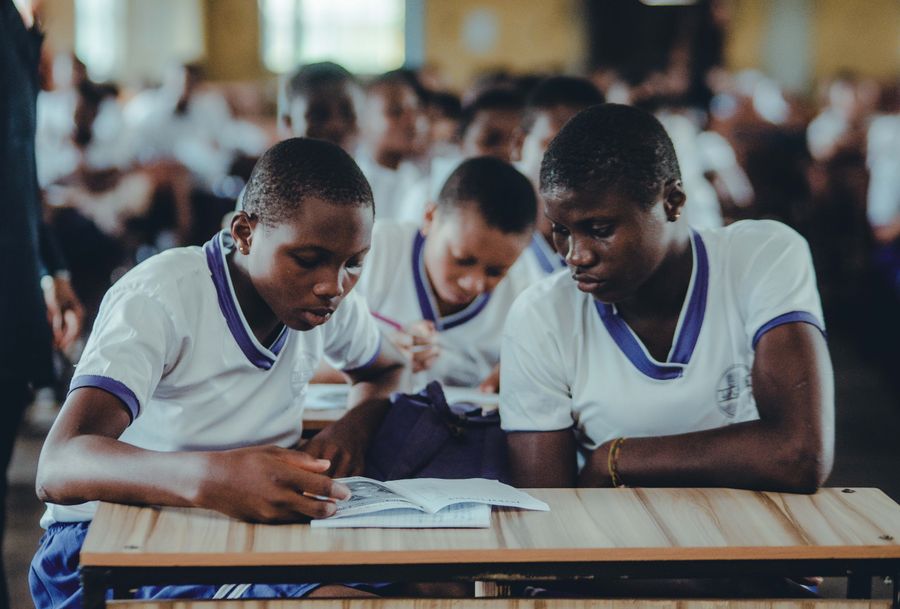
Kenya's first-ever Grade 10 cohort under CBC (now CBE) walked into classrooms in January 2026 to find a serious problem: there were not enough textbooks. Reports from schools across the country paint a grim picture, some schools received as few as 9 textbooks for classes of 50 learners. Others received books for some subjects but nothing for their pathway electives.
This is not just an inconvenience. Without adequate learning materials, your child's education suffers. But the good news is that there are concrete, practical steps you can take right now to bridge the gap while waiting for the government and publishers to catch up.
Why Is There a Textbook Shortage?
Understanding the cause helps you understand how long the problem might last:
- First cohort problem, Grade 10 under CBC (now CBE) has never existed before. Publishers had to develop entirely new textbooks from scratch, aligned to the new Senior Secondary curriculum. This takes time, writing, reviewing, KICD approval, printing, and distribution.
- KICD approval bottleneck, Every textbook must be reviewed and approved by the Kenya Institute of Curriculum Development before it can be used in schools. The approval process has been slow for some subjects, delaying printing.
- Budget constraints, The government allocated funds for free textbooks through the school capitation grant, but the amount per learner has not kept pace with the cost of producing new materials for an entirely new curriculum level.
- Distribution logistics, Even where books have been printed, getting them to all 10,000+ secondary schools across 47 counties is a massive logistical operation. Schools in remote counties are the last to receive deliveries.
- Data gaps, KICD has been directing schools to submit fresh enrolment data to determine how many books to send. Schools that submitted data late received their allocations late.

What Parents Can Do Right Now
Do not wait for the government to solve this. Your child is in class today and needs to learn today. Here are actionable steps:
1. Get Supplementary Notes and Revision Materials
Textbooks are the primary resource, but they are not the only resource. Well-structured notes that follow the KICD curriculum can serve as an effective stand-in, or even a better supplement to the textbook.
Look for notes that are:
- Aligned to the 2026 Grade 10 KICD curriculum designs
- Organised by strand and sub-strand (not just random topic order)
- Written in learner-friendly language with worked examples
- Available as downloadable PDFs so your child can study anywhere
2. Use Digital Resources and YouTube Tutorials
If your child has access to a smartphone or computer, even a shared one, digital resources can fill the gap:
- YouTube tutorials, Channels like CBC Edu Kenya offer free video lessons aligned to the curriculum. Your child can watch, pause, rewind, and review at their own pace.
- KICD Digital Portal, KICD has some digital resources available through its website (kicd.ac.ke). Check what is available for Grade 10 subjects.
- Kenya Education Cloud, The Ministry of Education's online platform has some learning content, though coverage for Grade 10 is still growing.
3. Form Study Groups
If a class of 50 has only 9 textbooks, that is roughly 1 book per 5-6 learners. Encourage your child to form a study group of 5-6 learners who share one textbook. They can:
- Take turns with the textbook on a rotation schedule
- Photograph key pages and share them in a WhatsApp group
- Take notes from the textbook during their turn and share the notes with the group
- Study together after school, working through the textbook as a team
4. Talk to the School Administration
Schools have a responsibility to provide learning materials. Have a conversation with the head teacher and ask:
- Has the school submitted updated enrolment data to KICD? (This affects textbook allocation)
- When does the school expect the next textbook delivery?
- Is the school using any of the capitation grant to purchase additional copies?
- Are there any photocopied or digital alternatives the school is providing in the interim?
5. Check If Your County Has a Textbook Programme
Some county governments have supplemented the national textbook programme with their own purchases. Nairobi, Kiambu, Mombasa, Kisumu, and Nakuru counties have announced additional textbook procurement for 2026. Check with your county education office.
6. Pool Resources With Other Parents
If you can afford it, consider pooling money with other parents to buy additional textbooks or learning materials for your child's class. A group of 10 parents contributing KSH 500 each raises KSH 5,000, enough to buy several textbooks or a comprehensive digital notes package for the whole class.
7. Use Grade 7-9 Foundation Materials
Grade 10 builds directly on the Junior Secondary foundation. If your child is struggling because of the textbook gap, going back to strengthen Grade 7-9 concepts can be extremely valuable. This is especially true for Mathematics, where Grade 10 algebra and trigonometry depend on solid Grade 8-9 foundations.
The Teacher Shortage Compounds the Problem
The textbook shortage does not exist in isolation. Kenya currently faces a shortage of over 100,000 teachers across all levels. For Grade 10 specifically, the problem is acute because:
- Senior Secondary requires specialist subject teachers, a Physics teacher, a Chemistry teacher, a Computer Science teacher, etc. Many schools do not have enough specialists for all pathway subjects.
- Some teachers are teaching Grade 10 subjects they have never taught before, because they were trained under the 8-4-4 curriculum and the subject scope has changed.
- Teacher retraining programmes have not reached all schools yet.
This means your child may sometimes have a teacher who is learning alongside them. In this context, good supplementary materials become even more critical, they provide a structured learning path even when the teaching is uneven.
What the Government Is Doing
The Ministry of Education has acknowledged the textbook shortage and is taking steps:
- KICD data collection, Schools are being asked to submit accurate enrolment data so that correct quantities of textbooks can be allocated.
- Accelerated approvals, KICD is fast-tracking the review of remaining Grade 10 textbook manuscripts.
- Digital content development, The Ministry is expanding the Kenya Education Cloud with Grade 10 digital content.
- Teacher recruitment, The Teachers Service Commission (TSC) has announced plans to recruit additional teachers, though the timeline remains unclear.
Realistically, the textbook situation will improve gradually over the course of 2026, but is unlikely to be fully resolved until publishers complete all titles and the distribution pipeline catches up. Parents should plan accordingly.
Subjects Most Affected by the Shortage
Not all subjects are equally affected. Based on reports from schools:
| Severity | Subjects | Why |
|---|---|---|
| Most Affected | Pathway electives (Computer Science, Government & Governance, Theatre & Film, Fine Art) | These are entirely new subjects. Publishers are still developing materials and seeking KICD approval. |
| Moderately Affected | Physics, Chemistry, Biology, Business Studies | Books exist but not in sufficient quantities. Deliveries are ongoing. |
| Least Affected | English, Kiswahili, Mathematics | Core subjects had textbooks developed earliest. Most schools have received at least some copies. |
A Word on Community Service Learning Materials
Community Service Learning (CSL) is a unique subject that does not depend on textbooks in the traditional sense. There is no "CSL textbook" to wait for. Instead, learners need:
- A project planning template
- A reflection journal format
- Assessment rubrics so they know how their project will be evaluated
- Examples of successful community service projects
Teachers and parents can help learners get started on their CSL projects immediately, even before other textbooks arrive. This is one area where the textbook shortage does not need to slow things down.
Frequently Asked Questions
When will all Grade 10 textbooks be available?
There is no official date for full textbook delivery. The Ministry of Education and KICD are working to accelerate distribution, but realistically, most schools should have adequate textbooks by mid-2026 for core subjects. Pathway electives may take longer, some titles are still in the approval pipeline. Parents should plan for supplementary materials through at least the first two terms of 2026.
Should I buy textbooks myself?
If you can afford it and the KICD-approved textbook is available in bookshops, buying your child's own copy ensures they always have access. However, be careful to buy only KICD-approved editions, check that the book has the KICD approval stamp. Unapproved textbooks may not align with the curriculum. Alternatively, comprehensive digital notes aligned to the curriculum are more affordable and immediately available.
Can my child use Grade 9 materials for Grade 10?
Not as a direct replacement, Grade 10 content is more advanced. However, reviewing Grade 9 materials is valuable for strengthening foundational concepts. For subjects like Mathematics, English, and Integrated Science (which becomes separate Physics, Chemistry, and Biology in Grade 10), a strong Grade 9 foundation makes Grade 10 topics much easier to grasp.
Is the textbook shortage the same in all counties?
No. Schools in urban centres like Nairobi, Mombasa, and Kisumu have generally received more textbooks than schools in rural and arid counties. National and extra-county schools also tend to receive priority in distribution. County governments in some areas have supplemented the national allocation with their own purchases. Check with your school to find out the specific situation.
What is CBC Edu Kenya doing to help with the shortage?
CBC Edu Kenya is developing digital learning materials for all Grade 10 subjects across all pathways. These include KICD-aligned notes, schemes of work, lesson plans, and practice exam papers, available as instant downloads via M-Pesa at KSH 100 per subject. We are releasing materials on a rolling basis and aim to have comprehensive coverage for all Grade 10 subjects by the end of Term 1, 2026. Browse what is available at cbcedukenya.com/shop.
GRADE 10: Term 3 Complete Bundle
Every subject for Term 3 in one download: notes, practice and full answer keys, with exam revision included.
⏳ Only 35 days to the national assessments on 26 October. Start now.
KSH 300 · Get it now → 📱 M-Pesa, instant download · join parents preparing nowHave a CBC question this article didn't answer?
Ask Somo, Kenya's first AI tutor. CBC-grounded, Kenyan examples, instant feedback. Five free questions a day with no signup, or start a 7-day free trial for 30 questions a day.
Try Somo Free →