
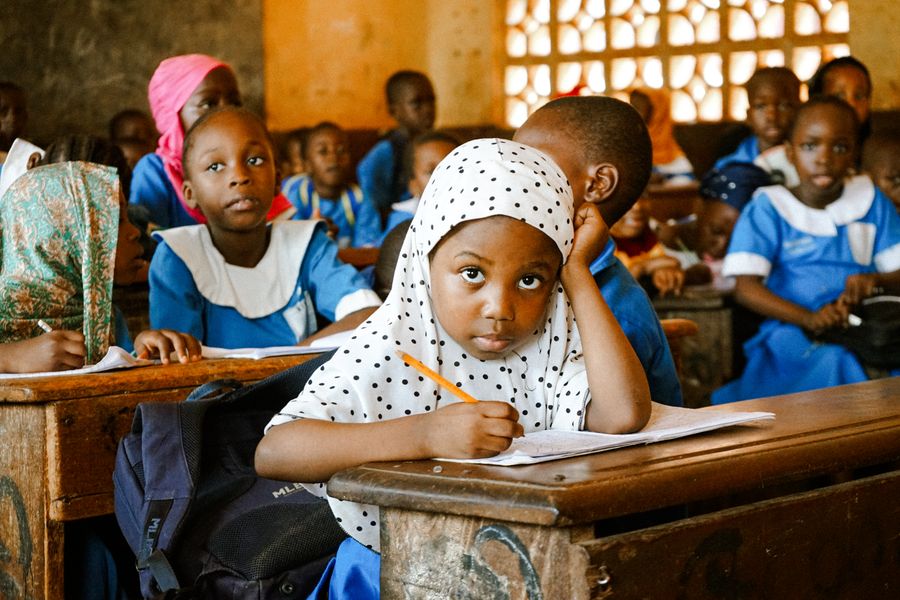
Ten years ago, the idea of an African primary school learner getting personalised tutoring from an algorithm would have sounded like science fiction. In 2026 it is Tuesday afternoon in thousands of classrooms from Nairobi to Accra. Artificial intelligence has quietly, and unevenly, arrived in African education, and it is changing what the next generation of learners will be capable of.
This article is a comprehensive 2026 snapshot: the tools teachers and students are actually using, the results being measured, the real challenges, and where this is all going. Whether you are a parent, teacher, education policy watcher, or an edtech founder, this is what you need to know right now.
Why AI Matters So Much for African Education
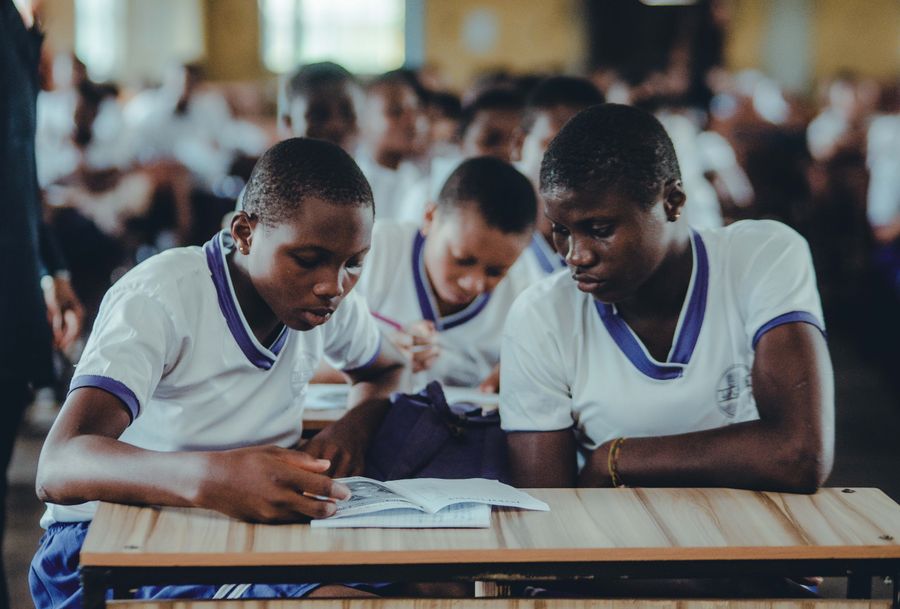
Africa has the youngest population on Earth. The median age in Nigeria is 18. In Uganda it is 16. Across the continent, more than 450 million children are currently enrolled in school, and hundreds of millions more are of school age but unable to attend. UNESCO estimates Sub-Saharan Africa needs roughly 15 million additional teachers by 2030 to meet basic universal education targets.
That teacher shortfall will not be closed by hiring alone. There simply are not enough qualified teachers available, and training new ones takes years. AI, specifically machine-learning-powered tutoring, adaptive practice, and grading automation, is the only intervention that scales fast enough to matter. That is why governments, NGOs, and private schools across Africa are experimenting aggressively.
The promise is specific:
- Personalisation at scale. A machine-learning model can adapt to an individual learner's level, something a single teacher with 60 pupils cannot do easily.
- Language coverage. Modern AI works in Swahili, Yoruba, Zulu, Amharic, Hausa, Afrikaans, and dozens of other African languages, imperfectly but improving monthly.
- Cost per learner. A subscription that costs a school a few dollars per month per student delivers practice, feedback, and assessment that previously required expensive 1-to-1 tutoring.
- Teacher workload relief. Grading, lesson-planning, and differentiating materials eats 40–60% of a teacher's time. AI cuts that dramatically.
The Tools Being Used on the Ground in 2026
Forget theoretical pilots. These are platforms that African learners are actively using this term.
Kenya, M-Shule, Eneza Education, MwalimuPlus
M-Shule is a Nairobi-based adaptive-learning platform that works over basic SMS. No smartphone required. It started in 2017 as a small experiment and now serves hundreds of thousands of Kenyan learners. The AI recommends practice questions based on past responses, so each child works on what they need, not a generic national worksheet.
Eneza Education (sh-upazi in Swahili) hit scale by letting learners on any feature phone text questions and receive curriculum-aligned practice. It now layers machine learning on top of a huge response dataset to predict which learners are falling behind and flag them to teachers. Eneza claims over 5 million learners have used the service cumulatively.
MwalimuPlus is the teacher-facing tool. It auto-generates CBC (now CBE)-aligned lesson plans, suggests differentiation strategies for mixed-ability classes, and automates the paperwork KICD requires. In 2026 the Ministry of Education has begun recommending it informally to schools piloting digital lesson planning.
Nigeria, uLesson, Kide Science, AI-Teacher
uLesson is the biggest educational video-plus-AI platform in West Africa. Over 5 million downloads across Nigeria, Ghana, Sierra Leone, and Liberia. It uses AI to recommend the next video, the next quiz, and the next intervention for each learner. Parents pay roughly $5–10/month; schools can buy institutional licences at a steep discount.
Kide Science partners with Finnish early-years specialists to deliver AI-guided science story-lessons for ages 3–8. The AI adapts the complexity of the narrative to the child's responses. It launched in Lagos in 2024 and now runs in private pre-primary schools across West Africa.
AI-Teacher (Nigeria) is a WhatsApp chatbot that walks secondary school learners through WAEC (West African Examinations Council) past papers topic by topic. Nearly 400,000 active users as of early 2026. It is free, the model is sponsored by a coalition of Nigerian edtech investors.
South Africa, Siyavula, FunDza, Snapplify AI Tutor
Siyavula is arguably the most mathematically rigorous adaptive-learning platform in Africa. It powers the official Department of Basic Education mathematics practice platform for Grades 4–12. The AI engine delivers a different problem to every learner based on prior performance. Teachers see real-time dashboards of class and individual mastery.
Snapplify AI Tutor, launched in 2024, integrates with South African CAPS textbooks and allows learners to ask a tutor-style chatbot questions about any page in any approved textbook. Adoption has spread rapidly through private and independent schools in Johannesburg, Cape Town, and Durban.
Pan-African & Global Tools Used Locally
Three global tools that have become everyday classroom staples in African schools:
- Khanmigo, Khan Academy's AI tutor. Free for a range of African countries through the Khan Academy Africa initiative.
- Google Read Along, uses on-device voice AI to help children practise reading English, Swahili, Hindi, and more. Works offline after install, which matters enormously for areas with patchy data.
- ChatGPT & Claude, used by older learners, university students, and teachers for research, drafting, and lesson planning. In 2026 both have free tiers that are dramatically more capable than their 2023 versions.
Comparison Table, AI Tools for African Schools (2026)
| Tool | Best For | Offline? | Cost | Where It Shines |
|---|---|---|---|---|
| M-Shule | Primary (SMS-based) | Works on feature phones | Low / sponsored | Rural Kenya |
| Eneza | Grades 1–8 practice | SMS works everywhere | ~$1/month | Pan East Africa |
| uLesson | Primary / Secondary video | Downloadable | $5–10/month | West Africa |
| Siyavula | Maths (Grade 4–12) | Requires internet | Free in SA via DBE | Deep maths mastery |
| Khanmigo | All ages, all subjects | Requires internet | Free in partner countries | Quality tutoring |
| Google Read Along | Early literacy | Yes, offline | Free | Any African language |
| ChatGPT / Claude | Teachers & older learners | No | Free tier available | Research, lesson prep |
| Grammarly | Writing / essays | Limited offline | Free tier available | English writing |
| Canva for Education | Teacher materials | Some offline | Free for teachers | Visual lesson design |
What AI Is Actually Being Used For in African Classrooms
1. Adaptive Practice
The single biggest use case. A learner works through a set of problems; the AI watches which ones they get right and which they get wrong, then chooses the next problem to either reinforce a shaky concept or push the learner further. This replaces the one-size-fits-all textbook problem set that penalises both fast and slow learners.
2. Automatic Grading of Short-Answer Responses
Modern language models can mark short written answers, not just multiple choice, with reasonable accuracy. Siyavula and Eneza both use this. Teachers still spot-check, but the bulk of the drudgery is gone.
3. Lesson Planning Co-Pilots
Teachers use ChatGPT, Claude, and local tools like MwalimuPlus to draft lesson plans aligned to curriculum documents, generate worksheets, and differentiate a single lesson into three versions for mixed-ability classes.
4. Voice-Based Reading Practice
Google Read Along and a growing list of African-language-first apps let learners read aloud to a phone. The AI listens, catches mispronunciations, and gently corrects. This is transformative for early literacy in contexts where teachers cannot listen to 50 children read individually.
5. Translation & Multilingual Support
In multilingual classrooms (most African classrooms), a learner can now ask a question in their mother tongue and get a curriculum-aligned explanation back in the language of instruction. This bridges one of the biggest learning gaps on the continent.
6. Accessibility for Learners with Disabilities
AI-powered speech-to-text, text-to-speech, and image description tools are giving learners with visual, hearing, and cognitive disabilities access to curriculum content that was previously out of reach. This is one of the most under-reported wins of the last two years.
The Hard Challenges That Are Not Yet Solved
It would be naïve to pretend AI has swept through African schools without friction. Here are the real barriers, not the brochure version.
Internet & Electricity
According to the ITU, roughly 60% of Africans are still offline. Rural public schools in Kenya, Ethiopia, Uganda, and DRC often have no electricity, let alone broadband. Tools like M-Shule and Eneza work around this with SMS, but richer AI experiences (video, real-time tutoring) require connectivity that is not universally present.
Device Access
Even in cities, a class of 50 learners may share 5 tablets. The best adaptive-learning software in the world does nothing if learners cannot access it. Government 1-to-1 device programmes are underway in Rwanda, Kenya, and South Africa, but scale is still limited.
Teacher Training
AI is only useful if teachers know how to integrate it. Most pre-service teacher training programmes in Africa do not yet cover AI pedagogy. A 2025 survey across 8 African countries found that fewer than 20% of practising teachers had received any formal training on using AI tools in class.
Data Protection & Privacy
Children's learning data flowing to foreign servers is a legitimate concern. Kenya's Data Protection Act (2019), Nigeria's NDPR, and South Africa's POPIA all have provisions, but enforcement on edtech platforms is patchy.
Curriculum Alignment
Global tools like ChatGPT are impressive but not built for CBC (now CBE) or CAPS or the Nigerian National Curriculum. Teachers still need local, curriculum-aware platforms, which is why homegrown African edtech matters.
Equity Risk
The biggest risk of all: AI could widen, not close, the gap between children in well-resourced urban private schools and children in under-resourced rural public schools. Unless public investment keeps pace, 2026's AI boom could entrench 2030's inequality.
What This Means for Parents, Teachers and Policy
For Parents
Do not wait for the school to introduce AI tools. Most of them are cheaper than a single month of tuition. A few low-friction starting points: sign your child up for a free account on Khan Academy and run Khanmigo as a homework helper; install Google Read Along for younger children; encourage teenagers to use Grammarly's free tier for essay writing and Canva's free-for-students tier for project work.
For Teachers
Start with the boring but time-saving uses first. Use AI to generate worksheets, differentiate a lesson plan into three versions, or draft rubrics. That buys you 3–5 hours a week. Then graduate to using AI in class, for example, having learners chat with an AI tutor about a topic they are stuck on while you work one-to-one with a different group. Free courses on AI-for-teachers are now available on Coursera and through our own free Learn AI course.
For Policymakers
Three things matter more than any single piece of software: (1) electricity and connectivity in every school, (2) pre-service and in-service AI training for teachers, and (3) procurement preference for curriculum-aware local edtech. Countries that get these three right in 2026–2028 will compound benefits for a generation.
Real Results So Far (What the Data Shows)
Evidence from published pilot studies and platform data reports:
- Siyavula: learners who completed 50+ adaptive-practice sessions in a term averaged 12–18% higher scores on subsequent mathematics tests than peers who did not.
- M-Shule: independent evaluations in 2023–2024 showed measurable improvements in literacy and numeracy among learners in Kenyan rural primary schools using the platform for 20+ weeks.
- Eneza Education: teachers reported saving roughly 3 hours per week on marking when using the platform's auto-graded quizzes.
- Google Read Along: peer-reviewed studies in India (the programme's origin) showed early-literacy gains for children who used the app 15+ minutes per day; early African rollouts are showing similar patterns.
These are not miracles. They are the kind of incremental, consistent improvements that, compounded over years, produce a generation of learners better prepared than the one that came before them.
What Comes Next: 2027 and Beyond
Three developments to watch:
Small on-device models. AI that runs directly on a cheap smartphone or tablet, with no internet connection required, will open up adaptive practice and tutoring to communities currently out of reach. This is already arriving in 2026 and will accelerate.
African-language foundation models. Projects like Masakhane, AI4D, and Lelapa AI are building large language models specifically for African languages. When these mature, multilingual learning will stop being an afterthought and become a default.
AI-augmented examinations. Within three to five years, several African examinations boards will begin piloting AI-assisted marking for short-answer questions. Done well, this frees examiners to focus on high-value judgement. Done badly, it is a disaster. Watch the safeguards closely.
Where to Start If You Are New to This
If this article is your first deep exposure to AI in education, here is the simplest on-ramp:
- Take our free Learn AI Foundations course, it is five short modules, no technical background required.
- Pick one tool from the table above and try it for two weeks. Do not try to adopt all of them. One tool, two weeks, real commitment.
- Share what works. African education improves fastest when teachers and parents share practical wins with each other.
For CBC (now CBE)-specific learning materials that complement AI tools, notes, exams, schemes of work, lesson plans, assessment rubrics, browse our shop or grab a free sample pack to see the quality.
Frequently Asked Questions
Is AI really making a difference in African schools or is it just hype?
Both. There is genuine, measurable improvement in places where tools have been deployed consistently for a year or more, platforms like Siyavula, Eneza, and M-Shule have independent evaluation data showing improved learner outcomes. But the hype is also real: far more schools are talked about as "AI schools" than actually use AI in any meaningful way. The honest answer for 2026 is that AI is a real, growing, but still minority intervention. The next five years will decide whether it becomes mainstream or remains a private-school advantage.
Do African schools need expensive devices and fast internet to use AI?
No. The most impactful tools in African contexts have been designed for low-connectivity environments. M-Shule and Eneza Education run over basic SMS on feature phones. Google Read Along works offline after a one-time download. Emerging small-model AI runs on inexpensive Android smartphones with no internet required. Expensive infrastructure helps, but the field has adapted impressively to African realities.
Will AI replace teachers in Africa?
No. Every credible study and every experienced educator says the same thing: AI is most effective as a teacher's assistant, not a teacher's replacement. Children still need adult role models, pastoral care, social development, and human judgement. What AI does is remove the drudgery, grading, lesson planning, differentiation, so teachers can focus on the parts of the job that only humans can do. The African teacher shortage is so severe that the real question is not whether AI will replace teachers but whether AI can help existing teachers reach more learners.
Is it safe for children to use ChatGPT or similar AI tools?
With supervision and some simple rules, yes. ChatGPT and Claude both have free tiers that are generally safe for learners aged 13+, but every child should understand three things: AI can be wrong (always verify facts), AI should not be used to cheat on homework (use it as a tutor, not a ghost-writer), and personal information (real names, addresses, phone numbers) should never be shared in a chat. Younger children are better served by purpose-built education tools like Khanmigo or Google Read Along, which have stronger safety design.
How can a parent or teacher start using AI today without spending money?
Three zero-cost starting points: (1) Create a free Khan Academy account and use Khanmigo, currently free in most African countries. (2) Install Google Read Along from the Play Store for early literacy in English, Swahili, and several other languages. (3) Use ChatGPT's free tier to generate practice questions, rephrase explanations, and draft lesson plans. Combine these three and you have a serious AI learning stack at no cost. Our free Learn AI course walks beginners through the setup step by step.
Final Word
The story of AI in African education in 2026 is not one of revolution, it is one of quiet, patient, compounding progress. A learner in Eldoret is getting adaptive maths practice that would have been impossible five years ago. A teacher in Ibadan is saving three hours a week because a chatbot drafts her lesson plans. A visually impaired child in Cape Town is hearing her textbook read aloud by a voice model that barely existed in 2022.
None of this makes headlines. All of it changes lives. The question for parents, teachers, policymakers, and founders is the same: how do we make sure this quiet revolution reaches every child, not just the ones whose schools can afford it? That answer will define African education for a generation.
Want to go deeper? Start the free Learn AI course, browse the full learning materials shop, or download a free sample pack to see what curriculum-aligned resources look like in 2026.
KJSEA and KPSEA: 40 days to the first paper
The Grade 9 KJSEA course covers all 9 learning areas for KSH 400. The Grade 6 KPSEA course covers all 5 subjects for KSH 300. Notes, worked examples, topical questions and full marking schemes in both.
⏳ Only 40 days to the national assessments on 26 October. Start now.
KSH 300 or KSH 400 · Get it now → 📱 M-Pesa, instant download · join parents preparing nowHave a CBC question this article didn't answer?
Ask Somo, Kenya's first AI tutor. CBC-grounded, Kenyan examples, instant feedback. Five free questions a day with no signup, or start a 7-day free trial for 30 questions a day.
Try Somo Free →